
How are Bird Nets installed on a truck?
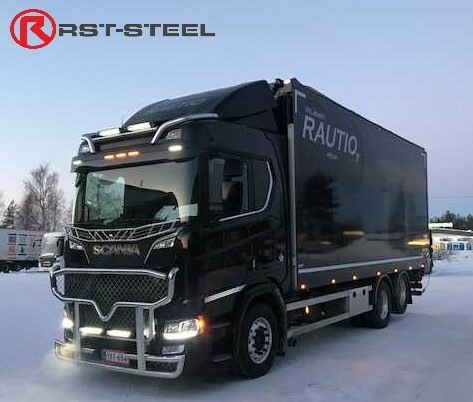
Installing a bird net on a truck involves mounting a stainless steel mesh frame across the front grille or bull bar structure to intercept stone chips and road debris before they reach the windshield. The process requires correct bracket alignment, model-specific hardware, and even net tensioning. This guide covers everything from what a truck bird net actually does to step-by-step fitting, common mistakes, and long-term maintenance.
What is a bird net on a truck and what does it actually protect against?
A truck bird net is a stainless steel mesh guard fitted across the front of a heavy goods vehicle, positioned between the road and the windshield to intercept stone chips, gravel, insects, and small road debris before they cause damage. It protects both the windshield and the front grille from minor impacts during daily operation.
For professional long-haul and heavy-duty drivers, windshield replacement is a costly and time-consuming interruption. On varied road surfaces, particularly gravel roads, construction zones, and winter-treated highways, the volume of airborne debris is significant. A stainless steel bird net acts as a first line of defense, absorbing and deflecting impacts that would otherwise cause chips, cracks, or grille damage. Beyond protection, a well-fitted net also gives the vehicle a clean, professional appearance that reflects well on any fleet or owner-operator.
What tools and preparation are needed before installing a bird net on a truck?
Before beginning a bird net truck installation, you need a socket set with metric sizes, a torque wrench, stainless steel fasteners appropriate to your mounting points, thread-locking compound, and a degreaser for surface preparation. Equally important is confirming that the net dimensions and bracket design are compatible with your specific truck model and cab generation.
Check the manufacturer’s fitting guide for your net to identify the correct torque values, typically between 8 and 25 Nm depending on bracket size and mounting location. Clean all mounting surfaces thoroughly with a degreaser to remove road film, grease, and oxidation before fitting any hardware. Using corrosion-resistant stainless steel fasteners from the outset is non-negotiable in Nordic conditions, where road salt accelerates galvanic corrosion on mixed-metal contact points. Verify net dimensions against your grille opening before you begin, as an undersized or oversized net creates tensioning problems that cannot be corrected after installation.
How is a bird net correctly installed on a truck step by step?
A correct bird net fitting follows a logical sequence: position the mounting brackets, attach the net frame loosely, align symmetrically, tension evenly, torque fasteners to specification, and conduct a final inspection. Rushing any stage compromises both fit quality and long-term durability on the road.
- Position the brackets at the designated mounting points on the grille surround or bull bar structure, ensuring both sides sit at identical heights before tightening anything.
- Attach the net frame to the brackets hand-tight only, allowing freedom to adjust alignment.
- Center the net horizontally and vertically, checking that the mesh sits flush with no visible gaps or overhangs at the edges.
- Tension the net evenly by working from the center outward, applying consistent pull to avoid diagonal distortion.
- Torque all fasteners to the manufacturer’s specification using a calibrated torque wrench, applying thread-locking compound where indicated.
- Conduct a final visual and physical inspection: check for symmetry, test each fastener for security, and confirm the net does not contact any moving parts or cooling components.
What are the most common installation mistakes and how do you avoid them?
The most frequent errors in HGV windshield guard installation are incorrect bracket positioning, uneven net tensioning, using incompatible or non-stainless fasteners, and failing to verify model-specific mounting compatibility before beginning work. Each of these mistakes shortens service life and can cause vibration-related fatigue damage.
Bracket misalignment is the root cause of most tensioning problems. If one bracket sits even a few millimeters higher than the other, the net will pull diagonally and develop stress points at the frame corners. Always dry-fit both brackets and confirm equal height before drilling or tightening. Uneven tension causes the net to vibrate at motorway speeds, which progressively loosens fasteners and fatigues the frame welds. Using standard zinc-plated bolts instead of stainless steel fasteners leads to corrosion within one winter season in salt-treated road conditions, making future removal and refitting extremely difficult.
How do you maintain and inspect a truck bird net after installation?
A stainless steel bird net requires inspection every 10,000 to 15,000 kilometers or after any significant debris impact. Check for loose fasteners, frame fatigue cracks at bracket connection points, and mesh deformation. Clean with a pH-neutral detergent and a soft brush, avoiding abrasive compounds that scratch the stainless surface and promote corrosion.
After heavy use on gravel or construction roads, run your hand along the frame to feel for any flex or movement that indicates a loosened mounting point. Tighten fasteners to the original torque specification if any movement is detected. A net showing visible mesh tears, bent frame sections, or cracked welds should be replaced rather than repaired, as structural integrity directly affects its ability to protect the windshield. Professional refitting is worth considering whenever mounting points show wear or when upgrading to a new truck model.
If you are looking for a high-quality stainless steel bird net built specifically for professional truck use, RST-Steel manufactures and supplies model-specific nets with full installation support across Finland. Contact us to find the right fit for your vehicle and get it installed correctly from the start.


 English
  Swedish
  Norwegian