
Are Front Bars approved for road use?
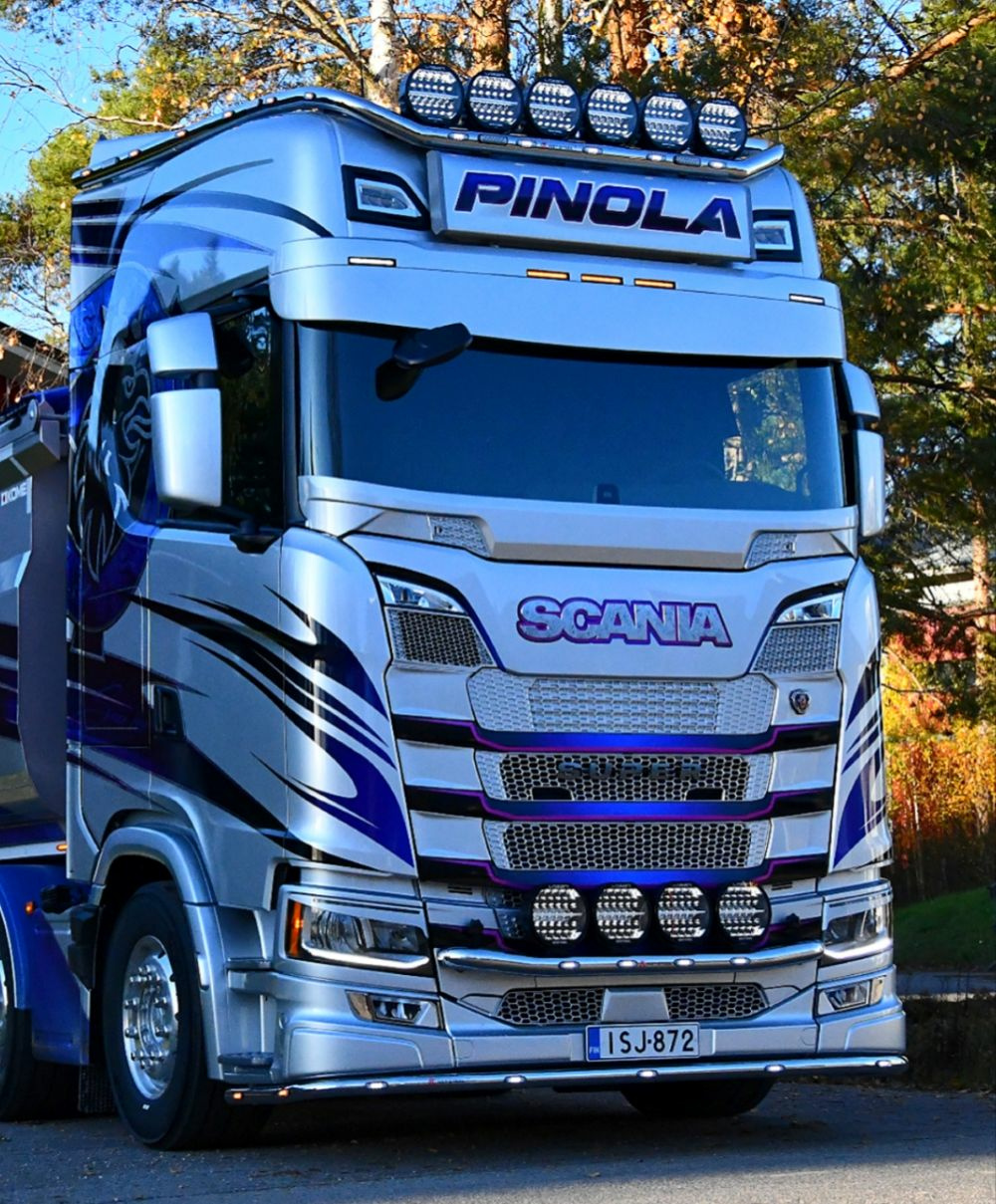
Front bars for trucks are generally approved for road use when they meet applicable technical standards and are fitted correctly. Unlike bull bars, front bars are primarily grille-mounted accessories designed for auxiliary light installation rather than structural protection. Whether a specific product is road-legal depends on construction quality, lighting compliance, and compatibility with your truck’s existing safety systems. The sections below cover the key questions professional drivers ask before fitting one.
What exactly is a front bar and how does it differ from a bull bar?
A front bar is a grille-mounted bar designed primarily to provide a sturdy mounting point for auxiliary lights. It sits within or across the front grille area and does not function as a structural protection system. A bull bar, by contrast, is engineered to absorb and redirect impact forces, connecting directly to the chassis or bumper reinforcement structure.
This distinction matters from a regulatory standpoint. Bull bars fall under type-approval frameworks that assess pedestrian impact safety and structural interaction with crash management systems. Front bars, being non-structural accessories, are evaluated differently, though they still carry obligations around protrusion, material finish, and compatibility with factory-fitted components. Knowing which category your accessory belongs to determines which regulations apply before you ever reach a roadworthiness inspection.
Are front bars for trucks approved for road use under EU and Finnish regulations?
Front bars for trucks can be road-legal under EU and Finnish regulations, provided they comply with relevant construction and equipment directives. Traficom, Finland’s Transport and Communications Agency, requires that any aftermarket accessory fitted to a commercially registered vehicle does not compromise the vehicle’s approved configuration or create hazards for other road users.
EU Directive 2007/46/EC and its successor framework under Regulation (EU) 2018/858 govern vehicle type approval. Accessories that alter the front-end geometry or add mounting points for lighting must not invalidate the base vehicle’s approval. Products carrying an E-mark or equivalent type-approval documentation provide the clearest compliance path. For professional drivers operating under commercial registration, keeping this documentation on file is a practical necessity during inspections.
What technical requirements must a front bar meet to be road-legal?
A road-legal front bar must satisfy several engineering criteria. Material quality is the starting point: grade 304 or 316 stainless steel is standard for durability and corrosion resistance in Nordic conditions. The bar must not protrude beyond permitted limits relative to the vehicle’s front profile, and all edges must be smooth or rounded to avoid creating additional injury risk.
Mounting points must be compatible with the specific chassis and grille structure of the truck model in question. The bar must not obstruct, damage, or interfere with ADAS sensors, radar units, or crash management structures integrated into the front bumper assembly. UN ECE pedestrian safety regulations are less directly applicable to trucks than to passenger cars, but the principle of avoiding additional hazard to vulnerable road users still informs how front bars are assessed during katsastus.
How do auxiliary lights mounted on front bars affect road-use compliance?
Fitting auxiliary or position lights to a front bar introduces additional obligations under ECE Regulation 48, which governs the installation of lighting and light-signalling devices on motor vehicles. Each light must be positioned within permitted height and width parameters, aimed correctly, and wired through a compliant switching arrangement that prevents misuse on public roads.
Driving lights, for example, must be extinguished automatically when main beam is switched off. Position lights must meet visibility angle and colour requirements. Wiring must be protected and properly fused. During a Finnish roadworthiness check, an inspector will verify that any lights fitted to the front bar match the vehicle’s lighting declaration. Non-compliant setups, including lights wired without proper switching or positioned outside approved zones, can result in a failed inspection and a requirement to remove or rectify the installation before the vehicle returns to service.
What should a professional driver check before installing a front bar on a commercial truck?
Before installation, confirm that the front bar comes with full certification documentation, including any type-approval certificates or manufacturer declarations of conformity. Verify that the product is specifically designed for your truck model and year, as compatibility varies significantly between chassis generations.
- Check whether installation affects your truck manufacturer’s warranty on front-end components
- Confirm the bar does not obstruct radar, camera, or sensor systems fitted as standard
- Ensure any auxiliary lights meet ECE R48 requirements for position and switching
- Retain all documentation for presentation at katsastus
- Use a qualified installer who understands both the product and the regulatory framework
At RST-Steel, we manufacture front bars from high-quality stainless steel and provide full installation services across our branches in Nivala, Pirkkala, and Oulu. If you want a product that fits correctly, meets Finnish road requirements, and comes with the documentation to back it up, contact us to discuss your truck model and requirements.


 English
  Swedish
  Norwegian