
Auxiliary Lights for Vehicles – How to Choose the Right Ones
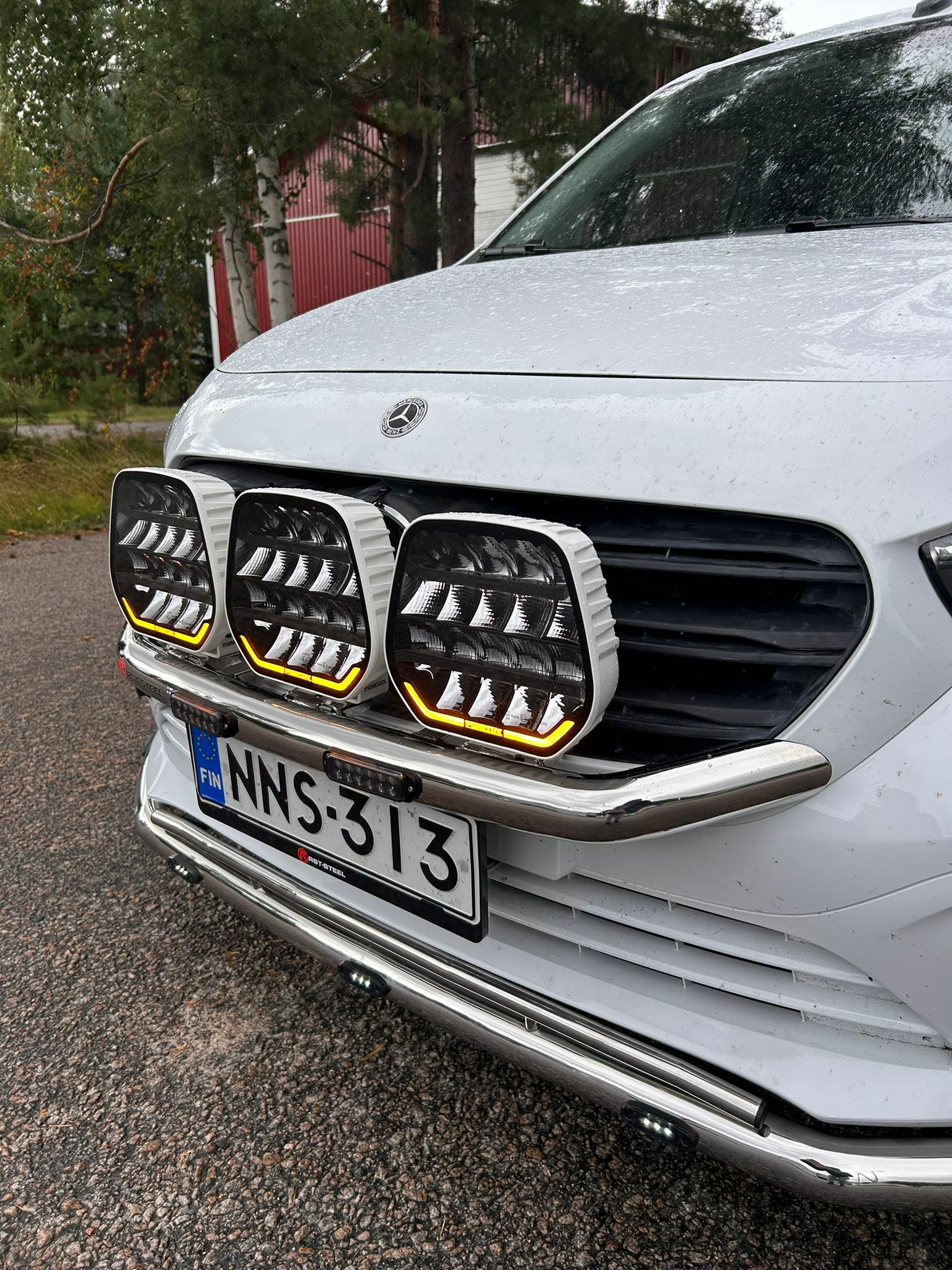
Car auxiliary lights significantly enhance driving safety and visibility, especially during nighttime driving, poor weather conditions, and off-road use. Properly selected auxiliary lights increase reaction time and reduce accident risk. When choosing lights, it is important to consider lighting technology, price range, technical specifications, and installation requirements based on your needs.
Why auxiliary lights are important for vehicle safety and visibility
Auxiliary lights greatly improve driving safety by increasing visibility and extending reaction time in hazardous situations. In darkness, effective work lights give the driver more time to notice obstacles, pedestrians, or wildlife near the roadway.
In particular, off-road driving and poor weather conditions make vehicle lighting a critical safety factor. Fog, rain, and snow significantly reduce visibility, making high-performance auxiliary lights a decisive factor in avoiding accidents.
Driving visibility improves considerably when the vehicle has a sufficient number of properly aimed auxiliary lights. This benefits not only the driver but also other road users who can better see a well-lit vehicle.
Differences between LED, halogen, and xenon auxiliary lights
LED auxiliary lights offer the best energy efficiency and longest lifespan, typically over 25,000 hours. They reach full brightness instantly and withstand vibrations well. Xenon lights produce very bright white light but require a separate ignition device and take longer to warm up.
Halogen lights are the most affordable option and easy to install, but they consume the most energy and have the shortest lifespan, around 1,000–2,000 hours. LED technology is best suited for continuous use and demanding conditions.
Xenon auxiliary lights fall between LEDs and halogens in brightness, with a lifespan of approximately 3,000 hours. The choice of lighting technology depends on usage needs, budget, and ease of installation.
How to choose the right price range for your auxiliary lights
Lazer Lamps represents premium solutions for professional use and the most demanding conditions, offering the best performance and durability on the market. Purelux and OZZ mid-range models are suitable for hobby use, providing excellent value for money.
Optibeam auxiliary lights are the most budget-friendly option, ideal for occasional use or situations with tight budgets but where functionality is important.
Defining your usage needs helps guide the choice: professional and daily use warrants investing in high-quality solutions, while occasional recreational use may be adequately served by more affordable options.
Key technical features to consider when selecting auxiliary lights
-
Lumen output: Determines brightness.
-
IP rating: Indicates water and dust resistance.
-
Light pattern: Spot for long-distance illumination, flood for wide-area lighting.
-
Operating voltage: Must match the vehicle system (12V or 24V).
An IP67 or IP68 rating ensures adequate protection against weather conditions. Mounting options should fit the vehicle, whether on the bumper, roof, or auxiliary light bar.
For most uses, 1,000–3,000 lumens is sufficient, while more demanding applications may require 4,000–6,000 lumens. Light pattern selection depends on the intended use: floodlights for work tasks, spotlights for off-road.
How to install auxiliary lights safely and legally
Installing auxiliary lights requires careful planning and knowledge of the vehicle’s electrical system. Lights must be connected with a relay and fuse for protection and may only be used simultaneously with the vehicle’s main headlights. Professional installation ensures a safe and regulation-compliant result.
If installing yourself, ensure secure mounting, correct aiming, and proper electrical connections. Auxiliary lights must not dazzle oncoming traffic, so precise adjustment is essential.
RST-Steel provides professional installation services at three locations, guaranteeing safe and legal results. DIY installation is possible but requires expertise and the correct tools.
Properly selected and installed auxiliary lights significantly improve driving safety and visibility. Considering your usage needs, budget, and technical requirements helps find the optimal solution. Explore our selection and contact us to find auxiliary lights perfectly suited to your needs.


 English
  Swedish
  Norwegian