
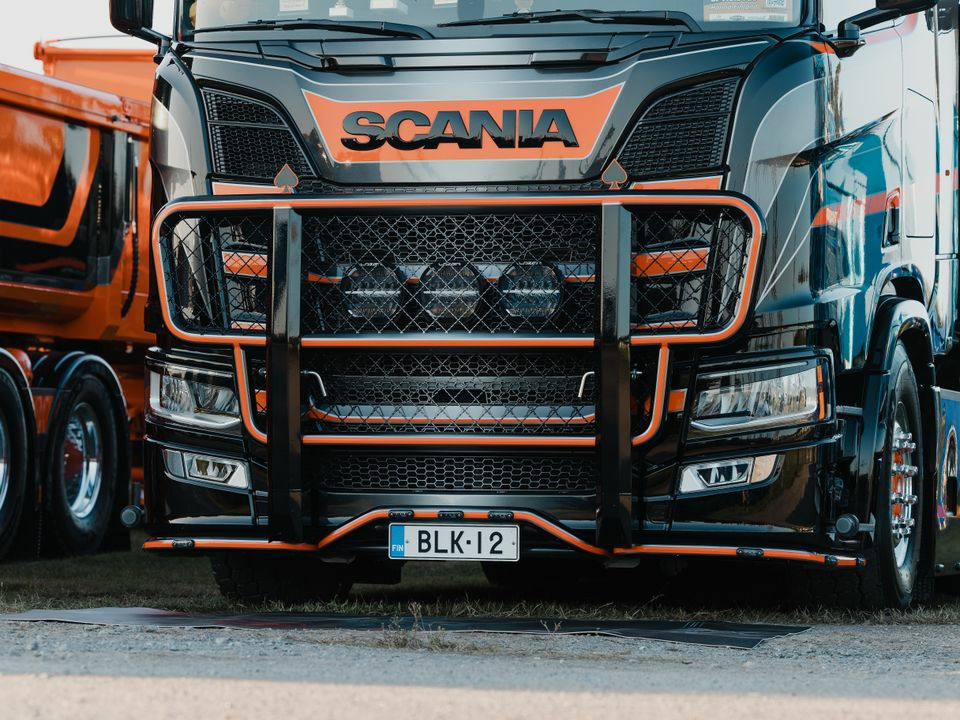
What Is a Bull Bar?

A bull bar is a protective accessory mounted on the front of a vehicle, made from durable steel. It protects the vehicle in collisions, especially animal-related accidents, and is an essential accessory for professional drivers operating in rural and forested areas. Bull bars significantly enhance both vehicle and driver safety.

What Is a Bull Bar and What Is It Used For?

A bull bar is a strong, steel protective structure installed in front of a vehicle’s standard bumper. It is designed to withstand heavy impacts and protect the front end from damage.
Structurally and materially, a bull bar differs from a standard bumper. While regular bumpers are often plastic or lightweight metal, bull bars are made from stainless steel, making them much stronger and more resistant to collisions.
In work vehicles, bull bars are particularly important because these vehicles often operate in areas with a high risk of animal collisions. Trucks, vans, and other work vehicles greatly benefit from the added protection.

Why Professional Drivers Need a Bull Bar

Professional drivers need a bull bar primarily for safety. Animal collisions can cause significant damage to both the vehicle and the driver, especially in heavy vehicles.
When driving on rural and forest roads, the risk of encountering deer, moose, or other animals is considerable. A bull bar reduces the impact force and protects critical vehicle parts, such as the radiator and lights.
The financial benefits are also significant. Repairing an animal collision can cost thousands of euros, whereas a bull bar pays for itself in the first avoided accident. For professional drivers, vehicle downtime also means lost income.

How to Choose the Right Bull Bar for Your Vehicle

Choosing the right bull bar begins with considering the vehicle model. Each bull bar is designed for a specific vehicle to ensure safe and effective mounting.
Key selection criteria include:

  • Compatibility with vehicle make and model

  • Quality and durability of materials

  • Regulatory approvals for road use

  • Reliability of the mounting system

Domestic production ensures customized solutions and fast delivery. Bull bars manufactured in Finland are designed for northern conditions and meet all safety requirements.

What to Consider During Bull Bar Installation

Professional installation is essential for the safety and functionality of the bull bar. An incorrectly installed bull bar can be hazardous to both the driver and other road users.
Key considerations for installation include:

  • Structural strength and mounting points of the vehicle

  • Compliance with safety regulations

  • Proper torque and installation instructions

  • Warranty and liability issues

Using a professional installer ensures the bull bar is securely mounted and compliant with regulations. DIY installation can void the warranty and pose a safety risk.

Key Benefits of a Bull Bar for Professional Drivers

A bull bar is a long-term investment that provides professional drivers with multiple significant advantages. The primary benefit is improved safety, but the financial savings are also substantial.
Main benefits include:

  • Significantly enhanced safety in animal collisions

  • Reduced vehicle repair costs

  • Preservation of vehicle resale value

  • Professional appearance

  • Minimization of downtime

For work vehicles, a bull bar is practically essential, paying for itself through safety and cost savings. It is an investment that protects both the vehicle and the business.

Explore our range and contact us to find the bull bar that perfectly suits your needs.

Related Posts

Uncategorized

Is a bull bar easy to clean?

Bull bars are easy to clean with proper techniques – discover material-specific care tips.

Uncategorized

Which bull bar best withstands collisions with animals?

Discover which bull bars offer maximum animal collision protection for your vehicle type and driving conditions.

Uncategorized

How to choose a bull bar that can withstand varying winter conditions?

Discover essential factors for selecting corrosion-resistant bull bars that maintain structural integrity through harsh winter conditions.

Uncategorized

Can a bull bar withstand road salt and moisture?

Quality bull bars resist road salt through galvanised steel and powder coating protection.

Uncategorized

Which auxiliary lights are suitable for truck fronts?

Discover LED light bars, spotlights, and combination beams perfect for truck fronts. Expert guide to choosing auxiliary lighting.

Uncategorized

What is the best auxiliary light for a passenger car?

LED auxiliary lights boost passenger car safety and visibility, with premium Lazer Lamps and budget Optibeam options available.

Uncategorized

Which auxiliary light is best for an SUV?

Discover the best auxiliary lights for SUVs with expert brand comparisons and performance insights.

Uncategorized

How many auxiliary lights can be installed on a vehicle in the Nordic countries?

Nordic vehicle auxiliary light limits: 2-4 lights allowed with strict compliance requirements across Finland, Sweden, Norway, and Denmark.

Uncategorized

How to choose the right auxiliary lights for an off-road vehicle?

Expert guide to selecting auxiliary lights: brightness, beam patterns, premium vs budget brands, and installation tips for safer off-road adventures.

Uncategorized

Should you choose round or panel-style auxiliary lights?

Compare round vs panel auxiliary lights for your driving needs and vehicle requirements.

Uncategorized

Is the Lazer T-series a good choice for forestry and off-road use?

Discover why Lazer T-series lights excel in forestry applications with superior durability and beam patterns.

Uncategorized

Can auxiliary lights be installed without drilling?

Discover proven no-drill mounting solutions for auxiliary lights that protect your vehicle while ensuring secure installation.

Uncategorized

Why is the Lazer Linear the best choice for roof-mounted auxiliary lights?

Discover why Lazer Linear auxiliary lights outperform competitors with superior LED technology and robust construction for professional vehicles.

Uncategorized

Linear series beam pattern – what advantages does it offer for highway driving?

Discover how linear series beam patterns reduce eye strain and improve highway visibility for professional drivers.

Uncategorized

Why is the Triple-R a popular Lazer model for trucks?

Discover why Triple-R leads Lazer’s truck lighting with superior durability, beam patterns, and professional-grade performance for demanding work conditions.

Uncategorized

Is the Lazer Sentinel the best choice for SUVs?

Expert comparison of Lazer Sentinel SUV auxiliary lights reveals surprising value alternatives across all budgets.

Uncategorized

Why is the ST Evolution the best auxiliary light choice for newer vehicles?

Expert guide reveals why ST Evolution leads auxiliary lighting for modern vehicles with superior performance.

Uncategorized

Why is the Lazer light beam more even than other brands?

Discover how Laser’s advanced optical engineering eliminates hot spots and creates superior beam uniformity for professional drivers.

Uncategorized

How do auxiliary lights behave in fog or rain?

Discover how fog scatters light differently than rain, why amber beats white light in weather.

Uncategorized

How does an auxiliary light help when driving in the dark?

Auxiliary lights extend visibility 200-400 metres beyond standard headlights, giving drivers crucial extra seconds to react to hazards during night driving.

Uncategorized

Why do auxiliary lights illuminate differently from the vehicle’s main high beams?

Discover why auxiliary lights outperform high beams with specialized optical design and advanced LED technology for superior visibility.

Uncategorized

Which auxiliary lights are best suited for vans?

Expert comparison of van auxiliary lights from budget to premium brands with installation guidance.

Uncategorized

Which auxiliary lights are best for long-distance driving?

LED spotlights and combination beam systems extend visibility 500+ metres for safer long-distance night driving adventures.

Uncategorized

Which auxiliary lights withstand cold and freezing temperatures best?

LED auxiliary lights with IP67+ ratings survive extreme cold best, maintaining performance down to -40°C.

Uncategorized

How many lumens should auxiliary lights provide?

Discover the ideal lumen range for auxiliary lights: 1,000-6,000 for most drivers, up to 10,000+ for professionals.

Uncategorized

How to choose the right size of auxiliary light for your vehicle?

Learn proper auxiliary light sizing for optimal vehicle performance and legal compliance.

Uncategorized

Can auxiliary lights be installed DIY, or should a professional do it?

Learn if DIY auxiliary light installation is safe or requires professional expertise for optimal performance.

Uncategorized

When is a bull bar necessary?

Discover when bull bars become essential protection for off-road driving, wildlife areas, and commercial use scenarios.

Uncategorized

How does a bull bar protect the driver and the vehicle in hazardous situations?

Bull bars absorb impact forces and distribute collision energy, protecting vehicle components and driver safety in hazardous situations.

Uncategorized

How to choose the right bull bar for your vehicle?

Learn how to choose the perfect bull bar for your vehicle with expert tips on types, sizing, and installation considerations.

Uncategorized

What is the role of a bull bar in professional driving?

Bull bars protect professional drivers from wildlife collisions and vehicle damage, ensuring operational continuity and business success.

Uncategorized

What materials are used in bull bars?

Steel, aluminium, and composites each offer unique advantages. Discover which bull bar material suits your vehicle’s needs.

Uncategorized

When should a bull bar be replaced with a new one?

Discover key warning signs and safety risks of damaged bull bars. Learn proper inspection techniques.

en_USEnglish

Cart ( 0 kohdetta )

No products in the cart.