
What’s the Difference Between LED and Halogen Auxiliary Lights?
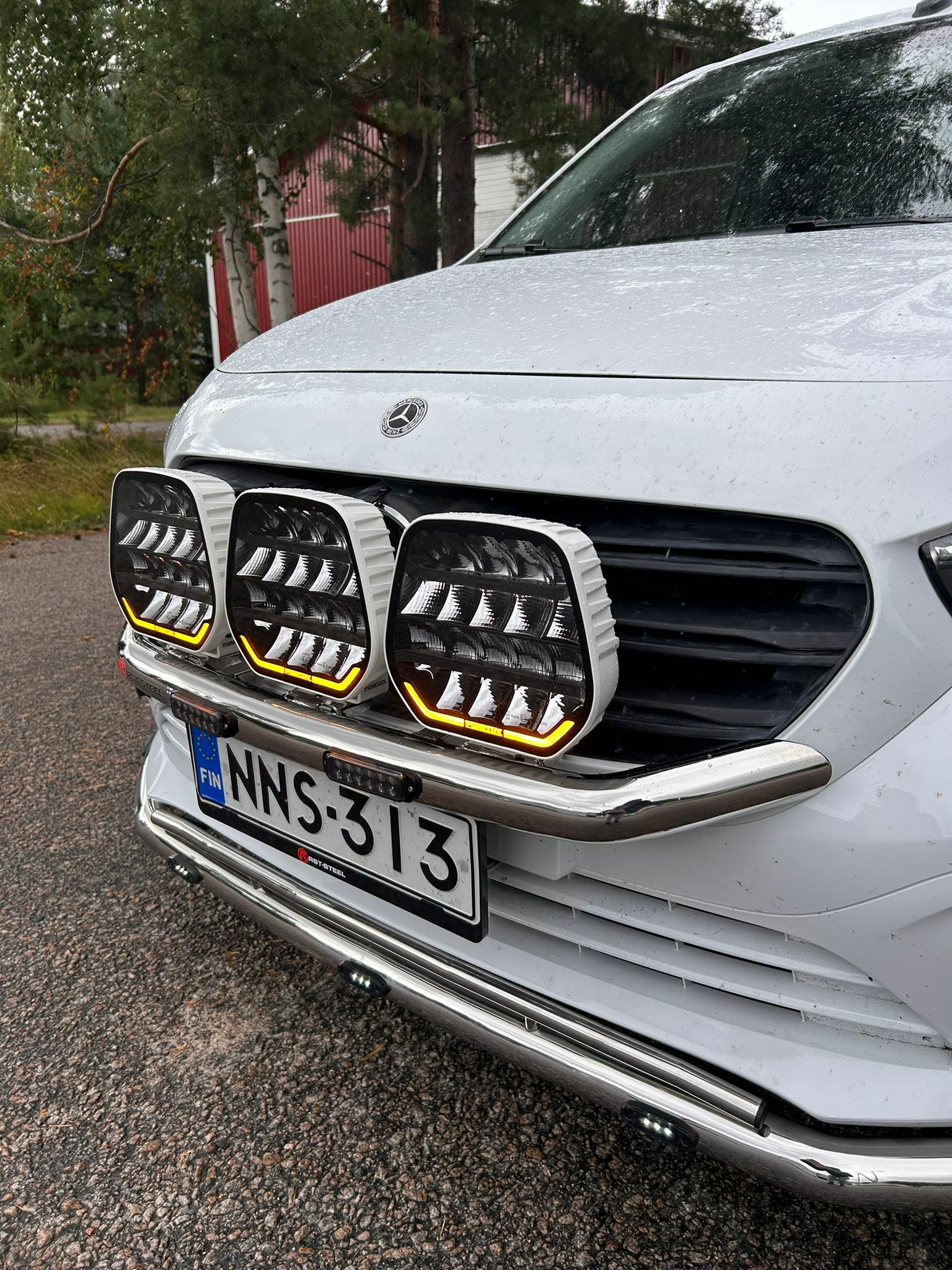
LED lights use semiconductor technology, while halogen lights operate using a heated filament. LED lights are more energy-efficient and durable, whereas halogen lights provide a warmer light tone and a lower purchase price. The choice depends on your usage needs, budget, and vehicle.
Basic difference between LED and halogen auxiliary lights
LED auxiliary lights produce light using semiconductor technology, where electric current passes through a diode causing light to be emitted. This process is very efficient and generates little heat. Halogen auxiliary lights, on the other hand, work on the principle of a traditional filament, where a tungsten filament is heated in a halogen gas environment.
The technological difference directly affects the lights’ performance, energy consumption, and lifespan. LED technology is newer and more advanced, while halogen technology has been a reliable solution for decades.
Both technologies have their own strengths for different purposes. Choosing between them depends on which characteristics you value most in vehicle lighting.
What is the biggest advantage of LED auxiliary lights compared to halogen?
Energy efficiency is the most significant advantage of LED lights – they consume up to 80% less energy while producing brighter light. This reduces the load on the vehicle’s electrical system and lowers fuel consumption.
LED lights last significantly longer than halogen lights. Their lifespan is typically 25,000–50,000 hours, whereas halogen lights last only 1,000–2,000 hours. This means fewer replacements and less maintenance.
Additionally, LED lights are mechanically more durable and better withstand vibration. They turn on instantly at full power, unlike halogen lights, which require warm-up time. Lazer auxiliary lights represent the peak of LED technology, offering exceptional performance in demanding conditions.
Why are halogen auxiliary lights still popular?
The lower purchase price is halogen lights’ main competitive advantage. They are significantly cheaper to buy than LED lights, making them attractive for drivers balancing a budget.
Halogen lights produce a warm, natural light color, which many drivers find more comfortable than the often cooler white light of LED lights. This can improve driving comfort on long trips.
Repairability is another significant advantage. A halogen bulb is easy and quick to replace, whereas repairing LED lights often requires replacing the entire unit. In older vehicles, halogen lights may also be a better choice for compatibility reasons.
Which lasts longer – LED or halogen?
LED lights clearly last longer than halogen lights. The lifespan of LED lights is typically 25,000–50,000 hours, compared to 1,000–2,000 hours for halogen lights.
In practice, this means that an LED light can last up to 25 times longer than a halogen light. If you use auxiliary lights an average of two hours per day, a halogen light lasts approximately 1–3 years, whereas an LED light reliably works for over ten years.
The longer lifespan compensates for the higher initial cost of LED lights over time. When you add up the saved replacement costs and reduced maintenance, LED lights often prove to be the more economical choice in the long run.
Choosing the right type of auxiliary light for your needs
The choice between LED and halogen lights depends on usage and budget. If you are looking for a long-term investment and use auxiliary lights regularly, LED lights are the better choice due to their energy efficiency and durability.
Halogen lights are suitable for occasional use or situations with a limited purchase budget. They are also a good choice for older vehicles where the electrical system may not optimally support LED technology.
Professional consultation is recommended to ensure you select the auxiliary lights best suited for your vehicle and intended use. The right choice ensures optimal lighting performance and safety in all driving conditions.
Explore our range and contact us to find the auxiliary lights that best meet your needs.
Related Posts
Can Sun Visors be adjusted to different positions?
Yes — truck sun visors adjust in multiple ways. Here’s what every professional driver should know.

Which Cabin Outside accessories should be installed on a truck?
Protect your truck and improve safety with the right cabin exterior accessories for professional drivers.
How does Cabin Inside affect driver well-being?
Poor cabin ergonomics silently drains driver alertness — discover which interior accessories make the biggest difference on long hauls.
Which seat covers are suitable for professional use?
Not all seat covers handle daily cab life. Find out which materials and features truly meet professional standards.
Which Work Light Bars are the most efficient on a truck?
Not all truck light bars are equal — discover which specs, beam patterns, and ratings truly deliver on the job.
Can Work Light Bars be used on public roads?
Work light bars are illegal on EU public roads — here’s what every professional truck driver must know.
Can Front Spoiler Bars be repaired after damage?
Damaged front spoiler bar? Discover repair methods, assessment tips, and when replacement beats repair costs.
Which Front Spoiler Bars withstand impacts best?
Not all front spoiler bars survive real-world punishment — material grade, weld quality, and bracket engineering make all the difference.
How do Front Spoiler Bars affect a truck’s air resistance?
Front spoiler bars do more than manage airflow — discover their real aerodynamic impact and practical benefits for truck drivers.

When should Wheel Covers be replaced?
Damaged truck wheel covers risk costly rim repairs and road safety hazards — here’s exactly when to replace them.
How should Wheel Covers be cleaned effectively?
Brake dust, road salt, wrong cleaner — discover the step-by-step wheel cover cleaning routine that protects your rims long-term.
Which lights work best on a Roof Bar?
LED vs halogen, beam patterns, and key specs — find the best roof bar lights for professional trucks.
Which Front Bars fit different truck models?
Discover which stainless steel front bars fit major European truck models — and how to choose the right one.
How should Cabin Inside cleaning be carried out professionally?
Master professional truck cabin cleaning with the right tools, techniques, and schedules every driver needs.
How can Cabin Inside lighting be improved?
Discover how the right truck cabin lighting reduces driver fatigue and transforms your cab into a productive workspace.
Which Front Spoiler Bars are suitable for city driving?
Protect your truck’s front bumper in city traffic — discover which front spoiler bars handle urban hazards best.
What are Front Spoiler Bars on a truck?
Discover how front spoiler bars shield truck bumpers from real-world hazards — reducing costly downtime and repair bills.
Is a Bull Bar mandatory on a truck?
Bull bars aren’t mandatory on trucks — but here’s why professional drivers treat them as essential.


 English
  Swedish
  Norwegian