-

Cabel harness bull bar (6x200W)
SKU: RST115
1 × 189,64 €
In StockEstimated shipping time: 2-5 business days
Välisumma: 189,64 €

SKU: RST115
1 × 189,64 €
Estimated shipping time: 2-5 business days
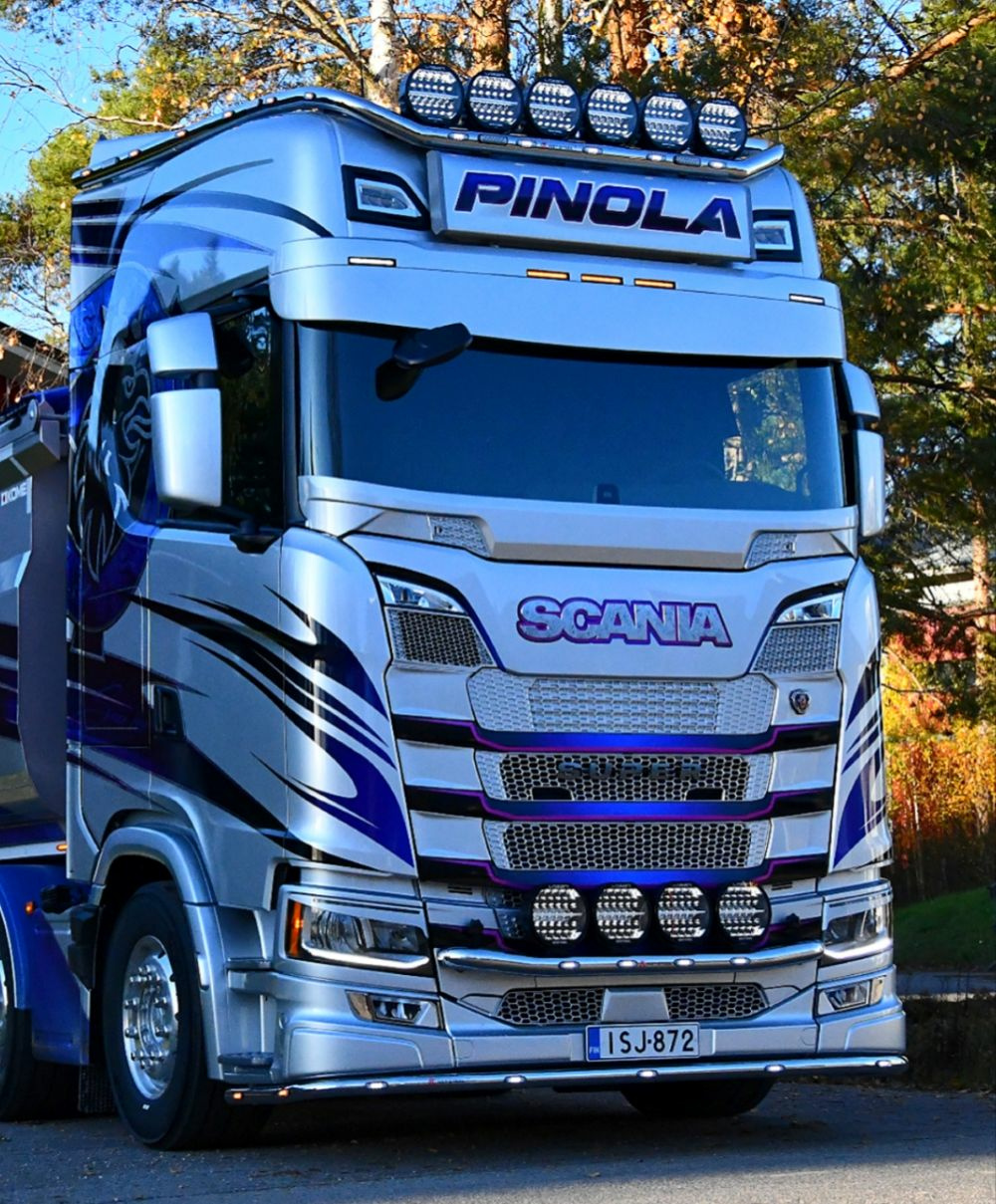
A front bar on a truck is mounted directly onto the grille frame, sitting across the front face of the cab between the headlights. It serves as a sturdy, stainless-steel mounting platform for auxiliary lights and position lights. This article covers where exactly it sits, how installation works, what it does once fitted, and how it compares to a bull bar and a front spoiler bar.
A truck front bar is a horizontal or multi-rail steel bar that mounts onto the grille frame of the truck cab, positioned across the upper or mid-section of the front grille area. It interfaces with the existing grille structure rather than the chassis, making it a grille-level accessory rather than a structural protection component.
The front bar sits proud of the grille surface, typically spanning the full width between the headlight housings. Its mounting points connect to the grille frame or the bumper crossmember, depending on the truck model, keeping the bar firmly aligned with the front face of the cab. Because it does not connect directly to the chassis rails, it serves a different purpose from a bull bar.
For a fleet manager or professional driver encountering this accessory for the first time, the key distinction is this: the truck grille bar is a light mounting platform, not a collision protection device. It enhances the front of the truck functionally and visually without altering the vehicle’s structural integrity.
Installing a front bar on a truck grille is a straightforward process that most professional drivers can complete with basic hand tools. Modern stainless-steel front bars are designed with model-specific brackets that align directly with existing mounting points on the grille frame, requiring no drilling or cab modification in most cases.
The general process runs as follows:
Compatibility is brand-specific. Front bars are produced for common platforms including Scania NextGen R/S, Volvo FH, DAF XF, Mercedes-Benz Actros, and MAN TGX. Always verify that the bar is designed for your exact cab generation, as grille geometry varies between model years. A correctly specified bar requires no cutting or adaptation.
Once fitted, the auxiliary light bar truck application is its primary function. The bar provides a rigid, vibration-resistant mounting platform for auxiliary driving lights and position lights, placing them at an optimal height for road illumination ahead of the truck. This directly improves the driver’s forward visibility and makes the vehicle more conspicuous to oncoming traffic.
Auxiliary lights such as long-range LED bars or spotlights bolt onto the bar’s integrated light brackets. Wiring is typically routed along the bar’s inner rail and through the grille aperture to the cab, keeping cables protected and tidy. Load ratings on quality stainless-steel bars accommodate multiple light units without flex or movement at highway speeds.
Beyond lighting, the truck light mounting bar also contributes to the vehicle’s appearance, giving the front a professional, purposeful look. Some configurations allow the addition of further accessories such as position light clusters, making the bar a versatile base for ongoing front-end customisation.
These three truck front accessories are frequently confused, but they serve distinct purposes and mount in different positions. Understanding the difference helps you choose the right product for your actual needs.
| Accessory | Mounting position | Primary purpose | Protection level |
|---|---|---|---|
| Front bar | Grille frame | Light mounting platform | None, functional only |
| Bull bar | Chassis-mounted | Collision protection | High, structural defence |
| Front spoiler bar | Lower front bumper | Bumper protection from road hazards | Moderate, impact absorption |
A bull bar connects to the chassis rails and is engineered to absorb impact energy in a collision, protecting the radiator, headlights, and front structure. It can also carry lights, but its defining feature is structural protection. A front spoiler bar mounts along the lower edge of the front bumper and shields it from kerbs, speed bumps, and snowdrifts that would otherwise crack or deform the bumper casing.
The front bar does none of this. Its value is precision: it puts auxiliary lights exactly where you need them, quickly and cleanly, without heavy installation work.
If you are fitting out a truck for long-haul or Nordic driving conditions and want to get your lighting setup right from the start, we offer stainless-steel front bars for all major truck brands alongside full installation support. Browse our front bar range at RST-Steel or contact us directly to find the correct fit for your cab.
Weekdays 9:00-17:00
+358 400 890 813Savenvalajantie 4, 85500 Nivala
Haikanvuori 3, 33960 Pirkkala
Zatelliitintie 15 B, 90440 Oulu
sales@rst-steel.fi

SKU: RST115
1 × 189,64 €
Estimated shipping time: 2-5 business days
 English
  Swedish
  Norwegian