
How Much Power Do Auxiliary Lights Draw from the Vehicle?
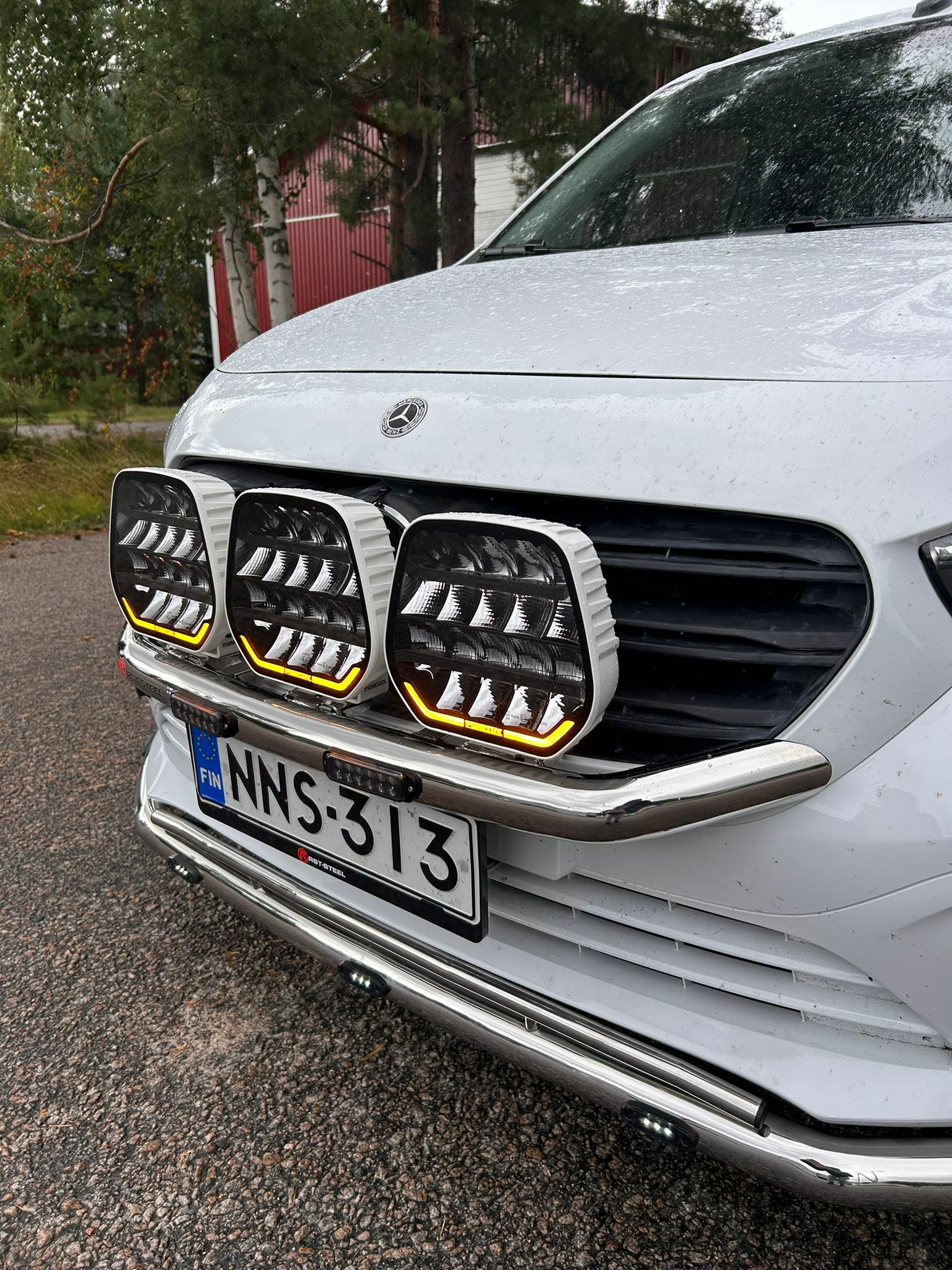
Auxiliary lights typically consume 10–50 watts per light depending on the type and size. LED auxiliary lights are significantly more energy-efficient, drawing only about a third of the current of halogen lights. Total consumption depends on the number of installed lights and whether they are used simultaneously.
Why knowing the power consumption of auxiliary lights is important
Understanding the power consumption of auxiliary lights is essential for the functionality of the vehicle’s electrical system and battery life. Installing lights that are too powerful or incorrectly sized can overload the charging system.
Auxiliary lights significantly improve visibility and driving safety, especially in the dark and under challenging weather conditions. However, their effect on the vehicle’s electrical system must be considered during installation.
The car’s alternator and battery are designed for a specific load. Extra consumption can cause battery problems or shorten the lifespan of electrical components significantly.
How much current do LED auxiliary lights consume compared to halogen?
LED auxiliary lights consume far less current than traditional halogen lights. A typical LED auxiliary light uses 10–30 watts, while a comparable halogen light consumes 35–55 watts.
For example, a 20W LED light draws about 1.7 amps in a 12-volt system, whereas a 55W halogen light draws nearly 5 amps. The difference is significant, especially when multiple lights are installed.
| Light type | Power (W) | Current (A) |
|---|---|---|
| LED auxiliary | 20W | 1.7A |
| Halogen light | 55W | 4.6A |
| Lazer auxiliary | 15–25W | 1.3–2.1A |
Lazer auxiliary lights represent top technology in energy efficiency, providing excellent light distribution with minimal current draw.
Do auxiliary lights affect the vehicle’s battery life?
Auxiliary lights affect the car battery during both operation and when the engine is off. Battery capacity must match the total consumption and usage time.
While the engine is running, the alternator supplies power to the auxiliary lights, but excessive load can strain the system. When the engine is off, lights draw power directly from the battery.
To protect the battery:
-
Choose energy-efficient LED lights
-
Install an automatic shut-off relay
-
Avoid prolonged use with the engine off
-
Regularly check battery condition
How to calculate total current draw of auxiliary lights
Total current draw is calculated by dividing the combined wattage of the lights by the vehicle voltage. Formula: Amps = Watts ÷ 12V.
For example, four 20W LED lights have a total of 80 watts, which corresponds to about 6.7 amps. This is a reasonable load for most vehicles.
To evaluate overall impact:
-
Add up all the wattage of the lights
-
Divide by 12 to get amperes
-
Compare with the alternator’s capacity
-
Ensure total consumption does not exceed 10–15% of alternator capacity
Key points on auxiliary light power consumption
Managing power consumption is crucial for the longevity of the vehicle’s electrical system. LED technology provides the best combination of power and efficiency.
For safe operation, professional assistance is recommended, especially when installing multiple lights or high-power work lights. Correct wiring and protection ensure system reliability.
The benefits of LED technology in power consumption make it a clear choice for new installations. Investing in high-quality LED lighting pays off through lower power use and longer service life.
Contact us
Explore our selection and get in touch to find auxiliary lights that perfectly meet your needs.
Related Posts
Can Sun Visors be adjusted to different positions?
Yes — truck sun visors adjust in multiple ways. Here’s what every professional driver should know.

Which Cabin Outside accessories should be installed on a truck?
Protect your truck and improve safety with the right cabin exterior accessories for professional drivers.
How does Cabin Inside affect driver well-being?
Poor cabin ergonomics silently drains driver alertness — discover which interior accessories make the biggest difference on long hauls.
Which seat covers are suitable for professional use?
Not all seat covers handle daily cab life. Find out which materials and features truly meet professional standards.
Which Work Light Bars are the most efficient on a truck?
Not all truck light bars are equal — discover which specs, beam patterns, and ratings truly deliver on the job.
Can Work Light Bars be used on public roads?
Work light bars are illegal on EU public roads — here’s what every professional truck driver must know.
Can Front Spoiler Bars be repaired after damage?
Damaged front spoiler bar? Discover repair methods, assessment tips, and when replacement beats repair costs.
Which Front Spoiler Bars withstand impacts best?
Not all front spoiler bars survive real-world punishment — material grade, weld quality, and bracket engineering make all the difference.
How do Front Spoiler Bars affect a truck’s air resistance?
Front spoiler bars do more than manage airflow — discover their real aerodynamic impact and practical benefits for truck drivers.

When should Wheel Covers be replaced?
Damaged truck wheel covers risk costly rim repairs and road safety hazards — here’s exactly when to replace them.
How should Wheel Covers be cleaned effectively?
Brake dust, road salt, wrong cleaner — discover the step-by-step wheel cover cleaning routine that protects your rims long-term.
Which lights work best on a Roof Bar?
LED vs halogen, beam patterns, and key specs — find the best roof bar lights for professional trucks.
Which Front Bars fit different truck models?
Discover which stainless steel front bars fit major European truck models — and how to choose the right one.
How should Cabin Inside cleaning be carried out professionally?
Master professional truck cabin cleaning with the right tools, techniques, and schedules every driver needs.
How can Cabin Inside lighting be improved?
Discover how the right truck cabin lighting reduces driver fatigue and transforms your cab into a productive workspace.
Which Front Spoiler Bars are suitable for city driving?
Protect your truck’s front bumper in city traffic — discover which front spoiler bars handle urban hazards best.
What are Front Spoiler Bars on a truck?
Discover how front spoiler bars shield truck bumpers from real-world hazards — reducing costly downtime and repair bills.
Is a Bull Bar mandatory on a truck?
Bull bars aren’t mandatory on trucks — but here’s why professional drivers treat them as essential.


 English
  Swedish
  Norwegian