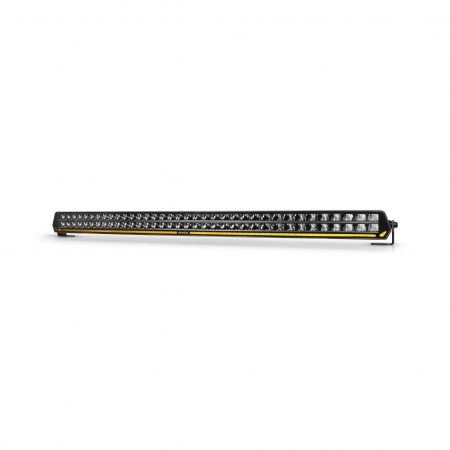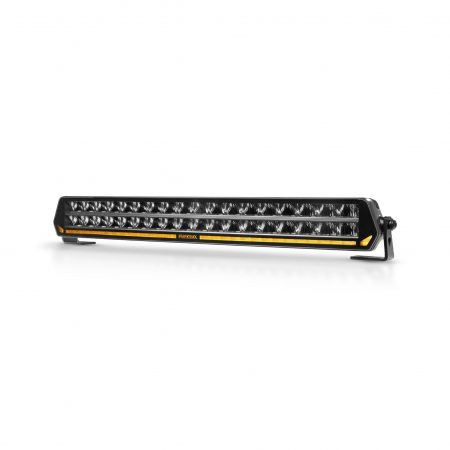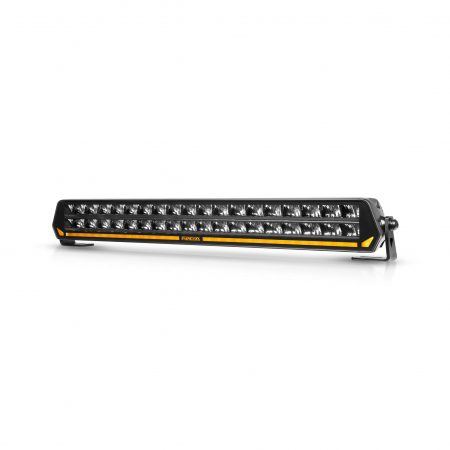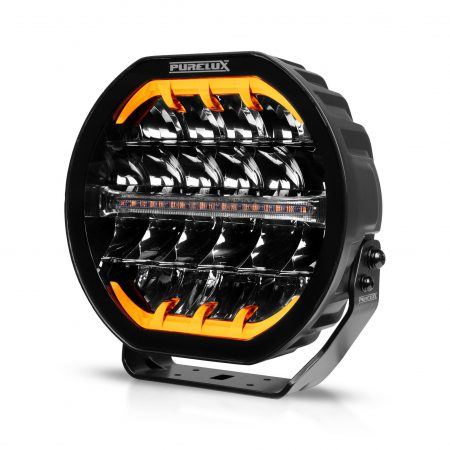
LED auxiliary lights typically draw 1.0–3.5 A at 12V (10–40 W), while halogen auxiliary lights draw 2.5–5.0 A at 12V (30–60 W). Standard halogen headlight bulbs (H4/H7) draw roughly 3.8–5.0 A at 12V, and LED headlight replacements draw 0.8–2.5 A at 12V. On 24V systems — common in trucks, buses and tractors — the same wattage draws half the current.
How many amps do auxiliary lights draw? (12V and 24V chart)
Amp draw depends on wattage and system voltage. Use the formula Amps = Watts ÷ Volts to find the exact figure for any light. The table below uses nominal 12V and 24V; actual running voltage is higher (13.5–14.5V on 12V systems, 27–28.5V on 24V systems), so real-world current is slightly lower. The nominal figures are the conservative ones to use for fuse and relay sizing.
Table A: Amp draw by light type
| Light type | Typical watts (W) | Amps at 12V | Amps at 24V |
|---|---|---|---|
| Halogen H4/H7 headlight bulb | 45–60 W | 3.8–5.0 A | 1.9–2.5 A |
| LED headlight bulb (replacement) | 10–30 W | 0.8–2.5 A | 0.4–1.3 A |
| Halogen auxiliary / driving light | 30–60 W | 2.5–5.0 A | 1.3–2.5 A |
| LED auxiliary light (small, e.g. 20 W) | 20 W | 1.7 A | 0.8 A |
| LED auxiliary light (medium, e.g. 30 W) | 30 W | 2.5 A | 1.3 A |
| LED auxiliary light (large, e.g. 40 W) | 40 W | 3.3 A | 1.7 A |
| LED light bar (typical) | 60–120 W | 5.0–10.0 A | 2.5–5.0 A |
| LED work light (typical) | 40–100 W | 3.3–8.3 A | 1.7–4.2 A |
| Rock light (per light) | 3–10 W | 0.3–0.8 A | 0.1–0.4 A |
| Position / side marker light | 1–5 W | 0.1–0.4 A | 0.0–0.2 A |
All figures are calculated at nominal voltage and rounded to one decimal place. Always verify the exact wattage on the product’s spec sheet before sizing fuses or relays.
How many amps do car headlights draw? (halogen vs LED, low vs high beam)
A standard halogen H4 or H7 headlight bulb draws roughly 3.8–5.0 A at 12V on low beam and can reach 5.0 A or more on high beam, depending on rated wattage. An LED headlight replacement for the same socket typically draws 0.8–2.5 A at 12V — a meaningful reduction in load, though light output and beam pattern depend on the specific product.
These figures apply to individual bulbs. A vehicle with two headlights doubles the draw. Always check the bulb’s rated wattage and divide by system voltage to get the actual amp draw for your specific vehicle.
How much current does a 12,000-lumen automotive LED lamp draw?
There is no single answer — it depends on the lamp’s efficacy (lumens per watt, lm/W). Use this estimate formula: Watts ≈ Lumens ÷ Efficacy (lm/W).
Modern automotive LED lamps typically achieve 80–120 lm/W. At that range, a 12,000-lumen lamp would consume approximately 100–150 W. At 12V that equals roughly 8.3–12.5 A; at 24V roughly 4.2–6.3 A. These are estimates — treat them as a planning guide only. The product’s spec sheet is the reliable number.
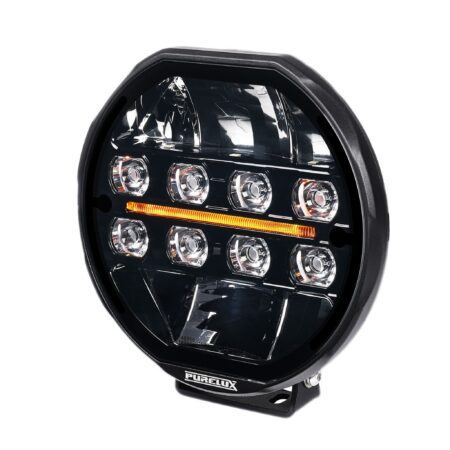
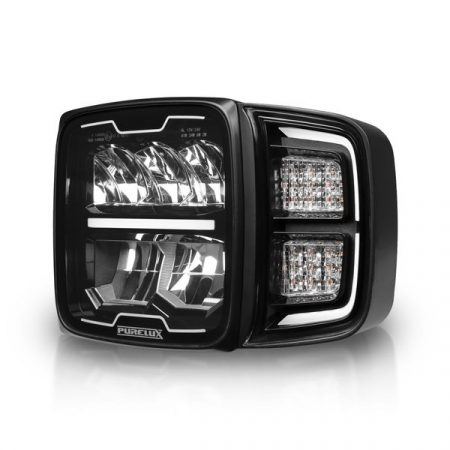
As a real-world example, the Purelux Blizzard 41 W LED plow light has a published wattage of 41 W, giving a calculated draw of 3.4 A at 12V and 1.7 A at 24V. For Lazer auxiliary lights and other models, check the individual product pages for published lumen and wattage figures rather than relying on estimates.
How to calculate amp draw for auxiliary lights
The formula is straightforward: Amps = Watts ÷ Volts. Use 12 for a standard car or van, 24 for a truck, bus or tractor.
Table B: Total load examples
| Setup | Total watts (W) | Amps at 12V | Amps at 24V |
|---|---|---|---|
| 2 × 20 W LED aux lights | 40 W | 3.3 A | 1.7 A |
| 4 × 20 W LED aux lights | 80 W | 6.7 A | 3.3 A |
| 6 × 20 W LED aux lights | 120 W | 10.0 A | 5.0 A |
| 2 × 30 W LED aux lights | 60 W | 5.0 A | 2.5 A |
| 4 × 30 W LED aux lights | 120 W | 10.0 A | 5.0 A |
| 6 × 30 W LED aux lights | 180 W | 15.0 A | 7.5 A |
To find your total load: add up the wattage of all lights that run simultaneously, then divide by 12 or 24. Compare the result against your alternator’s rated output and the wiring capacity. Check the manufacturer’s wiring instructions for the recommended fuse and cable size for your specific setup.
12V vs 24V: why trucks and buses draw half the current
Most cars and vans use a 12V electrical system. Trucks, buses, tractors and heavy work machines typically run on 24V. Because power (watts) equals voltage multiplied by current, doubling the voltage halves the current needed to deliver the same wattage. A 60 W light bar draws 5.0 A at 12V but only 2.5 A at 24V.
Lower current means thinner cable can be used, less heat in the wiring, and smaller voltage drop over long cable runs — which matters on a truck or a truck roof bar where cables may run several metres. Always confirm the system voltage of your vehicle before purchasing lights or wiring components.
Do auxiliary lights drain the battery?
While the engine is running, the alternator supplies power to the lights and recharges the battery. The risk of drain is low as long as total electrical load stays within the alternator’s rated output — check your vehicle’s handbook or alternator spec for that figure.
When the engine is off, lights draw directly from the battery. Even a modest set of LED auxiliary lights at 40 W total (3.3 A at 12V) will drain a 60 Ah battery in roughly 18 hours. Rock lights and light bars left on overnight can flatten a battery more quickly.
To protect the battery:
Choose energy-efficient LED lights with the lowest wattage that meets your light output requirement
Install an automatic shut-off relay wired to the ignition
Avoid running lights for extended periods with the engine off
Check battery condition regularly, especially on vehicles with a high total lighting load
Wiring, relay and fuse sizing for auxiliary lights
Correct wiring protects both the lights and the vehicle’s electrical system. As a general approach: size the fuse to the cable, and size the cable to the total current draw plus a safety margin. The light manufacturer’s wiring instructions are the authoritative source for the specific product.
A relay is strongly recommended for any auxiliary light installation. It keeps high current out of the switch and dashboard wiring, reduces voltage drop, and allows the lights to be controlled safely. For multiple lights or high-wattage setups, use a dedicated fused relay harness.
For mounting hardware and wiring accessories that are compatible with RST-Steel light bars and auxiliary lights, see our mounting accessories range.
What are auxiliary lights on a car?
Auxiliary lights are supplementary driving lights fitted in addition to a vehicle’s standard headlights. They are used to extend the lit range ahead of the vehicle, improve visibility in fog or poor weather, or illuminate working areas on vans, trucks and machinery. Common types include driving lights, spot lights, fog lights, light bars and LED work lights. For a full overview of available types, browse our auxiliary lights category.
Frequently asked questions
How many amps do 12V LED lights draw?
It depends on wattage. Divide the rated watts by 12 to get amps. A 20 W LED draws 1.7 A; a 40 W LED draws 3.3 A; a 100 W LED draws 8.3 A. Always use the figure from the product spec sheet.
How many amps do car headlights draw?
A standard halogen H4 or H7 headlight bulb draws roughly 3.8–5.0 A at 12V. An LED headlight replacement for the same application typically draws 0.8–2.5 A at 12V. Multiply by two for a pair of headlights.
What is 1.7 amps in watts at 12V?
1.7 A × 12 V = 20.4 W. This is the approximate draw of a single 20 W LED auxiliary light at nominal 12V.
How much power does a light bar consume?
A typical LED light bar consumes 60–120 W, drawing 5.0–10.0 A at 12V or 2.5–5.0 A at 24V. Check the product spec sheet for the exact figure before sizing your wiring and fuses.
Do rock lights drain the battery?
Each rock light draws only 0.3–0.8 A at 12V, but a set of eight left on overnight with the engine off can still drain a battery. Wire rock lights through an ignition-switched relay to prevent accidental drain.
What is the wattage of a position light?
LED position and side marker lights typically consume 1–5 W each, drawing 0.1–0.4 A at 12V. Their individual load is small, but a truck or trailer with many marker lights should account for the combined total.
How do I know if my alternator can handle extra lights?
Find the alternator’s rated output in amperes from the vehicle handbook or the alternator’s label. Calculate the total amp draw of all added lights using Amps = Watts ÷ Volts. Add that to the existing electrical load and compare with the rated output. If you are unsure, consult a qualified auto electrician.
Choosing energy-efficient auxiliary lights
LED technology delivers more light per watt than halogen, which means lower current draw for equivalent road illumination. When comparing products, look at lumen output alongside wattage — a higher lm/W ratio means better efficiency. For a verified wattage example, the Purelux Blizzard 41 W draws 3.4 A at 12V and 1.7 A at 24V.
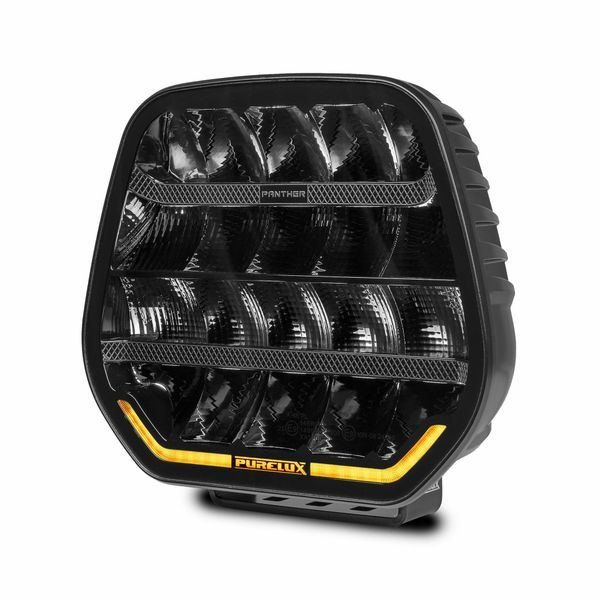
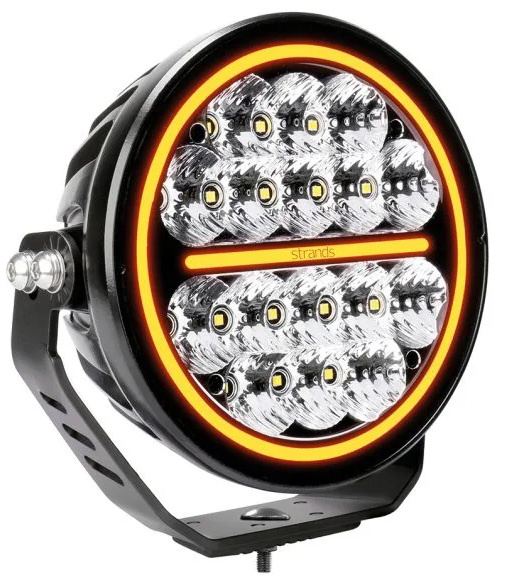
For long-range driving lights, Lazer auxiliary lights combine high lumen output with published wattage figures available on the product pages. The Purelux Panther S540 Gen3 is another option worth reviewing for its published specifications. For vehicle-mounted working illumination, our LED work lights cover a wide wattage range suited to both 12V and 24V systems.
Need help choosing the right lights for your vehicle?
Getting the amp draw right matters — whether you are fitting a pair of LED auxiliary lights to a 12V car or wiring a full bank of work lights to a 24V truck. Our team can help you match light output, wattage and wiring to your vehicle’s electrical system, and advise on fitting to RST-Steel light bars and bull bars. Request a quote or contact us directly — we are here to help you find the right solution.