
How well do auxiliary lights withstand road salt and dirt?
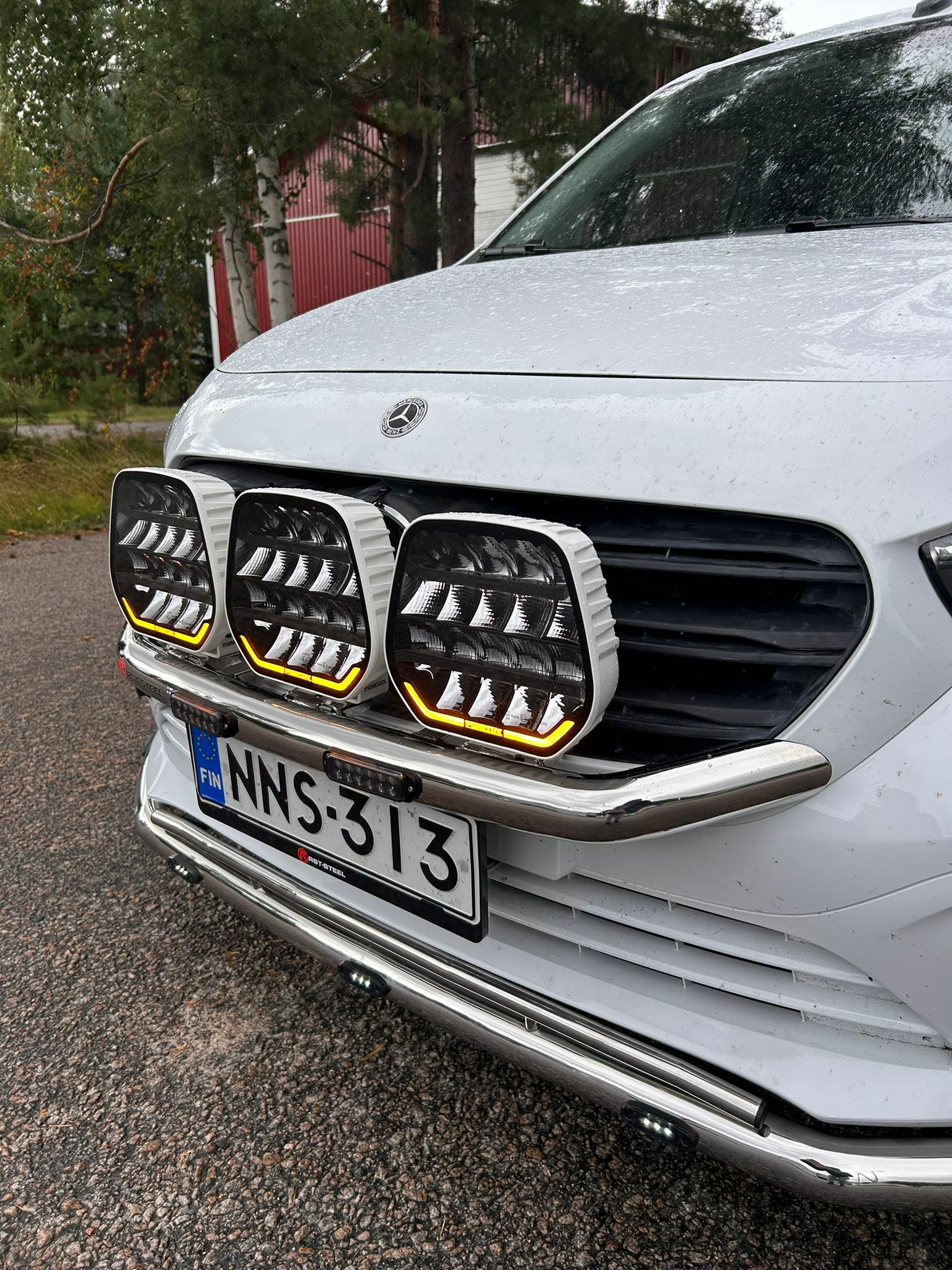
Durable auxiliary lights resist road salt and dirt by using corrosion-resistant materials such as anodized aluminum and high-quality seals. High-quality lights are designed to withstand Finland’s demanding winter conditions, while low-quality ones can be damaged quickly. The choice of materials, manufacturing quality, and proper maintenance determine the service life and reliability of auxiliary lights.
Why is resistance to road salt and dirt important for auxiliary lights?
The durability of auxiliary lights is a critical safety factor, as damaged lights can fail precisely when they are needed most. Road salt causes corrosion in metal components and can penetrate poorly sealed lights, leading to malfunctions or complete failure.
Finland’s winter conditions are particularly challenging for vehicle equipment. The combination of road salt and dirt forms an aggressive mixture that rapidly corrodes poor-quality materials. When auxiliary lights fail in darkness or bad weather, the safety of the driver and other road users is significantly compromised.
Low-quality auxiliary lights can gradually lose their lighting performance, which is dangerous because the change is not immediately noticeable. In the worst case, the light may go out completely or start flickering, distracting other drivers and reducing visibility.
How do different auxiliary light materials withstand Finnish winter conditions?
Anodized aluminum is the best material for light housings because it resists road salt exceptionally well and conducts heat efficiently. A high-quality aluminum body maintains its shape and performance even after years of use.
Plastic auxiliary lights are more affordable but become brittle in cold temperatures and can crack from impacts. Road salt and UV radiation weaken plastic over time, leading to yellowing and reduced light transmission.
A glass lens offers the best light transmission but is vulnerable to impact damage. Polycarbonate plastic is a good compromise—it resists impacts better than glass while maintaining clarity better than standard plastics.
The quality of the seals is crucial. High-quality rubber seals and O-rings prevent moisture and dirt from entering the lights, whereas poor seals can let water through already during the first winter.
What is the difference in durability between price categories of auxiliary lights?
Lazer Lamps represents the top tier in durability, using anodized aluminum housings and premium-quality seals. These lights last for years in demanding use without significant deterioration in light output or appearance.
Purelux and OZZ fall into the mid-range category, offering a good balance between price and durability. These brands use high-quality materials but may not last as long under extreme conditions as the most expensive models.
Optibeam provides a cost-effective option for consumers seeking basic lighting performance. Although the materials are simpler, with proper maintenance these lights perform well in normal use.
The advantage of more expensive models becomes evident especially in long-term use. They maintain their lighting performance and appearance better, making them a worthwhile investment over time despite the higher initial cost.
How can you extend the lifespan of your auxiliary lights in winter conditions?
Regular cleaning is the most important single action to improve the durability of auxiliary lights. Rinse the lights with warm water weekly during winter to remove salt and dirt buildup.
Use a mild soap solution and a soft brush for cleaning. Avoid strong chemicals or abrasive tools that could damage the seals or scratch the lens. Dry the lights carefully after cleaning.
Check the condition of the seals regularly, especially after winter. If you notice cracks or hardening, replace them immediately before moisture enters the lights.
Consult a professional if you notice moisture buildup inside the lights, reduced lighting performance, or visible damage. RST Steel offers expert maintenance services at its three locations, ensuring optimal performance and safety of your auxiliary lights.
Find the right auxiliary lights for your needs
Utforsk vårt utvalg og kontakt oss to find the auxiliary lights that best suit your needs.


 Norwegian
  English
  Swedish