
Which Lazer auxiliary light is best for general use?
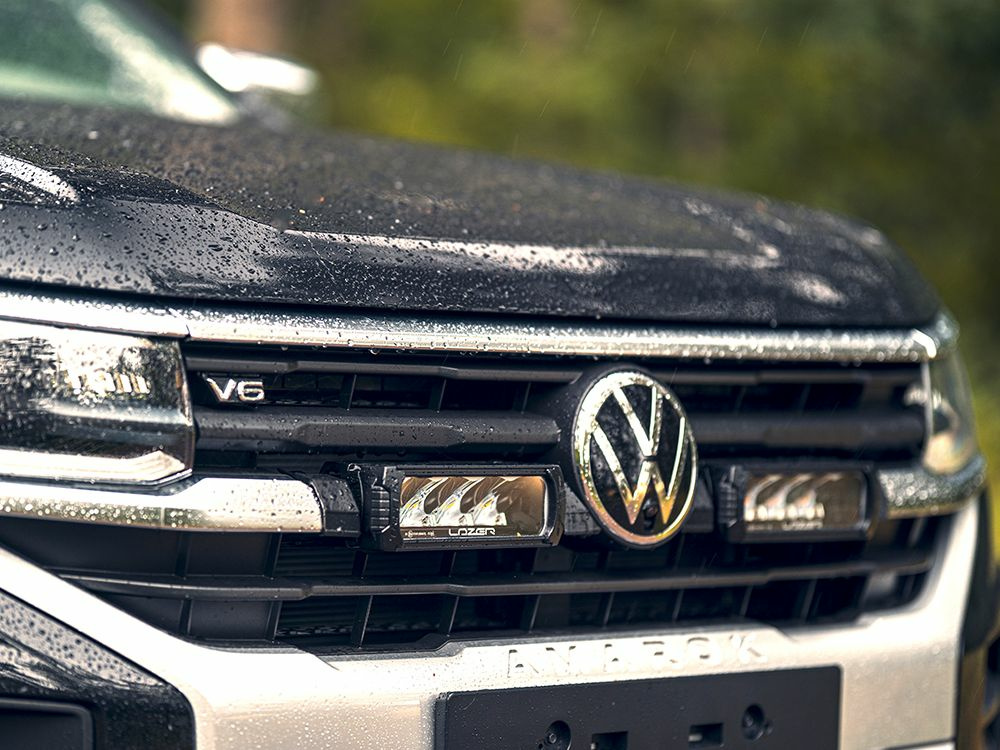
For general-use applications, the Lazer Linear series offers the best balance of performance, versatility, and road compliance. These ECE-approved LED auxiliary lights deliver exceptional beam quality with their precise combination pattern, making them ideal for both daily driving and occasional off-road adventures. Their low-profile design and comprehensive warranty coverage make them the top choice for professional drivers seeking reliable auxiliary lighting solutions.
What makes Lazer auxiliary lights different from other brands?
Lazer auxiliary lights stand apart through their British manufacturing excellence and exceptional warranty coverage. The brand offers 5-year warranties on auxiliary lights and 2-year coverage on work lights, demonstrating a level of confidence in their build quality that few competitors match.
The technical innovations begin with carefully selected components and precise engineering. Each Lazer light incorporates advanced LED technology with optimised reflector systems that maximise light output whilst maintaining beam precision. The brand’s commitment to quality extends to its robust construction methods, using materials that withstand harsh operating conditions without compromising performance.
Professional lighting applications demand reliability, and Lazer delivers through rigorous testing protocols. Their lights undergo extensive validation to ensure consistent performance across temperature extremes, vibration, and moisture exposure. This attention to detail results in auxiliary lighting solutions that maintain their effectiveness throughout an extended service life.
Which Lazer light series offers the best balance for everyday driving?
Den Linear series provides the optimal combination of road compliance, performance, and versatility for general use. These ECE-approved lights feature a precisely engineered combination beam pattern with bright central spot illumination and wide-angle flood coverage for comprehensive road lighting.
Linear lights excel in roof-mounted applications, where their low-profile design minimises wind resistance whilst maximising illumination effectiveness. The series offers both standard and Elite variants, with Elite models providing double the light output for enhanced visibility in challenging conditions.
The Sentinel series presents another excellent option for general use, particularly for drivers who prefer traditional round light designs. Available in 7″ and 9″ sizes, Sentinel lights feature ECE approval and optional parking light functions in white or amber. Their versatile mounting options suit various vehicle types, from passenger cars to commercial vehicles.
For drivers prioritising compact installation, the Glide series combines modern aesthetics with practical performance. These lights feature single-row LED arrays with distinctive parking light functionality, making them suitable for front-mounted applications where space constraints matter.
How do you choose between spot and combination beam patterns?
Combination beam patterns offer superior versatility for general-use applications, providing both distance illumination and peripheral coverage in a single unit. This configuration features a bright central spot beam surrounded by flood lighting that illuminates road edges and nearby terrain.
Spot beam configurations excel in specific applications requiring maximum throw distance, such as high-speed motorway driving or open-terrain navigation. These focused beams concentrate light energy into a narrow pattern, achieving greater illumination distances but with limited peripheral coverage.
The Linear series utilises an advanced combination pattern that balances these requirements effectively. The central spot portion provides excellent distance visibility for early hazard detection, whilst the surrounding flood pattern ensures adequate illumination of road markings, verges, and potential obstacles at closer range.
Professional drivers benefit most from combination patterns during mixed driving conditions. Urban environments require good peripheral visibility for pedestrian and cyclist detection, whilst rural roads demand distance illumination for wildlife and road hazard identification. Combination beams address both requirements without the need for multiple light units.
What installation considerations matter most for general-use applications?
ECE compliance represents the primary consideration for road-legal auxiliary lighting installations. Lazer’s ECE-approved models, including the Linear and Sentinel series, meet European standards for road use, ensuring legal operation during normal driving conditions.
Mounting position significantly affects performance and compliance. Roof mounting typically provides optimal light distribution without interfering with standard headlight patterns, making it the preferred choice for Linear series lights. Front bumper mounting works well for smaller units like the Glide series but requires careful positioning to avoid glare issues.
Professional installation ensures proper wiring integration and optimal positioning. Qualified technicians understand vehicle-specific mounting requirements and can integrate auxiliary lights with existing electrical systems safely. They also ensure compliance with local regulations regarding light positioning and usage.
Vehicle compatibility varies across different Lazer series. The Linear range suits most vehicle types due to its versatile mounting options, whilst Sentinel lights adapt well to vehicles where traditional round light aesthetics are preferred. Consider your vehicle’s front-end design and available mounting points when selecting the appropriate series.
Choosing the right Lazer auxiliary lights requires balancing performance needs with practical considerations. The Linear series consistently delivers the best general-use performance through its combination of road compliance, versatile beam pattern, and proven reliability. For professional guidance on selecting and installing the optimal Lazer auxiliary lighting solution for your specific vehicle and requirements, consult experienced lighting specialists who understand both the technical capabilities and regulatory requirements of professional auxiliary lighting systems.
Related Posts
What are Roof Bars on a truck?
Discover what truck roof bars do, which types suit your cab, and why proper installation matters for safety.
How are Roof Bars installed?
A complete guide to truck roof bar installation — covering mounting, wiring, and safety for professional drivers.
What is the difference between a Roof Bar and a Work Light Bar?
Roof bar or work light bar? Know the key differences to choose the right fit for your truck.
How many lights can be mounted on a Roof Bar?
Most truck roof bars hold 2–8 lights — but legal limits, cab width, and wiring matter more than you’d think.
What are Front Bars?
Discover how stainless steel front bars simplify auxiliary light installation and boost truck visibility on demanding roads.
Where are Front Bars mounted on a truck?
Truck front bars mount on the grille frame — not the chassis. Here’s what they do and why it matters.
How do Front Bars affect aerodynamics?
Discover how front bars disrupt truck airflow, raise fuel costs, and how smart design choices minimize the aerodynamic trade-off.
Why are Bird Nets necessary on trucks?
One cracked windshield costs more than a bird net — here’s why professional drivers install them first.
Are Front Bars approved for road use?
Find out if front bars are road-legal for trucks and what EU and Finnish compliance rules you must know.
How are Bird Nets installed on a truck?
Protect your windshield with a properly installed stainless steel bird net — here’s exactly how it’s done.
Which Bird Nets are the most durable?
Stainless steel bird nets outlast the rest — here’s how to choose the most durable option for your truck.
Can Bird Nets be used in all weather conditions?
Stainless steel truck bird nets handle every season — here’s what makes them truly all-weather reliable.
How can the Cabin Inside of a truck be improved?
Discover practical truck cabin upgrades that improve driver comfort, reduce fatigue, and boost daily performance.
What are Sun Visors on a truck?
Discover how exterior truck sun visors reduce dangerous glare and improve driver safety on long highway runs.
Which Roof Bars withstand harsh weather conditions best?
Grade 316 stainless steel roof bars outperform the rest in harsh Nordic conditions — here’s exactly why.
How do Sun Visors improve driving comfort?
Discover how a truck sun visor reduces glare, prevents driver fatigue, and improves road safety on every long haul.
Which Sun Visors are best suited for professional use?
Not all sun visors are built for professional demands — here’s what separates purpose-built truck visors from the rest.
Can Sun Visors be adjusted to different positions?
Yes — truck sun visors adjust in multiple ways. Here’s what every professional driver should know.
Which Cabin Outside accessories should be installed on a truck?
Protect your truck and improve safety with the right cabin exterior accessories for professional drivers.
How does Cabin Inside affect driver well-being?
Poor cabin ergonomics silently drains driver alertness — discover which interior accessories make the biggest difference on long hauls.
Which seat covers are suitable for professional use?
Not all seat covers handle daily cab life. Find out which materials and features truly meet professional standards.
Which Work Light Bars are the most efficient on a truck?
Not all truck light bars are equal — discover which specs, beam patterns, and ratings truly deliver on the job.
Can Work Light Bars be used on public roads?
Work light bars are illegal on EU public roads — here’s what every professional truck driver must know.
Can Front Spoiler Bars be repaired after damage?
Damaged front spoiler bar? Discover repair methods, assessment tips, and when replacement beats repair costs.
Which Front Spoiler Bars withstand impacts best?
Not all front spoiler bars survive real-world punishment — material grade, weld quality, and bracket engineering make all the difference.
How do Front Spoiler Bars affect a truck’s air resistance?
Front spoiler bars do more than manage airflow — discover their real aerodynamic impact and practical benefits for truck drivers.
When should Wheel Covers be replaced?
Damaged truck wheel covers risk costly rim repairs and road safety hazards — here’s exactly when to replace them.
How should Wheel Covers be cleaned effectively?
Brake dust, road salt, wrong cleaner — discover the step-by-step wheel cover cleaning routine that protects your rims long-term.
Which lights work best on a Roof Bar?
LED vs halogen, beam patterns, and key specs — find the best roof bar lights for professional trucks.
Which Front Bars fit different truck models?
Discover which stainless steel front bars fit major European truck models — and how to choose the right one.
How should Cabin Inside cleaning be carried out professionally?
Master professional truck cabin cleaning with the right tools, techniques, and schedules every driver needs.
How can Cabin Inside lighting be improved?
Discover how the right truck cabin lighting reduces driver fatigue and transforms your cab into a productive workspace.
Which Front Spoiler Bars are suitable for city driving?
Protect your truck’s front bumper in city traffic — discover which front spoiler bars handle urban hazards best.
What are Front Spoiler Bars on a truck?
Discover how front spoiler bars shield truck bumpers from real-world hazards — reducing costly downtime and repair bills.
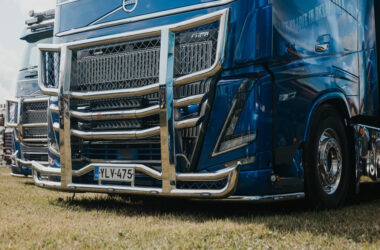
Is a Bull Bar mandatory on a truck?
Bull bars aren’t mandatory on trucks — but here’s why professional drivers treat them as essential.


 Norwegian
  English
  Swedish