
Which Front Spoiler Bars withstand impacts best?
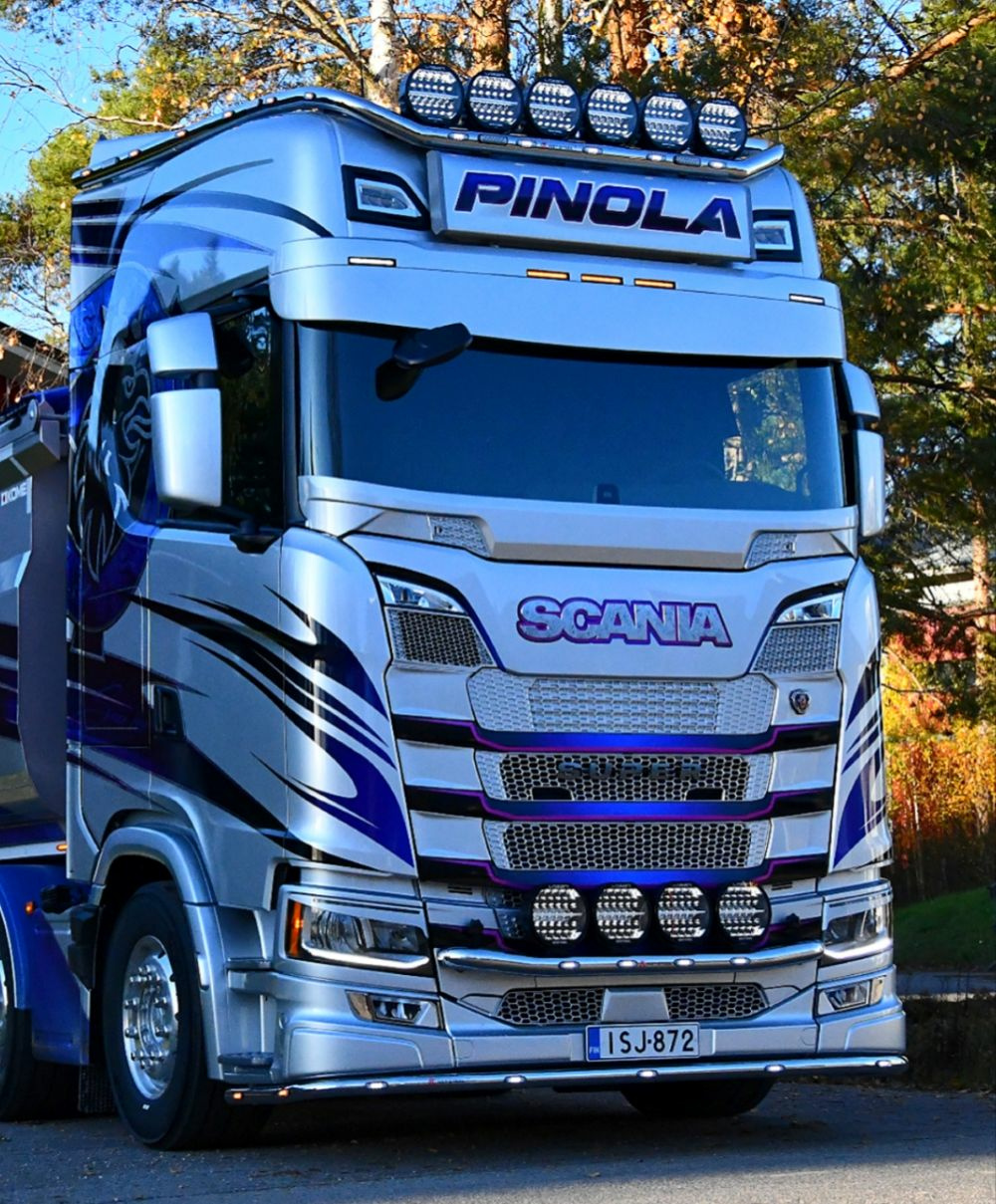
The front spoiler bars that withstand impacts best are those made from high-grade stainless steel, with robust weld construction, adequate wall thickness, and a vehicle-specific mounting system that distributes force across the chassis rather than concentrating it at a single point. Material quality, bracket engineering, and proper fitment together determine real-world durability. The following questions cover everything a professional driver needs to evaluate before choosing one.
What is a front spoiler bar and what kind of impacts does it actually protect against?
A front spoiler bar is a protective accessory fitted along the lower front edge of a truck’s bumper. Unlike a bull bar, which is designed to absorb significant collision forces and protect the entire front end, a front spoiler bar for trucks specifically shields the lower bumper section from the everyday hazards that professional drivers encounter constantly — kerbs, speed bumps, compacted snowdrifts, and road debris.
These low-level impacts are far more common than outright collisions, yet they cause a disproportionate amount of damage. A truck bumper struck repeatedly against kerb edges during loading bay manoeuvres, or dragged across a frozen snowbank on a rural delivery route, will crack, deform, and eventually require expensive replacement. Truck front bumper protection at this level is not about dramatic crash scenarios — it is about reducing the cumulative wear that quietly drives up maintenance costs over a vehicle’s working life.
What materials and construction standards make a front spoiler bar genuinely impact-resistant?
A genuinely impact-resistant spoiler bar starts with the right grade of stainless steel. AISI 304 and AISI 316 are the grades most commonly used in quality professional truck equipment. AISI 316 offers superior corrosion resistance, which matters considerably in Nordic operating conditions where road salt accelerates surface degradation. Wall thickness is equally critical — tubes with a minimum of 2 mm wall thickness resist deformation under repeated low-speed contact far better than thinner alternatives.
Weld quality is where many lower-cost products fail. Continuous MIG or TIG welds along all stress-bearing joints prevent the micro-cracking that propagates under repeated impact loading. Surface finishing — whether polished, brushed, or powder-coated — affects not just appearance but corrosion resistance at weld points, where the base material is most vulnerable. A stainless steel spoiler bar with poor weld finishing will corrode from the joint outward, compromising structural integrity long before visible damage appears.
How does the mounting system affect a front spoiler bar’s ability to absorb and distribute impact forces?
The mounting system is arguably more important than the bar itself. A heavy-duty front spoiler bar mounted with undersized brackets or too few fixing points will transfer impact energy directly to the bumper skin and, in worse cases, to the chassis mounting points behind it. This can cause more damage than no bar at all, because the bar adds mass and leverage to each impact rather than absorbing it.
Proper bracket design spreads load across multiple fixing points simultaneously. Brackets should be manufactured from compatible steel grades to avoid galvanic corrosion where dissimilar metals contact each other. Torque specifications matter too — over-tightened fixings stress the bumper mounting points, while under-tightened ones allow the bar to shift on impact, creating unpredictable force vectors. Vehicle-specific bracket kits, designed around the exact geometry of a particular truck model, consistently outperform universal solutions because the load paths are engineered rather than approximated.
What should professional drivers look for when comparing front spoiler bars for durability?
When comparing the best front spoiler bar options, start by checking whether the product specifies its steel grade. A manufacturer confident in their materials will mark the grade clearly. Inspect weld quality — continuous welds with no visible porosity or gaps indicate proper fabrication. Coating or polish consistency across the entire surface, including weld zones, signals attention to corrosion protection.
- Vehicle-specific fitment over universal designs wherever possible
- Bracket material compatibility with your truck’s existing metalwork
- Wall thickness of at least 2 mm on all load-bearing tubes
- Continuous welds at all structural joints, not spot welds
- Clear steel grade markings from the manufacturer
Universal bars may fit a range of models, but they rarely optimise load distribution for any single one. If your routes involve regular winter driving, loading dock manoeuvres, or unpaved roads, a bar engineered specifically for your truck model is the more cost-effective long-term choice.
At RST-Steel, we manufacture front spoiler bars from high-quality stainless steel, built specifically for the demands of professional drivers in Nordic conditions. If you want equipment that genuinely protects your truck rather than just decorating it, get in touch with our team to find the right fit for your vehicle.


 Norwegian
  English
  Swedish