
Which Front Bars fit different truck models?
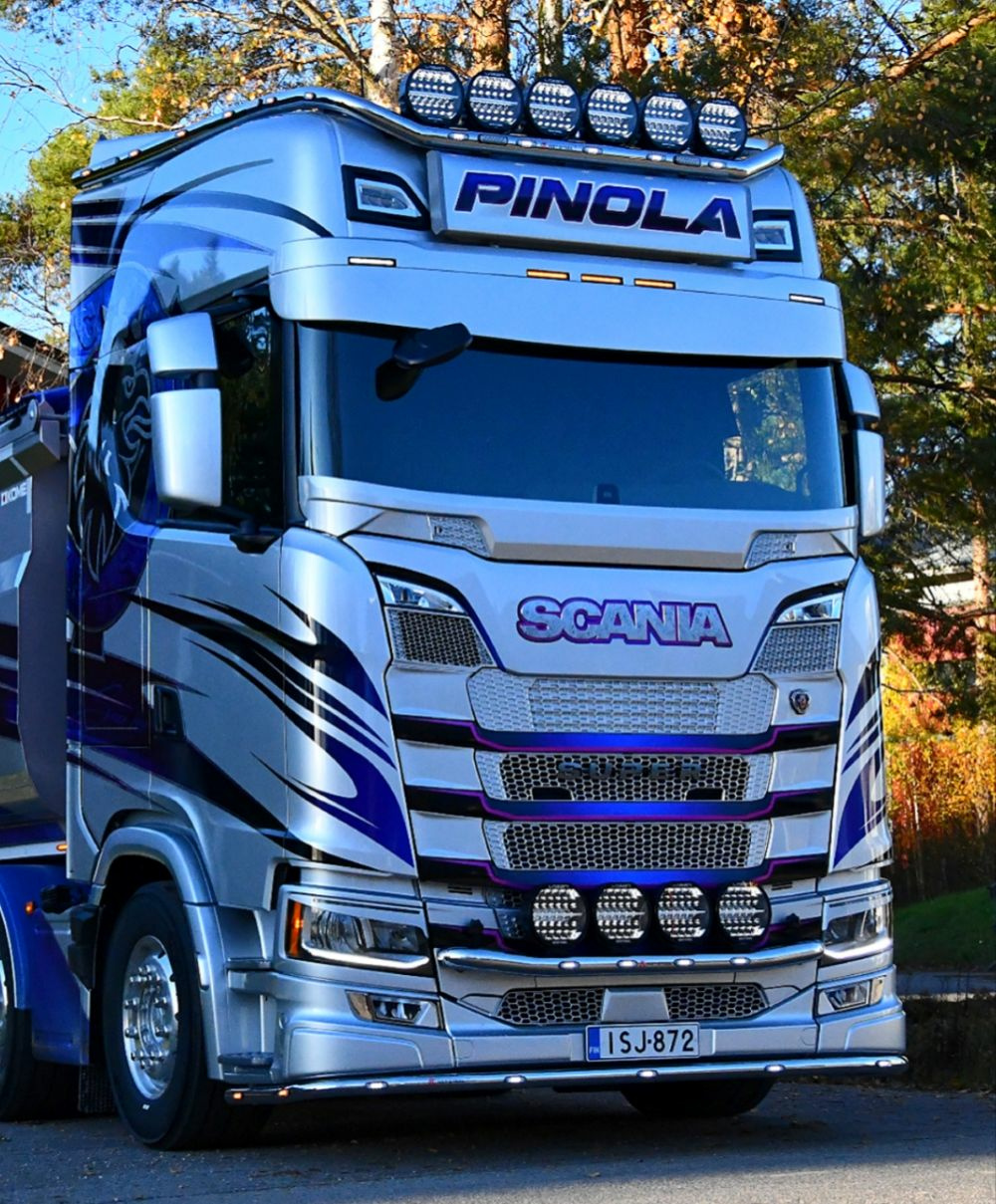
Front bars for trucks are stainless steel, grille-mounted accessories designed primarily to provide a solid, adjustable mounting platform for auxiliary lights. They fit directly to the front bumper area of the cab and are available for most major European truck models. This guide covers what a truck front bar actually is, which models it fits, how to choose the right specification, and what installation involves.
What exactly is a truck front bar and what does it do?
A truck front bar, also called a grille bar, is a stainless steel bar mounted across the front face of the truck’s bumper or lower grille area. Its primary function is to serve as a rigid, purpose-built mounting platform for auxiliary lights, giving drivers a clean and secure mounting point without modifying the cab structure. Unlike a bull bar, it does not wrap around the front to provide impact protection, and unlike a front spoiler bar, it sits higher on the cab rather than protecting the lower bumper edge from kerbs and snowdrifts.
For professional long-haul and heavy-duty drivers, the front bar is a preferred choice because it adds genuine functional value without excessive weight or bulk. It keeps the truck’s aerodynamic profile largely intact while dramatically improving forward visibility through properly positioned auxiliary lighting. The structural role is straightforward: the bar transfers light-mounting loads into the bumper frame, keeping auxiliary lights stable even on rough roads or at motorway speeds.
Which truck models are front bars commonly available for?
Front bars are manufactured for the most widely operated European truck platforms. Compatibility is cab-generation specific, so verifying the exact model year and cab variant before purchasing is essential. The main platforms covered include:
- Scania NextGen R, S, and G series (2017 onwards) — cab profile differences between the R/S highline and the G-cab mean fitment brackets differ, so confirm cab type.
- Volvo FH and FM series — the FH4 and FH5 generations have distinct bumper profiles, and FM variants require separate bar geometries due to the lower cab height.
- Mercedes-Benz Actros MP4 and MP5 — the MP5 (2019 onwards) revised the front bumper design significantly, so MP4-spec bars are not interchangeable.
- DAF XF and XG/XG+ — the XG generation introduced a wider cab and reshaped bumper, requiring dedicated front bar designs separate from XF fitments.
- MAN TGX — current-generation TGX bars are designed around the revised front end introduced with the 2020 model update.
- Iveco S-Way — as a newer platform, S-Way front bars are increasingly available and designed for the model’s distinctive front bumper geometry.
Always cross-reference the production year and cab specification when ordering, as even within the same model family, bumper profiles can vary between standard, low, and high-roof cab configurations.
How do you choose the right front bar specification for your truck and use case?
Choosing the correct stainless steel front bar comes down to four practical factors: cab and bumper profile match, light aperture configuration, material grade, and working environment. A bar that fits the cab geometry correctly will align flush with the bumper without gaps or stress on the mounting brackets. Pre-drilled light apertures should match the auxiliary lights you plan to mount, whether those are single wide-beam units, dual spot/flood combinations, or work light arrays.
For Nordic winter conditions, marine-grade stainless steel with a brushed or polished finish resists road salt corrosion far better than lower-grade alternatives. Construction site use demands heavier-gauge steel and robust bracket systems, since vibration and debris loading are higher. Long-haul highway drivers can prioritise a cleaner, lower-profile bar that minimises aerodynamic drag while still providing a solid light mounting point.
Bracket and fastener systems matter too. Quality bars use stainless or zinc-plated hardware with locking elements to prevent loosening from vibration. Confirm that the mounting system does not require permanent modification to the bumper, which is important for lease vehicles or trucks that need to be returned to standard specification.
How is a front bar installed on a truck, and what does the process involve?
Installing a truck front bar follows a logical sequence that, when done correctly, takes a few hours and requires basic workshop tools. The process breaks down as follows:
- Pre-installation checks — confirm bumper clearance, check that the bar does not obstruct cooling airflow or sensors, and plan the wiring route for any auxiliary lights before the bar is in place.
- Bracket alignment — position the mounting brackets against the bumper frame, ensuring even spacing and correct height. Misaligned brackets cause stress concentrations and can crack the bumper over time.
- Hardware torquing — fasten all bolts to the manufacturer’s specified torque values. Under-torqued fittings vibrate loose; over-torqued fittings can crack plastic bumper sections. A calibrated torque wrench is essential here.
- Wiring and light fitment — route auxiliary light cabling through grommeted holes to protect against chafing, connect to a fused circuit, and secure the lights to the bar’s pre-drilled apertures.
- Final inspection — check alignment, test lights, and verify that no wiring contacts moving parts or heat sources.
For drivers running tight schedules, a professional turnkey installation removes the risk of fitment errors and ensures the bar is road-legal and properly secured from day one. RST-Steel offers complete installation services across its Finnish branches, handling everything from bar selection through to final light alignment, so you can get back on the road without workshop time eating into your working day.
If you are ready to find the right front bar for your truck model, get in touch with us to discuss your cab specification and lighting requirements. We will make sure you get a bar that fits correctly, performs reliably, and looks the part for years of professional use.


 Swedish
  English
  Norwegian