
How do Front Bars affect aerodynamics?
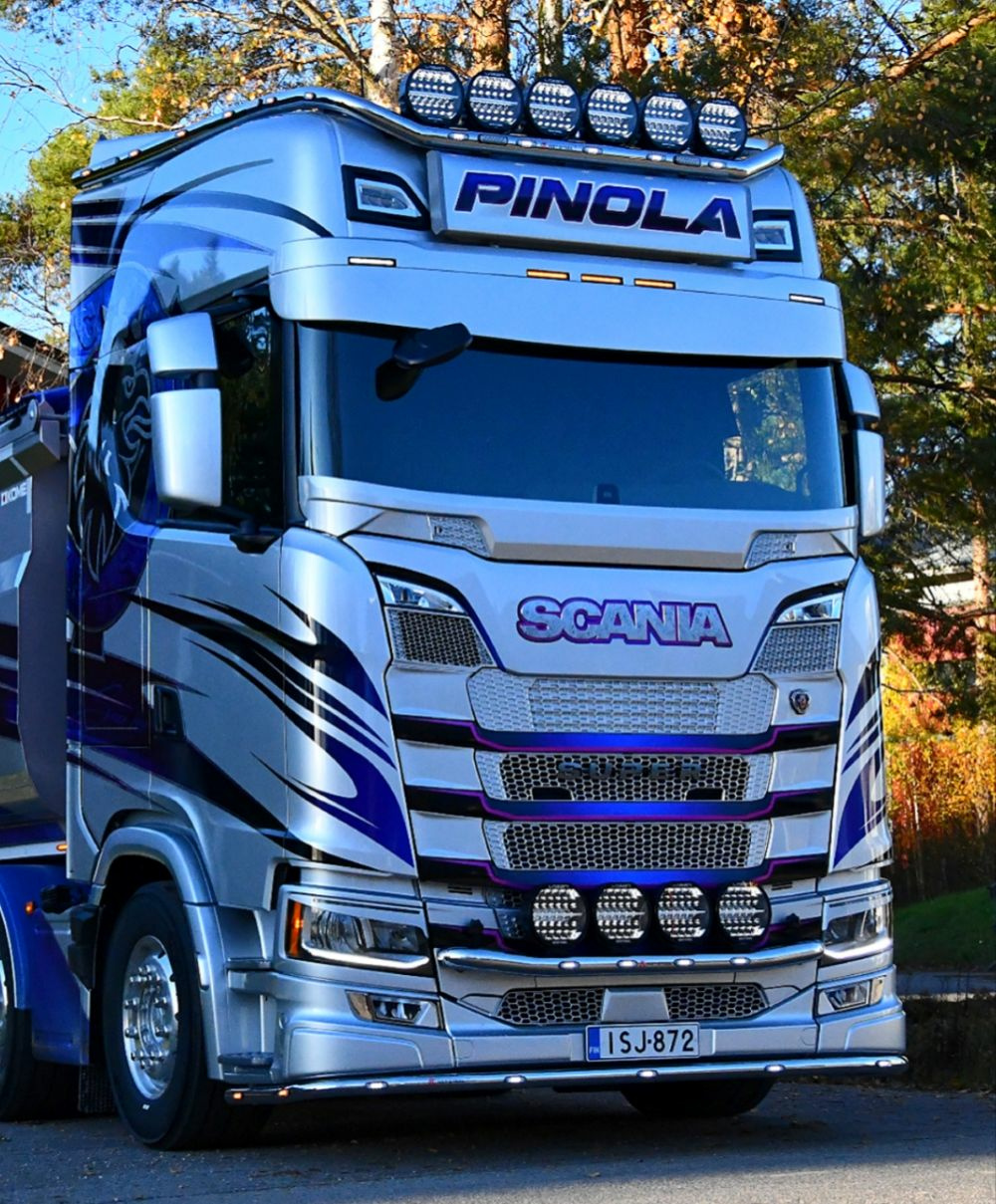
A front bar affects a truck’s aerodynamics by introducing additional drag at the vehicle’s leading edge, disrupting the smooth airflow that modern cab designs work hard to manage. The aerodynamic penalty varies depending on bar profile, mounting position, and operating speed. Understanding how front bar aerodynamics interact helps professional drivers make informed decisions that balance protection, function, and fuel efficiency.
What exactly is a front bar and what role does it play on a truck?
A front bar, also known as a grille bar or bull bar, is a structural accessory mounted across the front face of a truck’s cab, typically positioned in front of or flush with the grille area. Constructed from high-grade stainless steel, it serves three core purposes: protecting the front end from minor impacts, providing a solid mounting platform for auxiliary lights, and giving the vehicle a distinctive professional appearance.
The truck front bar is installed at the most aerodynamically sensitive point of the vehicle. Unlike passenger cars, trucks present a near-vertical frontal surface to oncoming air, making any additional protrusion at that face immediately relevant to airflow management. The bar’s role is primarily protective and functional, but its placement means aerodynamic considerations cannot be ignored.
How does a front bar physically alter airflow around a truck?
A front bar interrupts the laminar airflow at the truck’s leading edge by acting as a bluff-body obstacle. Oncoming air must split and travel around the bar’s cross-section, creating a high-pressure stagnation zone on the windward face and a low-pressure turbulent wake behind it. This pressure differential is the core mechanism behind the increases in form drag and pressure drag associated with vehicle front bar wind resistance.
Tubular round-profile bars behave differently from flat-profile designs. A circular cross-section allows air to partially curve around the tube, reducing the size of the turbulent wake. A flat-profile bar presents a broader stagnation surface and generates a larger, more disruptive wake zone. At highway speeds, these wake zones interact with the cab’s boundary layer, increasing overall aerodynamic drag beyond what the bar’s physical size alone would suggest.
What is the real-world impact of a front bar on fuel consumption and operating costs?
The practical impact on front bar fuel consumption is most significant during motorway and highway driving, where aerodynamic drag dominates resistance forces. Drag force scales with the square of velocity, meaning that at 90 km/h the drag penalty is roughly four times greater than at 45 km/h. For long-haul professional drivers covering high annual kilometres, even a modest increase in drag coefficient translates into a measurable rise in fuel expenditure over time.
That said, the fuel cost increase must be weighed against the protective value the bar delivers. A single avoided front-end repair, whether from a wildlife strike, a reversing incident in a yard, or road debris, can offset years of marginal fuel increases. For drivers operating in rural or Nordic conditions where animal collisions are a genuine risk, the trade-off between truck aerodynamics and accessories often favours installation without hesitation.
Can front bar design and placement minimise aerodynamic losses?
Yes, and the choices made during design and truck front bar installation have a direct bearing on the aerodynamic penalty. Smaller-diameter tubular profiles produce less form drag than wide flat bars. Positioning the bar lower, closer to the bumper line rather than spanning the full grille height, reduces its effective frontal area and keeps it within the natural airflow shadow of the bumper structure.
Surface finish also plays a role. Polished stainless steel reduces surface friction drag marginally compared to rougher finishes, though profile geometry has a far greater effect overall. Combining a front bar with a front spoiler bar is a practical way to partially recover aerodynamic losses, as the spoiler manages underbody airflow and reduces the pressure differential beneath the cab, partially compensating for the drag introduced higher up.
If you want to choose a front bar that balances protection, auxiliary light mounting, and minimal aerodynamic impact, our team at RST-Steel is happy to advise on the right profile and placement for your specific truck model. Kontakta oss to discuss your requirements or browse our range of Finnish-made stainless steel front bars designed for professional drivers.


 Swedish
  English
  Norwegian