
How Much Power Do Auxiliary Lights Draw from the Vehicle?
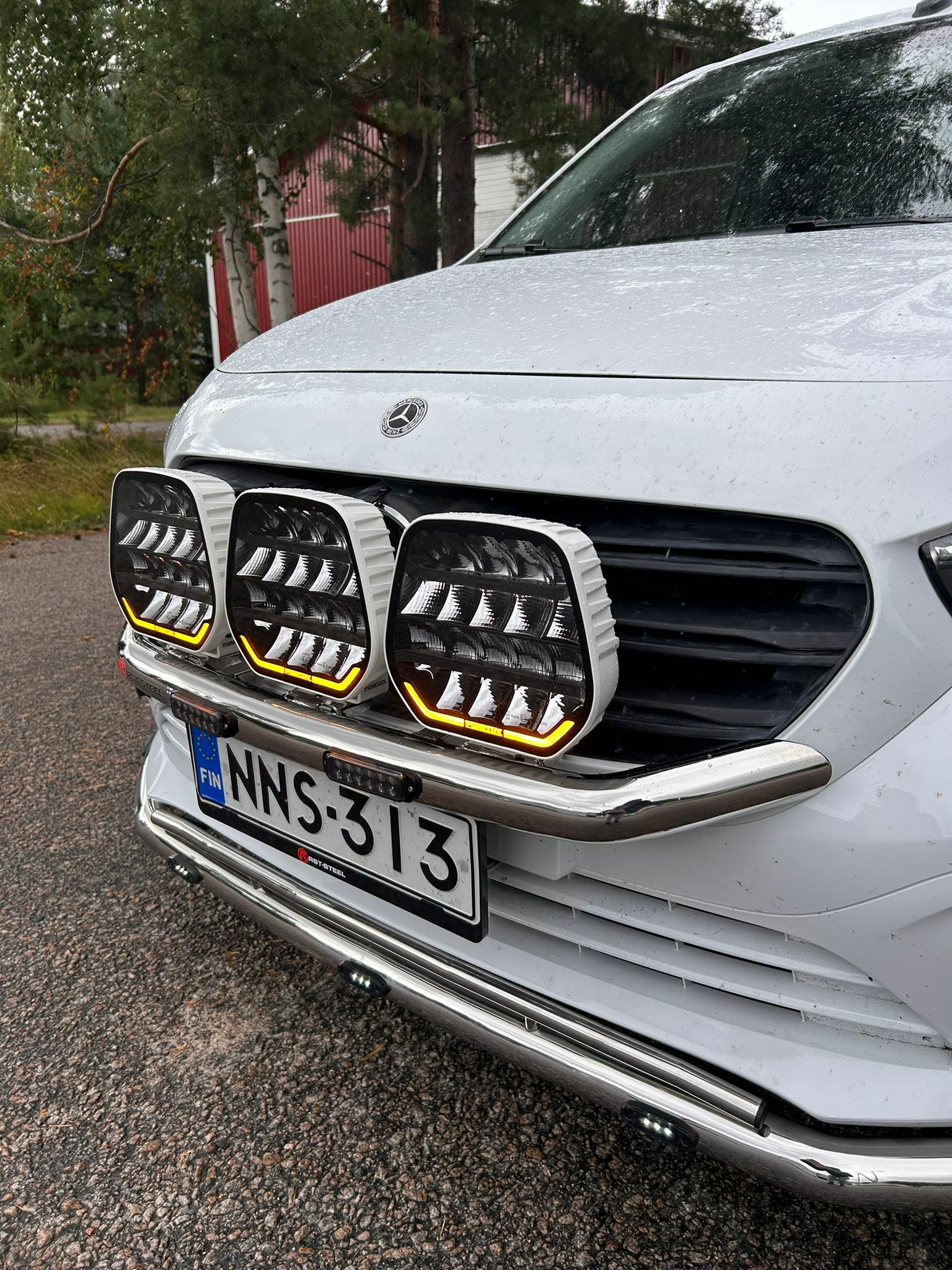
Auxiliary lights typically consume 10–50 watts per light depending on the type and size. LED auxiliary lights are significantly more energy-efficient, drawing only about a third of the current of halogen lights. Total consumption depends on the number of installed lights and whether they are used simultaneously.

Why knowing the power consumption of auxiliary lights is important

Understanding the power consumption of auxiliary lights is essential for the functionality of the vehicle’s electrical system and battery life. Installing lights that are too powerful or incorrectly sized can overload the charging system.

Auxiliary lights significantly improve visibility and driving safety, especially in the dark and under challenging weather conditions. However, their effect on the vehicle’s electrical system must be considered during installation.

The car’s alternator and battery are designed for a specific load. Extra consumption can cause battery problems or shorten the lifespan of electrical components significantly.

How much current do LED auxiliary lights consume compared to halogen?

LED auxiliary lights consume far less current than traditional halogen lights. A typical LED auxiliary light uses 10–30 watts, while a comparable halogen light consumes 35–55 watts.

For example, a 20W LED light draws about 1.7 amps in a 12-volt system, whereas a 55W halogen light draws nearly 5 amps. The difference is significant, especially when multiple lights are installed.

Light type Power (W) Current (A)
LED auxiliary 20W 1.7A
Halogen light 55W 4.6A
Lazer auxiliary 15–25W 1.3–2.1A

Lazer auxiliary lights represent top technology in energy efficiency, providing excellent light distribution with minimal current draw.

Do auxiliary lights affect the vehicle’s battery life?

Auxiliary lights affect the car battery during both operation and when the engine is off. Battery capacity must match the total consumption and usage time.

While the engine is running, the alternator supplies power to the auxiliary lights, but excessive load can strain the system. When the engine is off, lights draw power directly from the battery.

To protect the battery:

  • Choose energy-efficient LED lights

  • Install an automatic shut-off relay

  • Avoid prolonged use with the engine off

  • Regularly check battery condition

How to calculate total current draw of auxiliary lights

Total current draw is calculated by dividing the combined wattage of the lights by the vehicle voltage. Formula: Amps = Watts ÷ 12V.

For example, four 20W LED lights have a total of 80 watts, which corresponds to about 6.7 amps. This is a reasonable load for most vehicles.

To evaluate overall impact:

  1. Add up all the wattage of the lights

  2. Divide by 12 to get amperes

  3. Compare with the alternator’s capacity

  4. Ensure total consumption does not exceed 10–15% of alternator capacity

Key points on auxiliary light power consumption

Managing power consumption is crucial for the longevity of the vehicle’s electrical system. LED technology provides the best combination of power and efficiency.

For safe operation, professional assistance is recommended, especially when installing multiple lights or high-power work lights. Correct wiring and protection ensure system reliability.

The benefits of LED technology in power consumption make it a clear choice for new installations. Investing in high-quality LED lighting pays off through lower power use and longer service life.

Kontakta oss

Explore our selection and get in touch to find auxiliary lights that perfectly meet your needs.

Related Posts

Okategoriserade

How to choose the right auxiliary lights for an off-road vehicle?

Expert guide to selecting auxiliary lights: brightness, beam patterns, premium vs budget brands, and installation tips for safer off-road adventures.

Okategoriserade

Should you choose round or panel-style auxiliary lights?

Compare round vs panel auxiliary lights for your driving needs and vehicle requirements.

Okategoriserade

Can auxiliary lights be installed without drilling?

Discover proven no-drill mounting solutions for auxiliary lights that protect your vehicle while ensuring secure installation.

Okategoriserade

Why is the Lazer Linear the best choice for roof-mounted auxiliary lights?

Discover why Lazer Linear auxiliary lights outperform competitors with superior LED technology and robust construction for professional vehicles.

Okategoriserade

Linear series beam pattern – what advantages does it offer for highway driving?

Discover how linear series beam patterns reduce eye strain and improve highway visibility for professional drivers.

Okategoriserade

Why is the Triple-R a popular Lazer model for trucks?

Discover why Triple-R leads Lazer’s truck lighting with superior durability, beam patterns, and professional-grade performance for demanding work conditions.

Okategoriserade

Is the Lazer Sentinel the best choice for SUVs?

Expert comparison of Lazer Sentinel SUV auxiliary lights reveals surprising value alternatives across all budgets.

Okategoriserade

Why is the ST Evolution the best auxiliary light choice for newer vehicles?

Expert guide reveals why ST Evolution leads auxiliary lighting for modern vehicles with superior performance.

Okategoriserade

Is the Lazer T-series a good choice for forestry and off-road use?

Discover why Lazer T-series lights excel in forestry applications with superior durability and beam patterns.

Okategoriserade

Why is the Lazer light beam more even than other brands?

Discover how Laser’s advanced optical engineering eliminates hot spots and creates superior beam uniformity for professional drivers.

Okategoriserade

How do auxiliary lights behave in fog or rain?

Discover how fog scatters light differently than rain, why amber beats white light in weather.

Okategoriserade

How does an auxiliary light help when driving in the dark?

Auxiliary lights extend visibility 200-400 metres beyond standard headlights, giving drivers crucial extra seconds to react to hazards during night driving.

Okategoriserade

Why do auxiliary lights illuminate differently from the vehicle’s main high beams?

Discover why auxiliary lights outperform high beams with specialized optical design and advanced LED technology for superior visibility.

Okategoriserade

Which auxiliary lights are best suited for vans?

Expert comparison of van auxiliary lights from budget to premium brands with installation guidance.

Okategoriserade

Which auxiliary lights are best for long-distance driving?

LED spotlights and combination beam systems extend visibility 500+ metres for safer long-distance night driving adventures.

Okategoriserade

Which auxiliary lights withstand cold and freezing temperatures best?

LED auxiliary lights with IP67+ ratings survive extreme cold best, maintaining performance down to -40°C.

Okategoriserade

How many lumens should auxiliary lights provide?

Discover the ideal lumen range for auxiliary lights: 1,000-6,000 for most drivers, up to 10,000+ for professionals.

Okategoriserade

How to choose the right size of auxiliary light for your vehicle?

Learn proper auxiliary light sizing for optimal vehicle performance and legal compliance.

Okategoriserade

Can auxiliary lights be installed DIY, or should a professional do it?

Learn if DIY auxiliary light installation is safe or requires professional expertise for optimal performance.

Okategoriserade

When is a bull bar necessary?

Discover when bull bars become essential protection for off-road driving, wildlife areas, and commercial use scenarios.

Okategoriserade

How does a bull bar protect the driver and the vehicle in hazardous situations?

Bull bars absorb impact forces and distribute collision energy, protecting vehicle components and driver safety in hazardous situations.

Okategoriserade

How to choose the right bull bar for your vehicle?

Learn how to choose the perfect bull bar for your vehicle with expert tips on types, sizing, and installation considerations.

Okategoriserade

What is the role of a bull bar in professional driving?

Bull bars protect professional drivers from wildlife collisions and vehicle damage, ensuring operational continuity and business success.

Okategoriserade

What materials are used in bull bars?

Steel, aluminium, and composites each offer unique advantages. Discover which bull bar material suits your vehicle’s needs.

Okategoriserade

When should a bull bar be replaced with a new one?

Discover key warning signs and safety risks of damaged bull bars. Learn proper inspection techniques.

sv_SESwedish

Vagn ( 7 föremål )

Delsumma: 1836,65