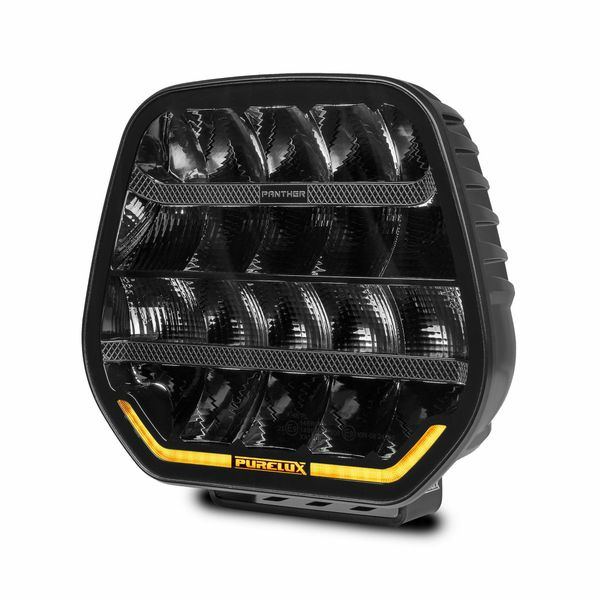
Are roof-mounted auxiliary lights legal? It depends. Legality varies with the vehicle type, the lighting function (road-approved driving light, work light or decorative light), the country you drive in and how the lights are installed and wired. Roof-mounted lights are not universally legal or illegal. In many countries they can be fitted to a roof, but only certain lights may be switched on while driving on public roads, and that decision rests with the local rules and the approval markings on the lamp itself.
This guide explains the legal, practical and technical considerations for roof-mounted driving lights on trucks, vans, SUVs and work machines. It separates what the law may require from what is simply good installation practice, so you can plan a setup that is safe and compliant where you drive.
Roof-mounted auxiliary lights – what the law says
Rules on auxiliary lights are set nationally, and in Europe they build on UNECE regulations and E-mark type approval. Because the details differ from country to country, no single answer applies everywhere. Always check the current rules of the country where the vehicle is registered and where you will drive, or ask the relevant vehicle authority or an inspection body.
Some principles are common in many jurisdictions. Lights must not dazzle other road users, and high-beam-type auxiliary lights are normally expected to be off when meeting oncoming traffic or following another vehicle closely. Lights that are not approved for road use are typically restricted to off-road areas, private land or work sites, and are often required to be covered or disconnected on public roads.
Beyond lighting rules, a significant modification may also affect vehicle registration or inspection, and it is wise to tell your insurer about the change. Whether either step is mandatory depends on your country and the scope of the modification.
For a Nordic perspective on how many lights may be fitted, see how many auxiliary lights can be installed on a vehicle in the Nordic countries. To understand approval markings, read how to ensure that an auxiliary light meets E-mark approval.
Road-approved driving lights, work lights and decorative lights
The type of light matters more than where it sits on the vehicle. Three broad categories are worth separating:
- Road-approved driving lights: Lights that carry the approval markings required for use on public roads in the relevant jurisdiction. Even approved lights are usually subject to rules on mounting position, aiming and when they may be switched on.
- Work lights: Wide-beam lights designed to illuminate a work area, such as a loading zone or a field. They are generally intended for use when the vehicle is stationary or off the public road, and may not be allowed to operate while driving on public roads.
- Decorative lights: Lights intended for appearance rather than illumination. These are commonly not permitted to be lit on public roads.
Do not assume a light is road-legal because it is sold as an “auxiliary light” or has a high output. Check the markings on the lamp and the documentation supplied with it. If the light does not show the approvals your country requires for road use, treat it as an off-road or work light.
Which auxiliary lights can be mounted on the car roof?
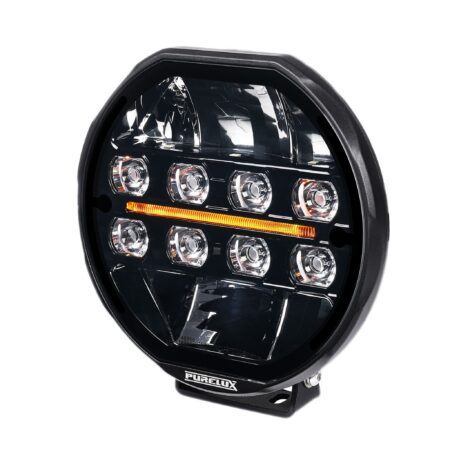
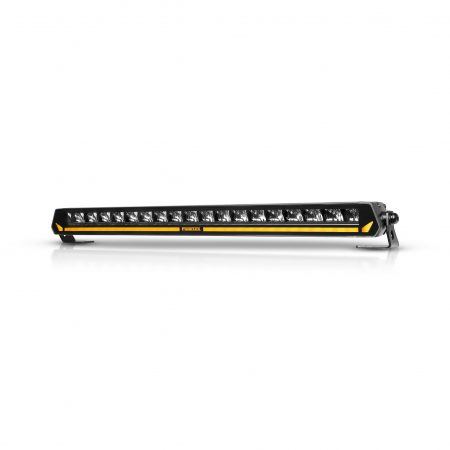
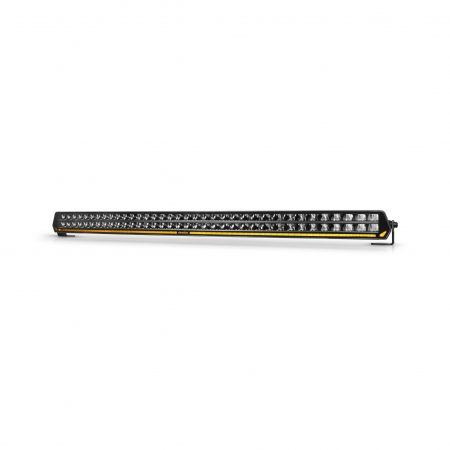
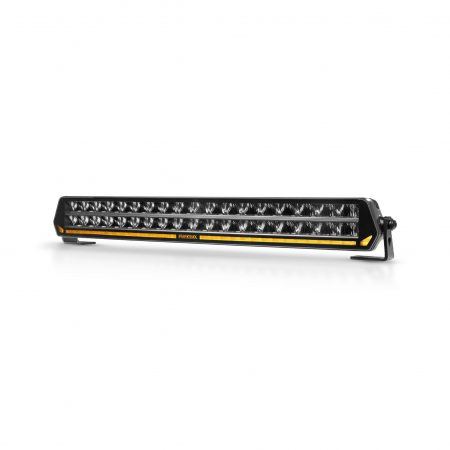
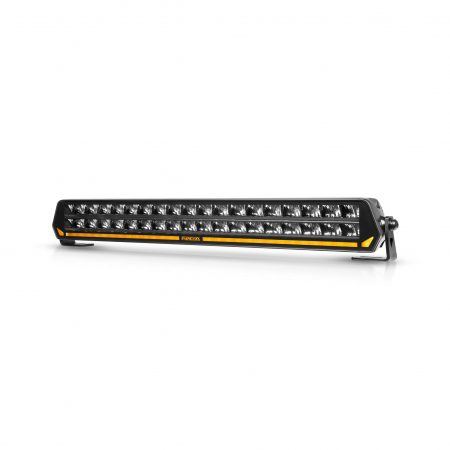
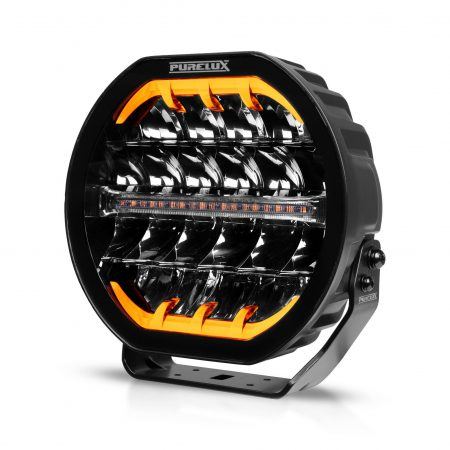
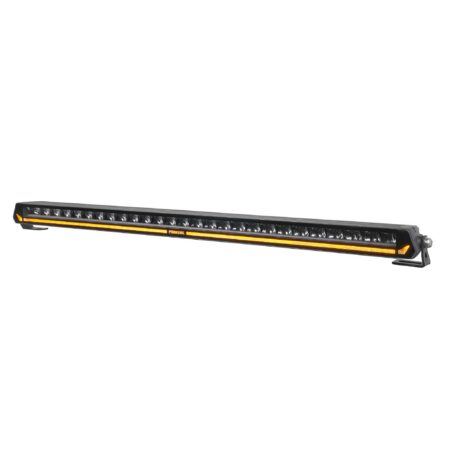
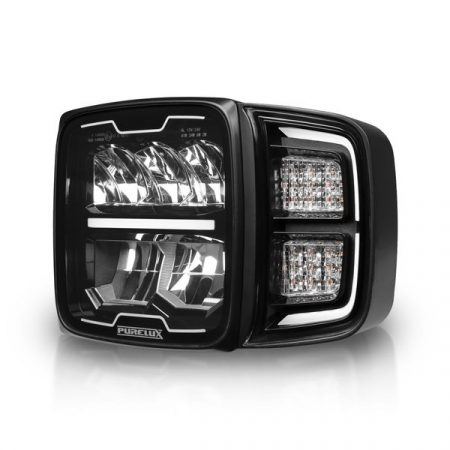
Physically, work lights, driving lights and LED light bars or panels can all be mounted on a roof, provided the roof and the mount can carry them. Whether they may be used on a public road is a separate legal question that depends on their approval status and local rules.
Work lights usually give a wide, flood-style light distribution. Driving lights focus the light further ahead in a narrower pattern. LED light bars and panels can combine both characteristics, depending on the optics. Choose the light type according to the task and the legal status you need, not just the look or output.
Lazer Lamps is one of the premium auxiliary light brands available for roof installations, built for demanding Nordic conditions. You can browse the range in the Lazer Lamps category or the wider auxiliary lights category, and confirm the approval status of any specific model before assuming it suits road use.
Roof mounting vs grille and bull bar mounting
Each mounting position has its own strengths and trade-offs. The roof is not automatically better or worse than the front of the vehicle. It depends on the vehicle, the use and the local rules.
A roof position places the light high above the hood and the driver’s line of sight to the road surface. This can give a long, clear view over the hood and reduce the amount of light that bounces back from the vehicle’s own bodywork. The trade-offs are wind load, extra height, a more demanding mounting structure and, depending on the light and beam, a greater risk of reflections in the windshield.
Grille and bull bar positions sit lower and further forward. They are often simpler to wire and mount, and the light stays closer to the front of the vehicle, which may be a requirement or a preference in some regions. A bull bar can also provide a sturdy mounting point. For details, see mounting auxiliary lights on a bull bar: what to check.
Roof vs grille vs bull bar: comparison
| Factor | Roof | Grille | Bull bar |
|---|---|---|---|
| Light height | High, above the hood line | Low to medium | Low to medium |
| Reflection off the hood | Generally lower | Can be higher | Can be higher |
| Windshield reflection risk | Needs checking, depends on beam and position | Generally lower | Generally lower |
| Mounting strength | Depends on roof structure, may need reinforcement or a rated bracket | Depends on the grille and bracket design | Usually strong, if the bar is designed for lights |
| Wind load and vibration | Higher exposure | Lower | Lower |
| Vehicle height | Increases overall height | No change | No change |
| Wiring and sealing | Roof penetration or routing along the body needed | Short run to the engine bay | Short run to the engine bay |
| Legal considerations | Varies by country, light type and use | Varies by country, light type and use | Varies by country, light type and use |
The last row is deliberate: no mounting position is legal everywhere by default. Check your national rules before you buy or install.
Visibility, beam aiming and glare
A roof-mounted light is aimed from a higher point, so the beam pattern on the road differs from a lower mounting position. Aim the light so that the cut-off or main beam falls on the road ahead and does not shine into the eyes of oncoming drivers or drivers ahead of you. Even a light that is legal to use can become a hazard if it is poorly aimed.
Check for reflections in the windshield and on the hood. A light bar mounted too far back on the roof, or aimed too flat, can send light onto the glass or bodywork and create distracting glare for the driver. Test the setup at night on a quiet, safe surface before relying on it.
Consider roof clearance as well. The added height of the light and bracket matters for garages, car parks, ferries, tunnels, bridges and low branches. Measure the new total height and note it, especially on vans, trucks and tall SUVs.
Why roof location affects visibility in snow, fog and rain
In falling snow, fog or heavy rain, the light is scattered by the particles in the air. A light mounted close to the driver’s eye level tends to illuminate the particles directly in the line of sight, which produces a bright wall of glare. A light mounted higher up, such as on the roof, is further from the line of sight, which can reduce that effect for some beam patterns. Lower, forward positions can also help in fog, since they illuminate the road surface from below the densest layer of airborne scatter.
The result depends on the beam shape, color temperature, aiming and the conditions, so treat these as general tendencies rather than guarantees. Flood-pattern work lights are more likely to cause glare in snow and fog than focused driving beams. If you drive in winter conditions, test the setup in realistic weather before deciding on the final mounting position.
How to install a roof-mounted auxiliary light safely
Safe installation starts with choosing the correct mounting location. The roof, the roof rails or the rack must be strong enough to carry the weight of the light and the stresses from wind, vibration and braking. Follow the vehicle manufacturer’s roof load limits and the mounting guidance from the light and bracket supplier. If the roof is not designed for the load, use a mount or rack that is rated for it.
Plan the installation before drilling. Decide where the cable will run, how it will enter the vehicle and how every opening will be sealed. Any hole in the roof or body must be properly sealed and treated to prevent moisture ingress and corrosion.
At a high level, the electrical installation should be planned so that the light can be switched off easily, the circuit is protected and the wiring is secured and shielded from heat, abrasion and water. Take the vehicle’s electronics into account, including how the circuit is switched and whether the vehicle’s systems are sensitive to added loads. Detailed wiring is beyond the scope of this article, so see how to install auxiliary lights safely on a vehicle.
Vibration is a particular issue on the roof. Use appropriate fasteners, lock washers or thread-locking measures as recommended by the supplier, and re-check the tightness after the first drives.
Practical installation checklist
This checklist covers installation best practices. These are not necessarily legal requirements, so confirm legal obligations separately for your country.
- Confirm the legal status of the light (road-approved, work or decorative) and the rules for your vehicle type and country.
- Check the roof or rack load rating and the weight of the light and bracket.
- Measure the new total vehicle height and note it.
- Choose a mounting position that avoids windshield and hood reflections.
- Plan the cable route and entry point before drilling anything.
- Seal all holes and cable entries against water and treat exposed metal.
- Fit a switch within the driver’s reach and make sure the light can be turned off quickly.
- Protect and secure the wiring away from heat, sharp edges and moving parts.
- Aim the light on a level surface and check for glare to other road users.
- Re-check the fasteners after the first few drives and periodically afterward.
- Check whether registration, inspection or insurer notification is needed in your country.
Trucks, vans, SUVs and work machines
These vehicle groups are not legally or technically equivalent, so do not apply the same assumptions to all of them.
- Trucks: Heavy vehicles may be subject to stricter rules on lighting, vehicle height and modifications. Cab roofs and the load they carry vary considerably, so check the manufacturer’s guidance.
- Vans: Large flat roofs can take light bars, but height restrictions and roof load limits are important, and commercial vehicle rules may apply.
- SUVs: Roof rails and racks are common mounting options. Check rated loads and the effect on height and wind noise.
- Work machines: Tractors and other machines often have their own lighting rules and may use lights differently from road vehicles. Rules may depend on whether the machine is used on public roads.
The same light can be treated differently depending on the vehicle class, so check the rules that apply to your specific vehicle.
Country-specific rules
This article does not list country-by-country rules, because they change and a mistake could lead you to install something that is not permitted. Before installing, verify the current requirements with your national transport or vehicle authority, an inspection body or a qualified installer. If you drive across borders, check the rules of each country you will drive in.
Frequently asked questions
Are roof-mounted lights legal?
It depends on the vehicle type, the light’s approval and function, the country and the installation. In many places, mounting is allowed but use on public roads is restricted. Check your local rules.
Is a roof light bar legal on public roads?
Some light bars may be used on public roads if they carry the required approvals and meet mounting and usage rules. Many light bars are intended for off-road or work use only. Check the markings on the light and your national rules.
Can I install driving lights on my truck roof?
Often it is physically possible, but legal use depends on the light, the truck category and your country. Check the roof load limits and height rules, and verify what is allowed for your vehicle class.
Is a roof position better than a bumper or bull bar?
Not necessarily. A roof gives height and a long view over the hood but brings wind load, height and reflection considerations. Lower positions are simpler to wire and mount. The best choice depends on the vehicle and use.
Do roof lights cause glare in snow and fog?
They can, depending on beam pattern, aiming and conditions. A higher position may reduce glare for some beams, but wide flood beams can still cause problems. Test the setup in real conditions.
Do I need to tell my insurer or have the vehicle inspected?
This depends on your country and the extent of the modification. It is advisable to inform your insurer and to check with the relevant authority whether registration or inspection is needed.
Key considerations for roof-mounted auxiliary lights
Roof-mounted auxiliary lights are a matter of three things: the right light for the job, a mounting position that suits the vehicle and conditions, and a clear understanding of the local rules. Keep legal requirements and installation best practices separate, and never assume that a light or position is permitted without checking.
Professional installation helps ensure a secure mount, sealed openings and safe wiring. If you are unsure about the load capacity of your roof, the wiring or the rules, consult a professional installer.
Remember to check whether your insurer needs to be notified and whether any official approval or inspection is required. This helps keep the vehicle’s lighting both safe and compliant.
Next step: choose compatible lights and mounting accessories
To find auxiliary lights and mounting accessories that match your vehicle and use case, browse the auxiliary lights range or request a quote and tell us your vehicle, the intended use and your country, so we can help you check compatibility before you buy.