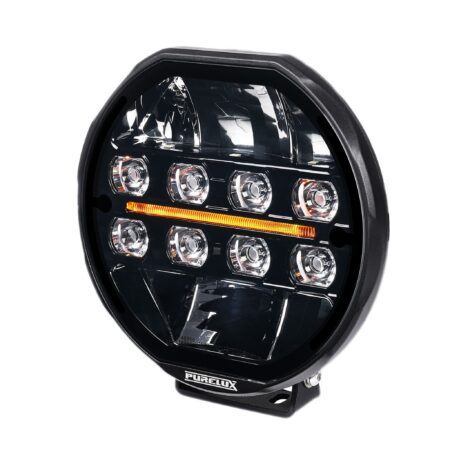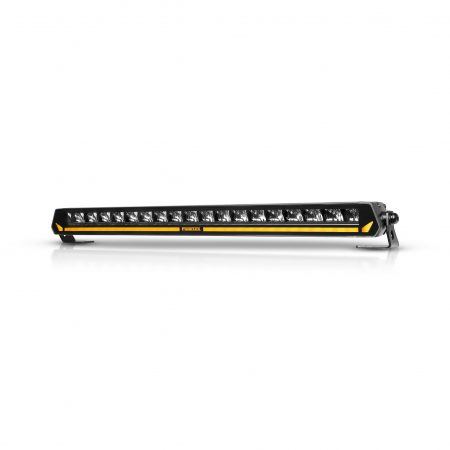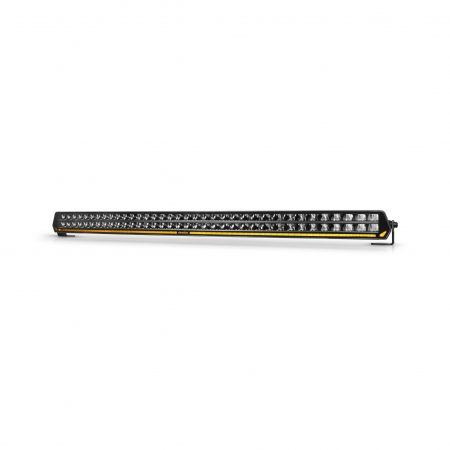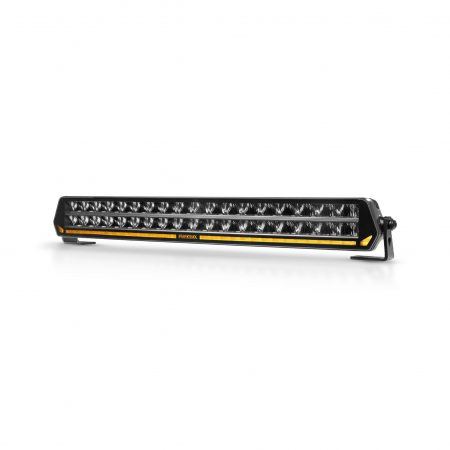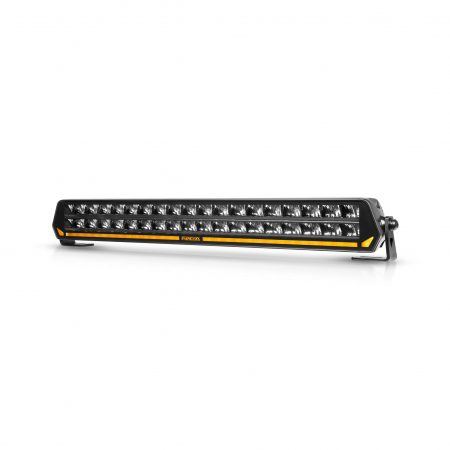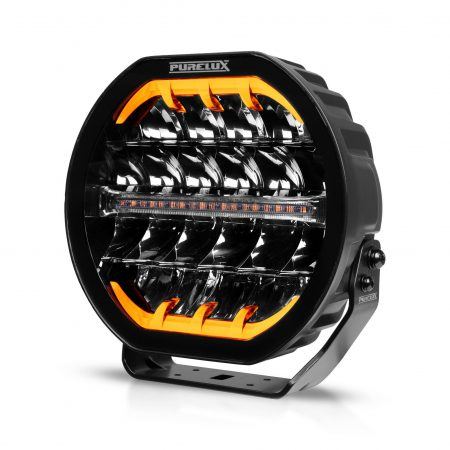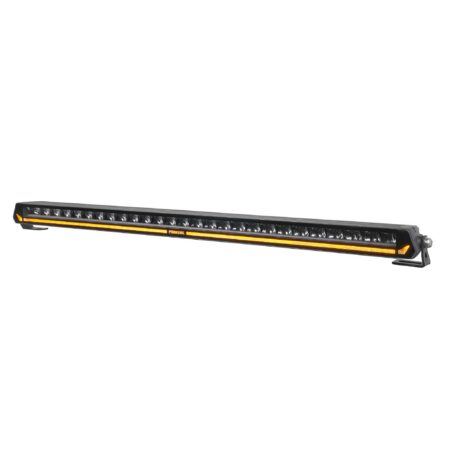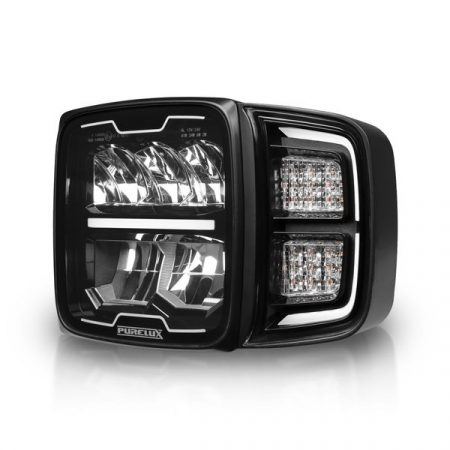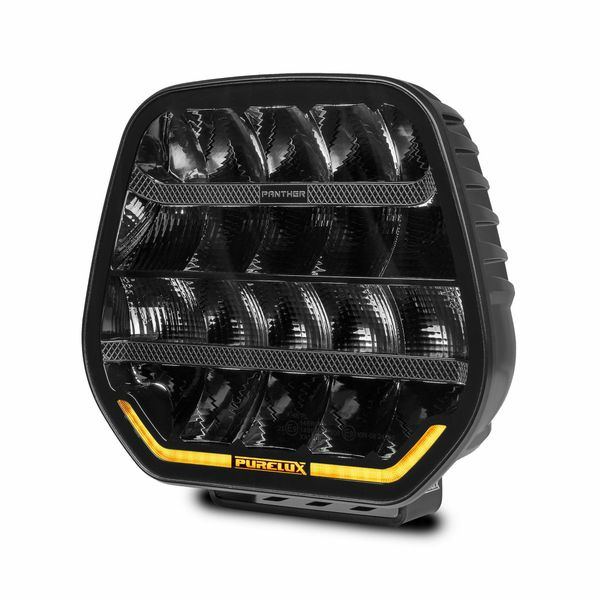

How many auxiliary lights you can fit on a vehicle in the Nordic countries depends on three things: the country, the vehicle classification, and the approval of the lamp itself. There is no single Nordic limit. In general, additional forward-facing lights that work together with the high beams must be approved for that purpose, mounted symmetrically, and used within the number and combined-brightness limits that apply to your vehicle. Because national rules and inspection practice change, the specific figures for each country should be confirmed with the national vehicle authority or an approved inspection station before you buy or install anything.
How many auxiliary lights are allowed on a vehicle in Finland, Sweden, Norway and Denmark?
The short answer is that the permitted setup depends on the country, the vehicle category (passenger car, van, truck, agricultural machine) and whether each lamp carries the correct approval for its function. A lamp count alone does not tell you whether an installation is legal, because the rules also cover how lamps are combined, where they sit on the vehicle, and which lighting function they are approved for.
Three factors decide whether your setup is legal:
- Number of lamps: national rules limit how many forward-facing lamps may be switched on at once, and this can include the standard headlights.
- Combined limits: some regulations restrict the total reference number (a measure of combined beam intensity) of all lamps lit together, not just the count.
- Approval and function: each lamp must be approved for the function you use it for, such as a main-beam driving light, a fog light or a work light.
Nordic auxiliary light rules compared: Finland, Sweden, Norway and Denmark
The table below summarises the principles that apply across the region and flags where local confirmation is required. It does not replace the current national regulations.
| Country | Typical configuration | Relevant light function | Approval requirements | Notable limitations |
|---|---|---|---|---|
| Finland | Additional driving lights wired to work with the main beam; exact permitted number and combined limit require confirmation with the national authority | Main-beam driving light | E-marked lamps approved for the intended function | Symmetrical mounting expected; confirm limits and inspection requirements locally |
| Sweden | Additional driving lights linked to the main beam; confirm the permitted number and combined limit for your vehicle category | Main-beam driving light | E-marked lamps approved for the intended function | Mounting position and switching requirements apply; confirm locally |
| Norway | Additional driving lights linked to the main beam; confirm the permitted number and combined limit for your vehicle category | Main-beam driving light | E-marked lamps approved for the intended function | Not an EU member, so national rules and inspection practice may differ; confirm locally |
| Denmark | Follows the EU framework for vehicle lighting, with national implementation; confirm the permitted number and combined limit for your vehicle category | Main-beam driving light | E-marked lamps approved for the intended function | Mounting and switching rules apply; confirm locally |
Auxiliary light rules in Finland
Finland generally expects additional driving lights to be approved, symmetrically mounted and used in connection with the main beam. The exact number of lamps and any combined limit should be confirmed with the Finnish transport authority or an inspection station, as these details depend on the vehicle category and current regulations.
Auxiliary light rules in Sweden
In Sweden, additional driving lights must be approved for their function and installed according to the vehicle regulations. Requirements for mounting position and how the lamps are switched can apply. The permitted number and combined limit should be confirmed with the Swedish transport authority before installation.
Auxiliary light rules in Norway
Norway applies its own national vehicle regulations alongside European approval standards. Because Norway is not an EU member, you should not assume that EU-based practice applies in the same way. Confirm the permitted number, the combined limit and inspection requirements with the Norwegian authorities for your vehicle category.
Auxiliary light rules in Denmark
Denmark follows the EU vehicle lighting framework, implemented through national rules. Lamps need the correct approval for their function, and the permitted number and combined limit depend on the vehicle category. Confirm the details with the Danish authorities or an approved inspection station.
What is the difference between driving lights, work lights, fog lights and light bars?
The legal treatment of a lamp depends on its approved function, not its appearance. The same hardware can be treated very differently depending on how it is approved and how it is wired.
- Additional high-beam driving lights: approved for road use and designed to work together with the main beam. These are the lamps most closely governed by number and combined-brightness rules.
- Work lights: intended for lighting a work area, typically when the vehicle is stationary or working off-road. They generally cannot be used on public roads while driving, and they usually do not carry a road-use approval for forward illumination.
- Fog lights: a separate approved function with their own mounting and use rules. They are not interchangeable with driving lights.
- Roof-mounted light bars: often not approved for use on public roads. Whether one is allowed depends on its approval, its wiring and how it is mounted. See our guide on mounting auxiliary lights on the roof.
What do E-marking, ECE approval and reference numbers mean?
E-marking is the approval mark on a lamp showing that it has been type-approved under a UN ECE regulation. The mark includes a letter E and a number identifying the country that issued the approval. It shows that the lamp meets the technical requirements for its stated function, such as beam pattern and glare control. It does not by itself make every installation legal.
ECE approval refers to the UN regulations under which lamps are tested. Different regulations cover different functions, so a lamp approved as a work light is not automatically approved as a driving light. You can read more in our guide on how to check that an auxiliary light meets E-mark approval.
Reference numbers express the intensity of a lamp’s main beam in a standardised way. Where a country limits the combined reference number of all lamps lit together, the sum of the headlights and any additional lamps must stay within that limit. This is why the number of lamps alone does not determine legality: a few powerful lamps can exceed a limit that more modest lamps would meet. To find the figure for your vehicle, see our guide on how to find a vehicle’s reference number.
How do the rules differ for cars, vans, trucks and agricultural machines?
Vehicle classification changes what is allowed. Rules for passenger cars are usually the most restrictive when it comes to lamps that operate on public roads. Vans and trucks may be covered by different provisions, and heavy vehicles can have additional requirements for mounting height, switching and inspection.
Agricultural and forestry machines are often treated separately, with more flexibility for work lighting used in the field. However, that flexibility generally applies to working use, not to driving on public roads with work lights lit. Because categories and exemptions vary by country and change over time, confirm the classification of your vehicle and the rules that apply to it before installation.
Pre-installation compliance checklist
- Identify your vehicle category as registered (passenger car, van, truck, agricultural machine).
- Confirm the permitted number of additional forward-facing lamps with the national vehicle authority or an inspection station.
- Find out whether a combined reference number limit applies and check your vehicle’s reference number.
- Check that every lamp carries an E-mark for the exact function you intend to use it for.
- Confirm the allowed mounting position, including height and symmetry.
- Plan the wiring so the lamps switch with the main beam if required, and use correctly rated wiring, fuses and relays.
- Decide how work lights will be switched so they cannot be lit while driving on public roads.
- Check whether the modification must be registered or inspected, and keep the approval documents with the vehicle.
- Have the beam aligned after installation to avoid glare for oncoming traffic.
For wiring, mounting and alignment practice, see our guide on how to install auxiliary lights safely on a vehicle.
How to choose auxiliary lights
Start with the use case and the legal requirements, then choose the lamp. No specific product is legal everywhere, because legality depends on the approval, the vehicle and the installation, not the brand alone.
- Match the function: choose a lamp approved as a driving light if you want road-legal main-beam support, and a work light if you need working illumination off the road.
- Check the approval marking: look for the E-mark and confirm the regulation it covers.
- Consider output and beam pattern: higher output is not automatically better, particularly where combined limits apply. A well-controlled beam is more useful than raw lumens.
- Consider durability: Nordic conditions mean cold, moisture and vibration, so look for sealed, robust construction and good thermal management.
Browse our auxiliary light range to compare options, and check the approval details of any lamp against your vehicle’s requirements before ordering.
Frequently asked questions
How many driving lights are permitted?
It depends on the country, the vehicle category and the lamp approval. There is no single Nordic number, and some rules also limit the combined reference number of all lamps lit together. Confirm the figure for your vehicle with the national authority or an inspection station.
Can you install a single LED light bar?
Possibly, but only if the light bar is approved for the function you intend to use, is mounted in a permitted position and is wired in line with the rules for your vehicle. Many light bars are sold as work lights without road approval and cannot be used on public roads while driving.
Are roof-mounted lights allowed?
Roof-mounted lights are often not allowed for use on public roads unless they are approved for that purpose and installed accordingly. Read our guide on roof-mounted auxiliary lights for more detail.
Do work lights count as driving lights?
Not by default. Work lights are approved and intended for illuminating a work area, and they generally may not be lit while driving on public roads. If a lamp is approved and wired as a driving light, it is treated as one, and it then counts toward the applicable limits.
Can multiple lamps operate with the high beams?
Only within the limits that apply to your vehicle and country. The number of lamps and, where applicable, the combined reference number determine whether the setup is acceptable. Confirm the limits locally before wiring additional lamps to the main beam.
Get help choosing and installing compliant auxiliary lights
If you are unsure which setup suits your vehicle and country, we can help you select lamps and plan a compliant installation. Request a quote and tell us your vehicle type and intended use. Because requirements vary by country and vehicle category, always verify the final configuration with the relevant authority or an approved inspection station.