Counterweight bars for excavators are a specific category of steel light mounting bars, not to be confused with the counterweight itself. The counterweight is the heavy cast iron block at the rear of the machine that balances the boom and bucket during operation. RST-Steel does not manufacture or supply those components. What RST-Steel manufactures are the steel bars that bolt onto that counterweight block, providing a structural mounting point for rear-facing work lights. If you arrived here looking for a replacement counterweight casting, this article is not for you. If you need a purpose-built rear light bar for your excavator, read on.
With 73 products across the rear bars for excavators category, covering Volvo, Hitachi, Doosan, Kobelco, Caterpillar, JCB, Kubota, Komatsu, and others, this is one of the most developed product ranges RST-Steel manufactures. The reason for that depth is straightforward: excavator counterweights vary considerably between brands and model series, and a bar that fits a Volvo EC300 will not mount correctly on a Hitachi ZX300. Fit is not a detail. It is the whole point.
How counterweight bars protect excavators in the field
Rear-mounted light bars on excavators exist because of a specific operational problem: excavator operators have limited rear and lateral visibility, and construction sites do not stop operating when daylight does. Early morning starts, late afternoon finishes, indoor demolition work, and covered trenching sites all create low-light conditions where the area directly behind and beside the machine is effectively invisible without dedicated illumination.
The consequences of poor rear visibility on a live site are serious. Other site personnel move around working machines. Adjacent equipment operates in close proximity. Trenching work puts the machine near edges where spatial awareness is critical. Rear-facing work lights mounted on a counterweight bar illuminate the working zone behind the machine during repositioning and reversing, the moments when visibility gaps are most dangerous.
Beyond safety, there is a productivity argument. Operators who can clearly see what is behind them move the machine with more confidence and fewer stops. On sites where multiple machines operate in rotation, delays caused by poor visibility compound quickly. A properly lit machine is a faster machine, particularly in the shoulder seasons when Nordic construction sites run long hours in marginal light.
Key differences between counterweight bar designs
Not all excavator rear bars are built the same way, and the differences between designs have direct consequences for how the bar performs in use.
Bar profile and light mounting positions
The profile of the bar, its height, width, and the number of light mounting positions, determines how much of the rear working zone is illuminated and at what angles. A wider bar with multiple mounting points allows the operator to configure lighting coverage across a broader arc. A narrower single-position bar suits machines working in confined spaces where a wide light spread would cause glare problems for adjacent workers.
Attachment geometry
Attachment geometry is where brand-specific manufacturing becomes essential. The mounting surface of a Komatsu counterweight has a different profile, different bolt spacing, and different available contact area than a Caterpillar or Kobelco unit. Bars manufactured to a generic dimension will either not fit at all or will fit loosely, neither outcome is acceptable on a machine that vibrates continuously under load. RST-Steel’s bars are designed to specific brand and model combinations precisely because of this variation.
Cable routing and protection
Work light wiring on an excavator is exposed to mud, water, impact, and the constant movement of the machine. Bars that include integrated cable routing channels or protection points keep wiring clear of the counterweight’s rotation zone and reduce the risk of damage during normal operation. This is a design detail that separates purpose-built bars from improvised solutions.
Matching a counterweight bar to your excavator model
The starting point for selecting an excavator counterweight bar is the machine’s brand and model series, not the bar’s dimensions. Counterweight geometry is not standardised across the industry, and even within a single manufacturer’s range, the counterweight profile can change between model generations.
RST-Steel’s current range covers the following brands, with product counts reflecting the depth of available fitments:
- Volvo — 32 products, the largest single-brand selection in the range
- Hitachi — 22 products
- Doosan / Develon — 19 products
- Kobelco — 18 products
- Caterpillar — 12 products
- JCB — 11 products
- Kubota — 9 products
- Komatsu — 7 products
If the machine is not on this list, or if the specific model series is uncertain, the correct approach is to contact RST-Steel directly with the machine’s model designation and year. Counterweight profiles are documented, and in many cases a fitment can be confirmed or a custom solution developed for models outside the standard range. Guessing at fitment based on approximate dimensions is not a reliable method and risks damage to both the bar and the counterweight mounting surface.
For operators running mixed fleets, the work machines hub provides an overview of the full range of excavator accessories available, including roof bars and side bars that complement the rear bar fitment.
Material and finish considerations for harsh operating conditions
An excavator counterweight bar operates in one of the more demanding environments any steel component can face. The rear of a working excavator collects mud, water, road salt during transport, and physical impact from spoil and debris. A bar that corrodes or deforms within a season is not a cost saving. It is a replacement cost plus downtime.
Steel construction is the baseline requirement. The relevant variables are wall thickness, weld quality, and surface treatment. Powder coating over properly prepared steel provides corrosion resistance that holds up through Nordic winters, where road salt and freeze-thaw cycling accelerate surface degradation on inadequately finished components. The coating should be applied after all fabrication is complete, including drilling and welding, so that cut edges and weld zones are protected, not just the flat surfaces.
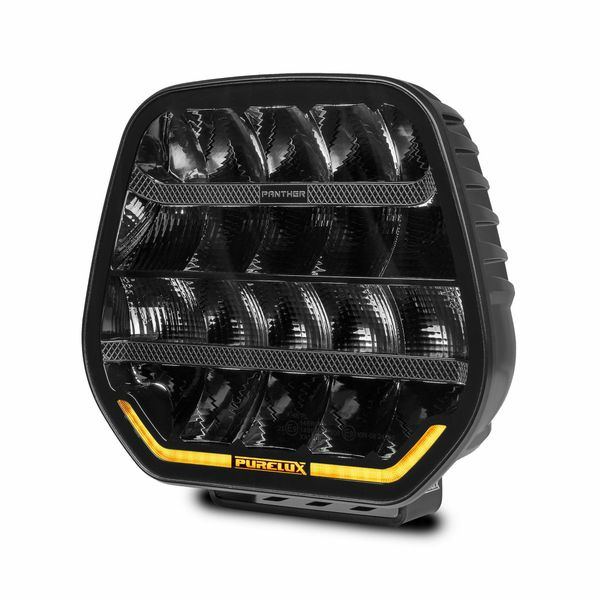
For work lights mounted on the bar, the same environmental logic applies. RST-Steel distributes Lazer work lights specifically because their sealing and thermal performance are suited to the temperature ranges and moisture exposure common on Nordic construction sites. A high-quality bar fitted with inadequately sealed lights defeats the purpose of the installation.
Professional installation vs. field fitting
Counterweight bars can be fitted in the field by a competent mechanic with the right tools and the correct torque specifications. The bar itself is a bolted assembly, not a welded-on component, and the installation process is straightforward when the bar is the correct fitment for the machine.
Where professional installation adds value is in the wiring. Routing cables from the rear-mounted lights through to the cab, whether to a dedicated switch panel or integrated into the machine’s existing electrical system, requires knowledge of the specific excavator’s wiring architecture. Incorrect wiring creates fault conditions that are time-consuming to diagnose and can void equipment warranties. RST-Steel’s installation locations in Pirkkala and Kempele handle this work for customers who want the job done correctly from the start.
For fleet operators procuring multiple units, professional installation also ensures consistency. Every machine leaves with the same wiring standard, the same switch configuration, and the same torque on the mounting hardware. That consistency matters when machines rotate between operators and sites, and when service intervals need to be standardised across a fleet rather than managed machine by machine.