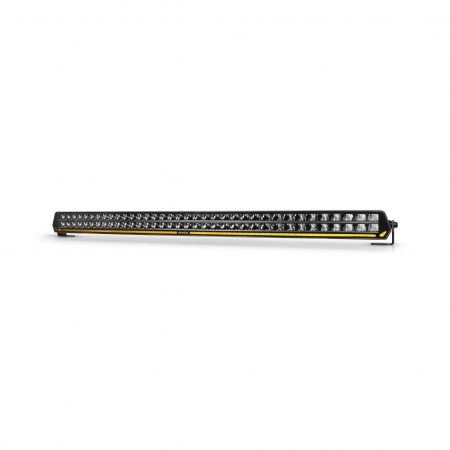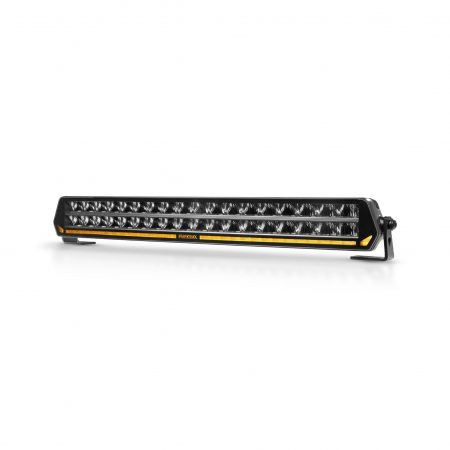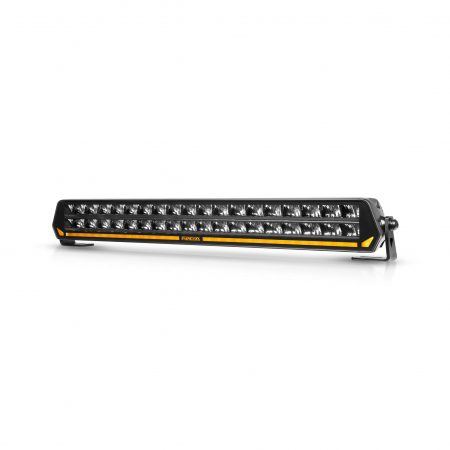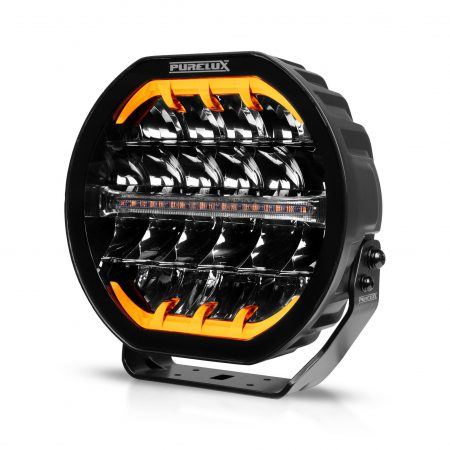
Choosing auxiliary lights for a working vehicle is not complicated, but it is easy to get wrong. The wrong beam pattern wastes money. The wrong mounting position creates glare problems. A light that is not E-marked can result in a failed inspection or a fine. This guide covers the practical decisions involved in selecting, fitting, and legally operating auxiliary lights on professional and commercial vehicles across the Nordic market.
The range of available products has expanded significantly in recent years. LED technology now dominates the market at every price point, and the variety of beam patterns, form factors, and mounting solutions means there is a purpose-built option for almost every application. That variety also makes it worth understanding what each option actually does before committing to a purchase.
Types of auxiliary lights and their uses
Auxiliary lighting covers a broad category of vehicle-mounted lights, and the right type depends entirely on how and where the vehicle operates. The two primary categories are driving lights and work lights, and they are not interchangeable.
Driving lights
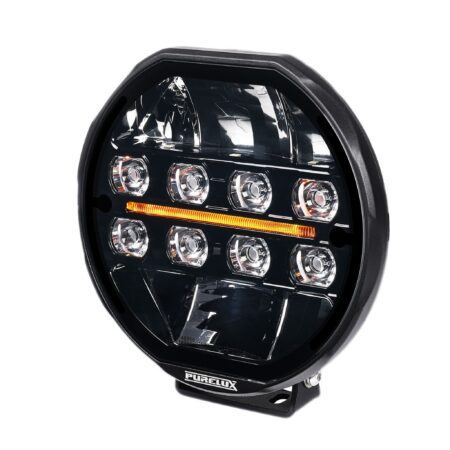
Driving lights are designed to extend forward visibility on roads and tracks at speed. They project a focused beam ahead of the vehicle and are intended for use alongside main beam headlights. On rural roads, forest tracks, or unlit highways, they significantly extend the distance at which the driver can identify obstacles, animals, or road edges. OZZ XR2 and XR3 series lights, for example, are built specifically for truck applications where maximum forward range is the primary requirement.
Work lights
Work lights are built for stationary or slow-moving operation. They illuminate a working area rather than a road ahead. Excavators, forest machines, agricultural equipment, and service vehicles all use work lights to illuminate the immediate surroundings during loading, unloading, or machine operation. Work lights are not road-legal when the vehicle is moving at normal speed and are restricted to specific operational conditions under Nordic road traffic legislation.
Specialised auxiliary lights
Beyond the two main categories, there are purpose-built variants for specific tasks. Plow lights are one example. The Purelux Blizzard LED Plow Light is engineered specifically for snow blade mounting, handling the vibration, extreme cold, and close-range wide spread that standard driving lights are not designed for. Warning lights and beacons serve a separate function entirely, signalling the presence of slow-moving or hazardous vehicles rather than illuminating the road.
Beam patterns: spot, flood, and combo explained
Beam pattern is the single most important technical decision when selecting LED auxiliary lights. Two lights with identical lumen output can perform completely differently depending on how that light is distributed.
Spot beams
A spot beam concentrates light into a narrow, long-reaching projection. It is suited to high-speed road use where the driver needs to see far ahead. The trade-off is a narrow field of view. At the sides of the beam, visibility drops off quickly. In dry, clear conditions on open roads, spot beams perform well. In heavy snowfall, a tight spot beam reflects off falling snow and can reduce visibility rather than improve it.
Flood beams
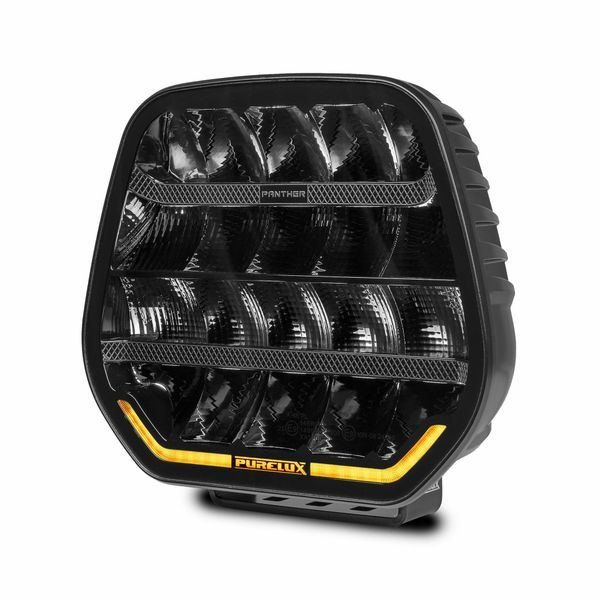
A flood beam spreads light across a wide horizontal arc at shorter range. It is the correct choice for work applications, slow-speed manoeuvring, and any situation where peripheral visibility matters more than forward distance. The Purelux Panther C540, with its curved panel format, is designed specifically to maximise peripheral spread for exactly this kind of application.
Combo and snow beams
Combo lights combine spot and flood elements in a single unit, offering a middle-ground solution that suits mixed-use vehicles. For Nordic winter conditions specifically, a wider spread or dedicated snow beam pattern is preferable to a pure spot beam. Narrow spot beams that perform well in dry conditions can become a liability in heavy snowfall, where the concentrated beam reflects off precipitation and reduces effective visibility. Selecting the right beam pattern for the climate and use case is as important as selecting the right lumen output.
Key specs to check before buying
Several technical parameters determine whether a light is suitable for a given application. Checking these before purchase avoids costly mismatches.
Lumen output
Lumens measure total light output. Higher lumens do not automatically mean better performance if the beam pattern distributes that light poorly. A well-focused 5,000-lumen spot light will outperform a poorly designed 8,000-lumen unit on a long straight road. Lumen output should always be read alongside beam pattern data.
Reference number
The reference number is a standardised measure of beam intensity and reach. A higher reference number indicates a tighter, longer-reaching beam. OZZ lights use P7 and P9 reference number variants, where P9 produces a more concentrated, longer-range beam than P7. This figure is particularly relevant for truck operators who need maximum forward visibility on unlit roads.
Colour temperature
Colour temperature is measured in Kelvin. Lights in the 5,000 to 6,000K range produce a white to cool-white output that closely resembles daylight and improves contrast in most road conditions. Very high colour temperatures can increase glare in rain or fog. Colour temperature affects perceived brightness and eye fatigue on long shifts.
Power draw and operating temperature
Power draw, measured in amps, determines the electrical load on the vehicle. Multiple high-output lights running simultaneously require properly rated wiring and a relay setup. An operating temperature rating confirms the range within which the light will function reliably. For Nordic conditions, this matters. A light rated only to minus 20 degrees Celsius may fail during a Finnish or Norwegian winter night where temperatures can drop significantly lower.
E-mark certification
E-mark approval confirms that a light meets the European vehicle lighting directive and is road-legal. All Purelux models in the RST-Steel range carry E-mark approval. Fitting non-E-marked lights to a road vehicle can result in a failed roadworthiness inspection and legal liability. For work lights used only on private land or in off-road conditions, the requirement is different, but any light used on public roads must carry the mark.
Mounting positions and vehicle compatibility
Where a light is mounted determines what it illuminates, how it interacts with other road users, and whether it is legal in its intended position. Mounting decisions are not purely mechanical.
Roof and roof bar mounting
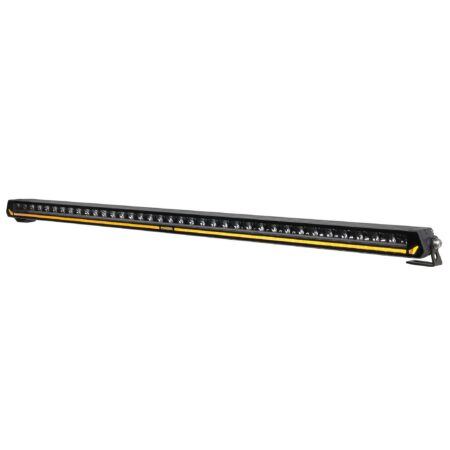
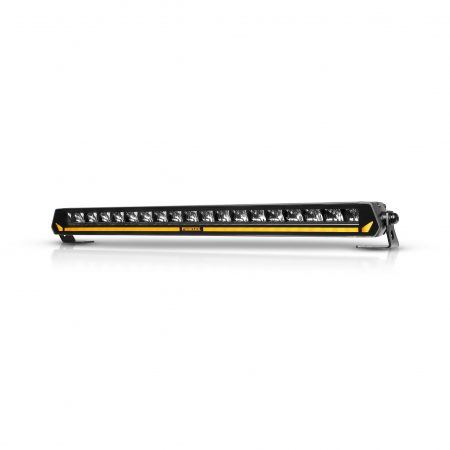
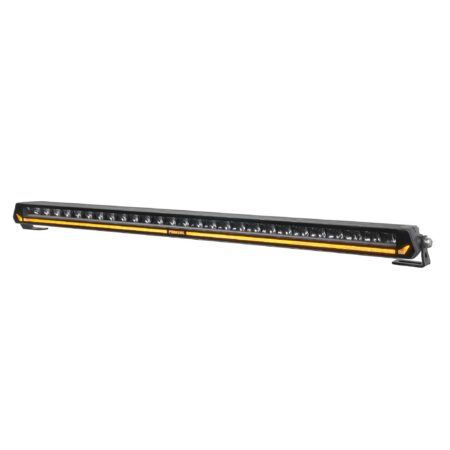
Roof mounting provides the highest mounting position, which extends the effective reach of spot beams and reduces shadows cast by the vehicle’s own bodywork. It is common on trucks, SUVs, and agricultural machines. Auxiliary light bars mounted on roof bars allow multiple lights to be positioned at the same height with consistent aim. The trade-off is increased aerodynamic drag and, on some vehicles, interference with overhead clearance requirements.
Bumper and bull bar mounting
Lower mounting positions on bumpers or bull bars are standard for driving lights on trucks and commercial vehicles. This position keeps the light beam close to the road surface angle, which is effective for illuminating the road ahead. It is also the most common position for plow lights, where the light needs to illuminate the ground immediately in front of the blade.
Vehicle compatibility
Not all mounting solutions fit all vehicles. Bracket design, cab geometry, and existing bodywork all affect which mounting options are available. RST-Steel’s range includes mounting accessories covering brackets, wiring kits, relay sets, and switch panels across a wide range of vehicle types, from vans and trucks to tractors, excavators, and forest machines. Selecting a light without confirming mounting compatibility is a common source of avoidable problems.
Legal requirements for auxiliary lighting in Finland
Nordic road traffic legislation places clear restrictions on how and when auxiliary driving lights can be used, and the rules vary between Finland, Sweden, and Norway. Buyers should confirm the specific rules for the country where the vehicle is registered and operated.
Across the Nordic countries, auxiliary driving lights are generally restricted to use alongside main beam headlights. They cannot be used in conditions where they would dazzle oncoming traffic. This means they must be switched off in built-up areas with street lighting and when approaching oncoming vehicles on unlit roads. The number of auxiliary driving lights permitted per vehicle also varies by country and vehicle type.
Work lights are subject to separate restrictions. Under Nordic road traffic legislation, work lights are restricted to stationary or slow-moving vehicle use. Operating work lights while driving at road speed is not permitted. For vehicles that carry both driving lights and work lights, the switching setup must ensure that work lights cannot be activated while the vehicle is in normal road use.
E-mark certification is the baseline requirement for any light fitted to a vehicle used on public roads. Beyond that, placement, aim, and operating conditions all fall under national vehicle inspection requirements. Where regulations affect product selection, the correct approach is to confirm the applicable rules for the relevant country before purchasing. RST-Steel can advise buyers on compliance questions for the Nordic market directly.
Professional installation vs. DIY fitting
The mechanical act of mounting an auxiliary light is straightforward. The electrical side is where problems arise, and where the difference between professional and DIY fitting becomes significant.
Wiring and electrical load
High-output LED auxiliary lights draw meaningful current. Multiple lights running simultaneously require correctly rated wiring, properly specified relays, and fusing that matches the actual load. Undersized wiring creates heat, voltage drop, and fire risk. A relay that is not rated for the load will fail, often at the worst possible moment. Professional installation ensures that the electrical system is built to handle the actual operating conditions, not just the minimum required to make the lights switch on.
Aim and beam alignment
Incorrectly aimed driving lights dazzle oncoming traffic, which is both dangerous and illegal. Setting correct aim requires either alignment equipment or a reference surface at a known distance, and it needs to be checked after the mounting has settled under road use. A light that was correctly aimed in a workshop can shift after a few hundred kilometres of vibration if the mounting is not properly torqued and secured.
When DIY is reasonable
For work lights on agricultural or construction equipment that operates exclusively off-road, DIY fitting is more straightforward. The regulatory requirements are less stringent, the electrical loads are often simpler, and the consequences of minor alignment errors are less significant. For road-going vehicles, particularly trucks and vans used commercially, professional installation removes liability and ensures the installation will pass a vehicle inspection.
RST-Steel handles supply and installation through its locations in Pirkkala and Kempele, covering the full range from single driving light fitments to complete multi-light setups on commercial vehicles. For buyers who want the work done once and done correctly, that option exists alongside the full product range available through the lighting category.
Frequently Asked Questions
Can I run auxiliary driving lights and work lights from the same switch panel?
Technically yes, but it is not recommended and may not be legal for road-going vehicles. Nordic road traffic legislation requires that work lights cannot be activated during normal road use, which means the switching setup must physically or electronically prevent work lights from being used while driving at road speed. A properly wired relay system with separate circuits for driving lights and work lights is the correct approach, and this is one of the key reasons professional installation is worth considering for commercial vehicles.
How do I know if a light I already own is E-marked?
E-mark approval is indicated by a marking on the light housing itself, typically a circle containing the letter E followed by a country code number, alongside an approval number. If this marking is not physically present on the unit, the light is not E-marked and should not be used on public roads. Receipts, packaging, or product listings alone are not sufficient proof — the mark must appear on the light itself to satisfy a vehicle inspection.
What beam pattern is best for a vehicle used in both summer and winter conditions in Finland?
A combo beam or a dedicated snow/wide-spread beam pattern is the most practical choice for year-round Nordic use. Pure spot beams deliver excellent forward range in dry, clear conditions but reflect off falling snow and rain, reducing effective visibility rather than improving it. A combo light gives you useful forward reach without the aggressive concentration that causes reflection issues in precipitation, making it a more versatile choice for vehicles that cannot be re-equipped seasonally.
How many auxiliary driving lights am I legally allowed to fit to my truck or van?
The permitted number of auxiliary driving lights varies by country and vehicle type under Nordic road traffic legislation — there is no single answer that covers Finland, Sweden, and Norway uniformly. In Finland, the rules are set out in the national vehicle regulations and are enforced during roadworthiness inspections. The safest approach before purchasing multiple lights is to confirm the applicable limit for your specific vehicle category and country of registration. RST-Steel can advise on this directly for the Nordic market.
What happens if my auxiliary lights are not correctly aimed after installation?
Incorrectly aimed driving lights are both a safety hazard and a legal issue. Lights aimed too high will dazzle oncoming drivers, which can result in a failed vehicle inspection and potential liability if an incident occurs. Aim can also shift after installation due to mounting vibration and road use, so it should be checked again after the first few hundred kilometres of driving. If you are not using alignment equipment or a proper reference surface, having the aim set and verified professionally is the more reliable option.
Is there a minimum operating temperature I should look for when buying auxiliary lights for Nordic winters?
Yes, and this is a specification that is easy to overlook. A light rated only to -20°C may fail or perform poorly during Finnish or Norwegian winter nights where temperatures can drop to -30°C or lower in inland and northern regions. Check the manufacturer’s stated operating temperature range before purchasing, and prioritise lights that are rated for the actual conditions your vehicle will face. Products designed specifically for Nordic or arctic use, such as those in the Purelux range, are built with these temperature extremes in mind.
Do I need a relay kit, or can I wire auxiliary lights directly to the vehicle's existing electrical system?
For any high-output LED auxiliary light, a relay kit is strongly recommended and often necessary. Running high-current loads through a vehicle’s existing switch circuits without a relay creates heat, causes voltage drop that reduces light output, and risks damaging the vehicle’s wiring or fuse box. A relay draws the main current directly from the battery through correctly rated wiring while using the switch circuit only to trigger the relay — this is the correct way to wire auxiliary lighting and is standard practice for commercial vehicle installations.