A bull bar is a fabricated steel frame that mounts to the front of a truck. That description is accurate, but it undersells what the component actually does in practice. For professional drivers operating in Nordic conditions – long-haul routes through forested corridors, early morning yard work in sub-zero temperatures, or construction site access on unmaintained tracks – a front bar is a piece of working infrastructure. Understanding what it protects against, what materials hold up over time, and how it interacts with lighting and homologation requirements helps operators make decisions based on function rather than appearance.
This guide covers the full picture: protection mechanics, material performance in cold climates, lighting integration, compatibility and approval requirements, and the practical difference between professional installation and self-fitting. Whether the vehicle in question is a single Scania R or a mixed fleet of Volvo FH and MAN TGX trucks, the considerations are the same.
What Bull Bars Actually Protect Against
A bull bar distributes impact energy across a fabricated frame before that energy reaches the vehicle’s own structure. This is the core function, and it matters most in two distinct scenarios: wildlife collisions at road speed and low-speed contact in yards, loading bays, and construction sites.
Wildlife Collisions at Road Speed
In the Nordic countries, moose collisions are a genuine operational risk, not a theoretical one. At 70 to 80 km/h, a moose strike without front protection typically destroys the radiator and grille assembly in a single impact. The cooling system fails, the truck goes out of service, and the driver faces a recovery situation on a rural road, potentially in darkness or adverse weather. With a properly mounted steel bull bar, the impact energy is absorbed and distributed across the bar’s frame before it reaches the vehicle’s cooling system and chassis. The truck may still sustain damage, but the radiator survives and the driver can often continue operating to a safe location.
The difference is not marginal. It is the difference between a truck that drives away and one that requires a flatbed recovery. For professional operators running tight schedules, that distinction has direct cost implications.
Low-Speed Contact and Yard Damage
Not every impact happens at highway speed. Loading docks, reversing in confined yards, and contact with barriers or gateposts are routine sources of front-end damage on working vehicles. A bull bar absorbs these contacts at the bar level, protecting the grille, headlights, and lower chassis components that would otherwise absorb the impact directly. Over the working life of a vehicle, this adds up. Front-end repair costs on modern trucks, particularly those with integrated sensors and active safety systems in the bumper assembly, are substantial. A front bar that prevents even one significant grille or headlight replacement has paid for itself.
Steel vs. Other Materials: What Holds Up in Nordic Conditions
Material choice for a bull bar is not primarily an aesthetic decision. In Nordic operating conditions, it is a structural and maintenance question. The relevant factors are performance at low temperatures, resistance to road salt and moisture, and long-term structural integrity under repeated stress.
Why Stainless Steel Is the Standard for Nordic Use
AISI 304 stainless steel is the material used across the RST-Steel bull bar range, and the reasons are specific to the operating environment. Stainless steel does not corrode under road salt exposure the way mild steel does. Nordic roads are heavily salted from late autumn through early spring, and a mild steel bar that is not perfectly maintained will begin to rust at weld points and cut edges within a few seasons. AISI 304 resists this without requiring the same level of maintenance intervention.
At low temperatures, steel retains its structural properties in a way that some alternative materials do not. Polymer composites and aluminium alloys can become brittle below minus 20 degrees Celsius, which is a normal operating temperature in northern Finland, Sweden, and Norway during winter. A material that performs adequately in a temperate climate may not perform the same way when the temperature drops significantly. For a component whose entire purpose is to absorb impact, this is not a negligible consideration.
Finish Options and Their Trade-offs
RST-Steel bull bars are available in polished stainless and powder-coated black, depending on the model. Polished stainless requires periodic cleaning to maintain appearance but offers no additional corrosion protection beyond the base material. Powder-coated black provides a matte finish that conceals minor surface marks and is preferred by many fleet operators for its low-maintenance appearance. The underlying steel performs the same in either case. The choice is primarily practical: what finish is easiest to maintain given the vehicle’s working environment and the operator’s cleaning routine.
How Bull Bar Design Affects Auxiliary Lighting Integration
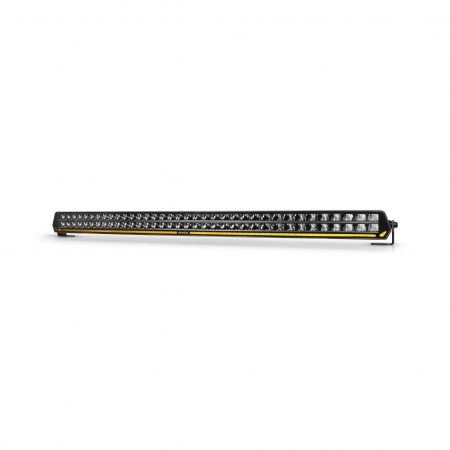
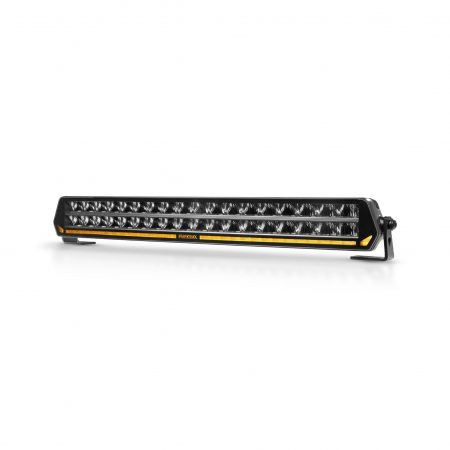
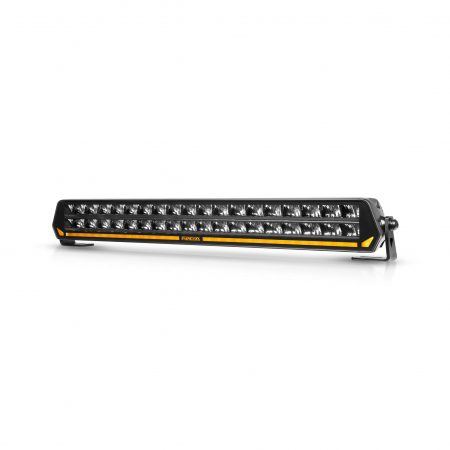
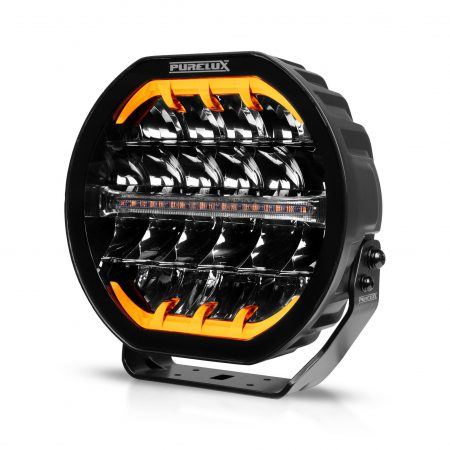
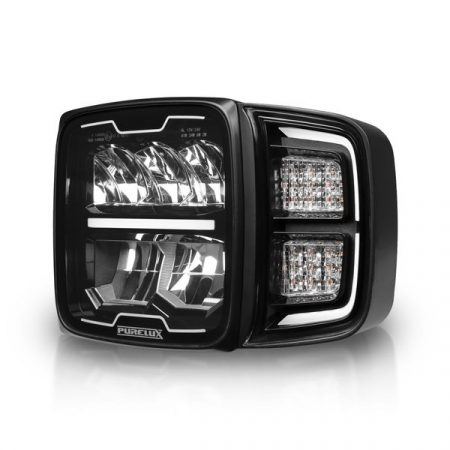
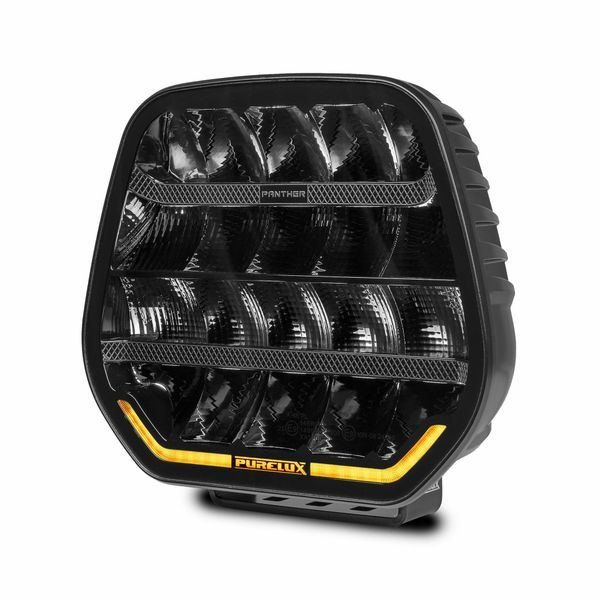
A bull bar is not just a protective structure. For most professional operators, it is also the primary mounting platform for auxiliary lighting. How the bar is designed determines what lighting can be fitted, how it is positioned, and whether the installation will hold up under vibration and temperature cycling over time.
Mounting Points and Light Positioning
The position of auxiliary lights relative to the vehicle affects both beam pattern and legal compliance. Lights mounted too high produce a different spread pattern than lights mounted at bumper level, and Nordic road traffic legislation specifies permitted mounting heights and activation conditions for different light categories. A bull bar designed with integrated mounting points for auxiliary lamps allows the installer to position lights at the correct height and angle from the start, rather than adapting a generic bracket to a structure that was not designed for it.
Structural rigidity at the mounting point matters as well. A light mounted to a bracket that flexes under road vibration will drift in alignment over time. On a well-designed bull bar, the mounting points are part of the fabricated frame, not bolted additions. This keeps the lights in alignment and reduces stress on the lamp housings and wiring connections.
Integration with High-Performance Auxiliary Systems
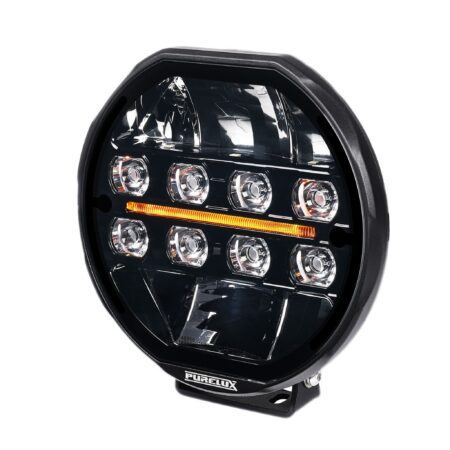
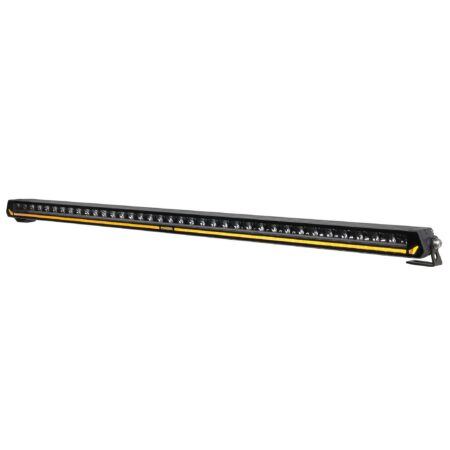
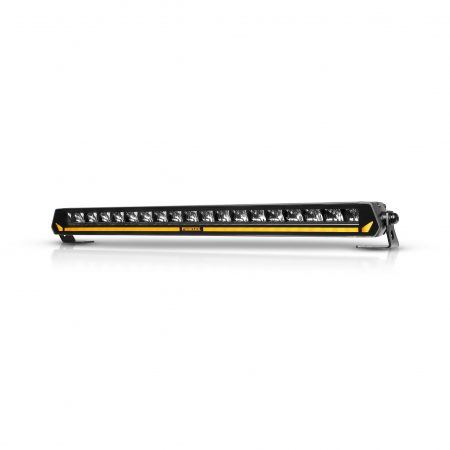
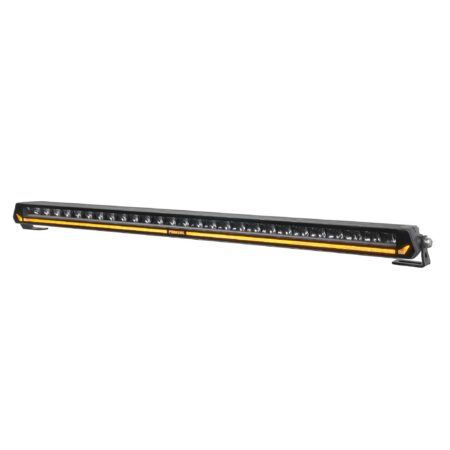
RST-Steel is the official Finnish importer of Lazer Lamps auxiliary lighting systems, and many installations combine an RST-Steel bull bar with Lazer Lamps units. The practical advantage of sourcing both from the same supplier is that the mounting geometry is known. The bar is designed to accept the light housing dimensions, the wiring route is planned as part of the installation, and the finished result is structurally and electrically integrated rather than assembled from unrelated components. For operators who want a specific lighting output and beam pattern, this matters more than it might appear.
Vehicle Compatibility and Homologation Requirements
Bull bars sold for road use in EU markets must carry E-marking, which confirms that the product has been tested and approved for use on public roads. This is not a formality. An unapproved front bar can affect a vehicle’s type approval, create liability issues in the event of an accident, and fail roadside inspection in countries where commercial vehicle checks are thorough.
E-Marking and What It Covers
All RST-Steel bull bars are E-marked and approved for road use across EU markets. The approval covers the bar as a product, but compatibility is still vehicle-specific. A bar designed for a Scania R NextGen does not fit a Scania R from the previous generation without modification, and fitting a bar to the wrong variant creates both a safety risk and a compliance problem. RST-Steel’s current range covers 53 products across all major truck brands in the Nordic market: Scania (R, S, XT, NextGen), Volvo (FH4, FH5, FM, FMX), DAF (XF, XG, XG+), MAN (TGX, TGS), Mercedes-Benz (Actros, Arocs, Atego), Renault (T, C, K), and Iveco. Within each brand, multiple variants exist to match different vehicle roles.
Chassis Attachment and Structural Modification
Mounting method affects both compliance and the vehicle’s structural integrity. RST-Steel bull bars use bolt-on mounting wherever the chassis allows, using existing attachment points without structural modification to the vehicle. This is important for two reasons. First, it preserves the vehicle manufacturer’s original structural design, which is the basis for the type approval. Second, it means the bar can be removed and refitted without permanent changes to the chassis, which matters for leased vehicles or trucks that will be sold or reassigned.
Professional Installation vs. Self-Fitting: What Changes
A bull bar that is incorrectly fitted does not perform the same as one that is correctly installed. The difference between professional installation and self-fitting is not primarily about technical skill. It is about access to the correct torque specifications, knowledge of vehicle-specific attachment points, and the ability to route wiring correctly when lighting is part of the installation.
What Professional Installation Covers
Professional installation at an RST-Steel location covers the physical fitting of the bar to the correct attachment points, torquing to specification, and verification that the bar is correctly aligned and does not interfere with the vehicle’s active safety systems or sensor housings. On modern trucks, front bumper assemblies often contain radar sensors, cameras, and proximity systems. A bull bar that obscures or vibrates against these components creates problems that may not be immediately obvious but will affect system performance over time.
When auxiliary lighting is part of the installation, professional fitting also covers wiring, relay installation, and switch integration. A light that is wired incorrectly may work initially but create electrical faults under vibration or moisture ingress. Getting this right from the start is significantly less expensive than diagnosing and correcting it later.
Practical Considerations for Fleet Operators
For fleet operators fitting multiple vehicles, RST-Steel handles professional installation across locations in Finland, Norway, and Sweden. Wholesale pricing and bulk ordering are available through the wholesale account programme. The practical advantage for fleet managers is consistency: every vehicle in the fleet receives the same fitting standard, which simplifies maintenance records and ensures that compliance documentation is uniform across the fleet.
Self-fitting is technically possible for operators with workshop facilities and mechanical competence, but it requires access to the correct vehicle-specific installation instructions and an understanding of what the torque specifications and attachment points are for that particular chassis variant. For a single vehicle where the operator has the relevant background, it may be a reasonable option. For a fleet, the time and risk involved in managing self-installation across multiple vehicles typically makes professional fitting the more practical choice.
The full range of RST-Steel bull bars is available by vehicle make and model, with installation available through RST-Steel’s Nordic locations. Operators with specific requirements or fleet enquiries can reach the team directly through the contact page.
Frequently Asked Questions
Can a bull bar affect my truck's active safety systems, such as radar or lane assist?
Yes, this is one of the most important compatibility considerations on modern trucks. Front bumper assemblies on vehicles like the Volvo FH5, Scania NextGen, and Mercedes Actros often house radar sensors, forward-facing cameras, and proximity systems. A bull bar that is not specifically designed for that vehicle variant can obstruct sensor fields of view or introduce vibration against sensor housings, degrading system performance over time. This is precisely why vehicle-specific fitment and professional installation matter — a correctly designed and properly fitted bar is engineered to leave these systems unaffected.
How do I know which bull bar is compatible with my specific truck model and variant?
Compatibility is determined by both the truck brand and the specific generation or variant — for example, a Scania R NextGen requires a different bar than a previous-generation Scania R. RST-Steel’s product range covers 53 products across all major Nordic truck brands, with variants matched to different chassis configurations and vehicle roles. The safest approach is to confirm the exact model year and variant before ordering, either by browsing the range filtered by make and model on the RST-Steel website or by contacting the team directly with your chassis details.
What maintenance does a stainless steel bull bar actually require in Nordic winter conditions?
AISI 304 stainless steel is specifically chosen for its resistance to road salt and moisture, so the maintenance burden is significantly lower than with mild steel alternatives. In practice, periodic washing — particularly after heavy salting periods — is sufficient to keep the bar in good condition. Polished stainless finishes benefit from occasional cleaning to maintain appearance, while powder-coated black finishes are more forgiving of surface marks and require less cosmetic upkeep. Neither finish requires anti-corrosion treatment under normal Nordic operating conditions.
Is it possible to add auxiliary lighting to a bull bar after it has already been fitted to the vehicle?
Yes, but the result depends heavily on whether the bar was designed with integrated mounting points for auxiliary lamps. Bars that include purpose-built mounting positions allow lights to be added later without compromising alignment or structural integrity. Retrofitting lights to a bar that lacks dedicated mounting points typically involves aftermarket brackets, which are more prone to vibration-induced drift and may not position the lights at the correct legal height. If auxiliary lighting is a likely future addition, it is worth selecting a bar with integrated mounting points from the outset, even if the lights are not fitted immediately.
What documentation should I keep after having a bull bar professionally fitted?
For commercial vehicle operators, it is advisable to retain the E-marking documentation for the bar, the installation record confirming which attachment points were used and that torque specifications were met, and any wiring records if auxiliary lighting was installed as part of the same job. This documentation is relevant for roadside inspections, insurance purposes, and — particularly for leased vehicles — for demonstrating that no permanent structural modifications were made to the chassis. Professional installation through RST-Steel includes this documentation as part of the fitting process.
Are RST-Steel bull bars suitable for trucks operating outside the Nordic countries, such as in Central or Eastern Europe?
Yes. All RST-Steel bull bars carry E-marking, which is the EU-wide approval standard for road use, meaning they are legally compliant for use across all EU member states and most European markets that recognise E-mark certification. The stainless steel construction and design standards are tailored to demanding Nordic conditions, which means the bars are well over-specified for milder climates — an advantage rather than a limitation. Operators running cross-border routes or mixed fleets across multiple European countries can use the same bar without compliance issues at borders.
What is the typical lead time for ordering and fitting a bull bar, and what should fleet managers plan for in terms of vehicle downtime?
Lead times vary depending on the specific model and whether the vehicle requires a bar that is in stock or on order, so it is worth confirming availability directly with RST-Steel, especially for less common truck variants. For fleet operators planning multiple installations, coordinating orders in advance and scheduling fitting appointments across RST-Steel’s Nordic locations in Finland, Norway, and Sweden allows downtime to be minimised and staggered across the fleet. Professional installation of the bar itself is typically completed within a single working day; installations that include auxiliary lighting wiring and switch integration may require additional time depending on the complexity of the electrical work.