Lazer Lamps has built a strong reputation among professional vehicle operators across Europe for one straightforward reason: the lights perform consistently in conditions where cheaper alternatives fail. For drivers covering unlit rural roads, forest tracks, or highway routes through Nordic winters, auxiliary lighting is not a comfort upgrade — it is a working tool. This guide covers the full Lazer Lamps range, explains how the different product families are designed to be used, and provides the practical context needed to choose the right configuration for a specific vehicle and application.
RST-Steel is the official importer of Lazer Lamps for the Nordic market, stocking the complete product range with full manufacturer warranty support. The notes in this guide draw on direct experience working with the brand across a wide range of vehicle types and operating environments.
What sets Lazer Lamps apart from other auxiliary lights
Lazer is a British manufacturer. The brand is used by professional transport operators, emergency services, forestry contractors, and agricultural operators across Europe. What separates Lazer from competing products at a comparable output level is optical precision and build consistency.
The most practical difference is beam evenness. The Lazer beam is more uniform across its full width than most competing lights at the same lumen output. This matters more than it might initially seem. A beam with sharp hot spots and dark edges at the periphery forces the driver’s eyes to constantly readjust as the vehicle moves. On a long night shift covering rural roads, that continuous readjustment contributes directly to eye fatigue. A flatter, more even beam reduces that effect. The difference is not visible in a product photograph — it becomes apparent after two hours of driving.
Build consistency is the second factor. Lazer housings are manufactured to tight tolerances, which means the beam pattern produced by a light in the field matches what was measured during development. Lights that use lower-grade optics or looser housing tolerances often produce inconsistent results between units, which creates problems when mounting matched pairs.
Lazer Lamps product ranges explained
The current Lazer range covers six distinct product families, each designed for a specific application category. Understanding what each family is optimised for makes it easier to match the right product to a specific use case.
Linear series
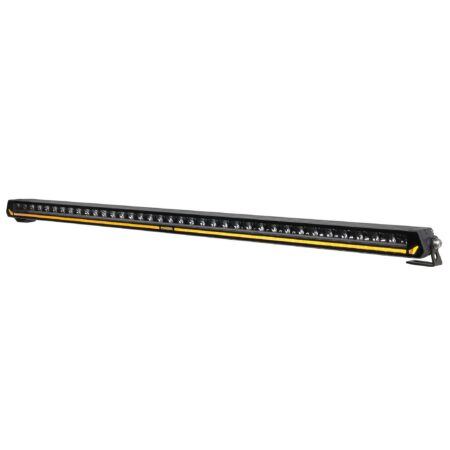
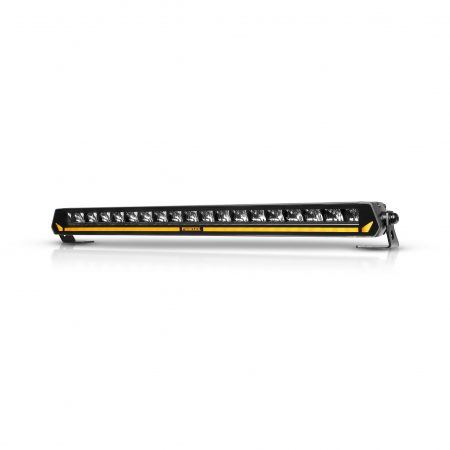
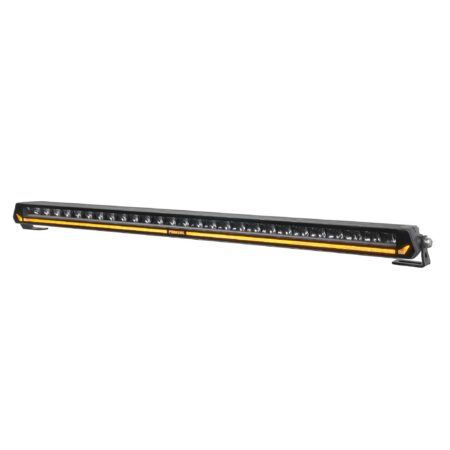
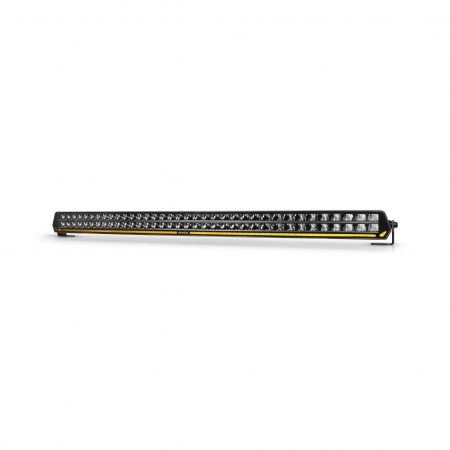
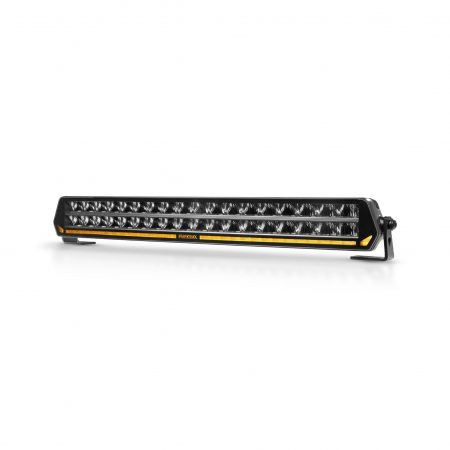
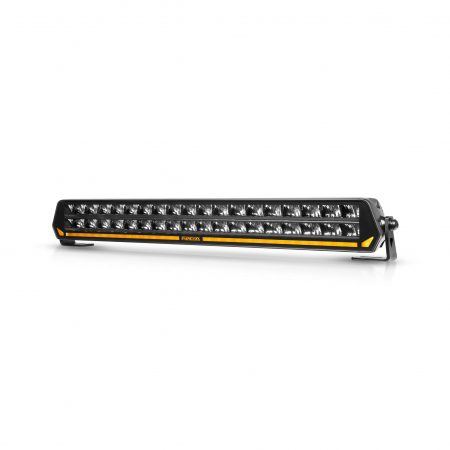
Linear is a slim horizontal LED bar format. It is available in Linear 6, Linear 12, Linear 18, and Linear 36 configurations, where the number refers to the count of LED modules. The Linear Elite 18 is the premium variant within the series, offering higher output than the standard version. The beam pattern prioritises road width at distance rather than extreme forward range, making it well suited to rural road driving where the full width of the road and verge needs to be visible. The Linear series is the natural choice for roof bar mounting on trucks.
Triple-R series
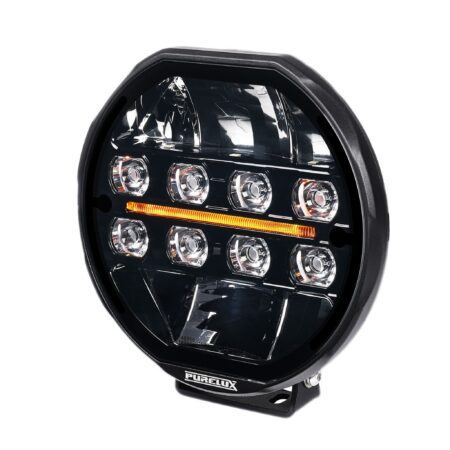
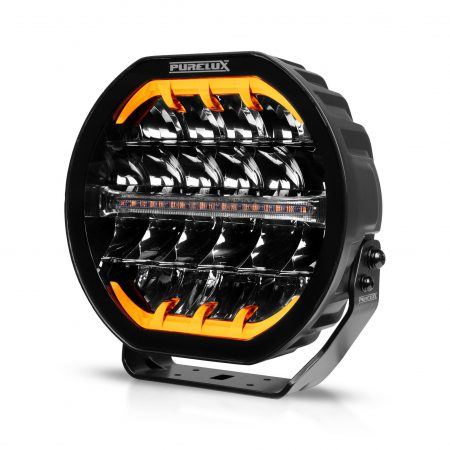
Triple-R is the flagship round driving light. It is available in Triple-R 750, 850, and 1000 configurations, with output increasing across the range. The beam is a focused long-range spot. For trucks operating on unlit highways and rural roads, the Triple-R provides genuine forward range that standard auxiliary lights do not deliver. The 1000 is the highest-output option in the series and is suited to high-speed unlit driving where maximum forward distance matters.
RP series
The RP series — comprising the RP Spot and RP Hyperspot — represents Lazer’s most concentrated long-range option. The Hyperspot has one of the longest effective beam distances available in a compact housing format. It is suited to drivers who regularly cover unlit routes at speed and need the maximum possible forward visibility from a relatively small mounting footprint.
Sentinel series
Sentinel is designed for SUVs and light commercial vehicles. It provides both long-range spot illumination and peripheral fill in a single compact housing, available in standard and Elite variants. The combination of spot and fill in one unit makes it a practical choice for vehicles where mounting space is limited but both forward distance and road width coverage are needed.
ST and T series
The ST/T series covers integration and work light applications. The ST Evolution is designed for OEM-style grille integration on specific newer truck and van models. RST-Steel stocks vehicle-specific ST grille kits for models including the Mercedes-Benz Sprinter. The T-Series is built for tractors, excavators, and forest machines. It carries IP69K ingress protection — the highest available rating — making it fully sealed against high-pressure water and suitable for agricultural washdown environments.
AIR series
AIR is a compact aerodynamic format engineered specifically for roof mounting at highway speeds. The housing geometry minimises wind noise and aerodynamic drag that affect standard light housings when mounted on roof bars. For operators who cover significant highway distances, the AIR format reduces both noise intrusion and the fuel penalty associated with increased aerodynamic resistance.
Choosing the right Lazer Lamps for Nordic conditions
Nordic operating conditions place specific demands on auxiliary lighting that are worth considering when selecting a product family. Cold temperatures, road salt exposure, ice, and the extended periods of complete darkness in winter all affect both product performance and the practical value of different beam configurations.
Temperature affects LED output — most LED systems produce marginally higher output in cold conditions than in heat, which is a benefit in Nordic winters. The more relevant concern is housing integrity over time. Road salt is corrosive, and products that are not built to handle sustained salt exposure will degrade at mounting points and seals. Lazer housings are built to withstand these conditions, but correct installation — including proper sealing of wiring connections — is equally important in extending service life.
Beam configuration choice is more context-dependent in Nordic conditions than in milder climates. In heavy snowfall or fog, a long-range spot beam reflects back off precipitation and reduces forward visibility rather than improving it. Wide-spread beam patterns perform better in those conditions. For operators who work in variable weather, the combination of a Linear bar for wide coverage and a Triple-R or RP Spot for clear-weather long-range use is a practical pairing. The two systems can be wired to separate switches so the driver can select the appropriate pattern for current conditions.
For forestry and agricultural operators, the T-Series IP69K rating is directly relevant. Forest machines and tractors are washed with high-pressure equipment regularly, and standard IP67 or IP68 ratings do not guarantee survival under direct high-pressure spray. The T-Series is built specifically for that environment.
Regulatory context also applies. Nordic road traffic legislation restricts the use of auxiliary driving lights to conditions of poor visibility and prohibits use in a way that dazzles oncoming traffic. Work lights are restricted to stationary vehicles in most Nordic countries. Specific rules vary between Finland, Sweden, and Norway, so it is worth confirming the applicable national requirements before configuring a lighting system for a vehicle that crosses borders.
How Lazer Lamps integrate with vehicle accessories
Auxiliary lighting does not function in isolation. The mounting position, the vehicle’s structural accessories, and the wiring configuration all affect how well a lighting system performs in practice.
RST-Steel stocks the full range of Lazer vehicle-specific integration kits. These kits pair a matched set of Lazer lights with a precision-fit mounting bracket for a specific vehicle model. They remove the need for custom bracket fabrication and ensure the lights are positioned correctly relative to the vehicle’s cooling geometry and headlight pattern. For operators fitting lights to a vehicle model covered by an integration kit, this is the most reliable approach — both for beam alignment and for avoiding interference with the vehicle’s thermal management.
For trucks, the Linear series is commonly mounted on roof bars. RST-Steel manufactures its own roof bars at its production facility in Nivala, and the combination of a purpose-built roof bar with correctly specified Lazer Linear units is a well-tested configuration across a range of truck models. The roof bar mounting height gives the Linear beam the elevation it needs to illuminate road width at distance without the beam cutting off prematurely against the road surface.
Bull bars and front bars provide an alternative mounting position for round driving lights such as the Triple-R or RP series. Mounting at bumper height places the beam lower, which changes the illumination geometry relative to roof mounting. For off-road or forestry applications, lower mounting is often preferable because it illuminates ground-level obstacles more directly. For highway driving, roof or A-pillar mounting generally produces better results for long-range forward visibility.
Wiring integration is a factor that is often underestimated. Auxiliary lights draw significant current, and incorrect wiring — undersized cable, poorly crimped connections, or inadequate fusing — creates both reliability problems and potential fire risk. Vehicle-specific integration kits include wiring harnesses sized for the intended load, which removes the guesswork from this part of the installation.
Why professional installation matters for auxiliary lighting
Fitting Lazer Lamps correctly requires more than bolting a bracket to a vehicle and running a wire to a switch. The quality of the installation directly affects beam alignment, long-term reliability, and compliance with road traffic regulations.
Beam alignment is the most immediate concern. A driving light that is mounted even a few degrees off its intended angle will either illuminate the wrong part of the road or, in the case of upward misalignment, dazzle oncoming drivers. Correct alignment requires knowing the intended beam geometry for the specific light, setting the mounting angle accordingly, and verifying the result under actual driving conditions rather than in a workshop with the vehicle on a flat surface.
Wiring quality determines long-term reliability. Nordic conditions — salt, temperature cycling, vibration on rough roads — degrade poorly made connections over time. Corroded terminals, loose crimps, and inadequate weatherproofing are the most common causes of auxiliary light failure in the field. A professionally installed system uses correctly rated cable, weatherproof connectors, and appropriate fusing at each stage of the circuit.
For operators who want the full system handled in one place — product selection, supply, and installation — RST-Steel operates installation facilities in Pirkkala and Kempele in addition to the production facility in Nivala. The team has worked with the Lazer range since its introduction to the Nordic market and can advise on product selection, integration kit compatibility, and wiring configuration for specific vehicle models. Enquiries can be directed through the RST-Steel contact page.
The right auxiliary lighting system, correctly installed and properly configured for the operating environment, is a long-term working asset. The Lazer range provides the product depth to cover most professional applications — the task is matching the right family and configuration to the specific vehicle, route type, and conditions the driver actually works in.
Frequently Asked Questions
How do I decide between a Linear bar and a Triple-R or RP round light for my truck?
The choice comes down to what your routes demand most. A Linear bar spreads illumination across the full road width and verge, making it the better option for rural and forest roads where you need to see what’s at the edges. A Triple-R or RP Spot delivers concentrated long-range forward distance, which is the priority on unlit highways at speed. For most professional operators covering varied routes, the strongest configuration is running both — a Linear on the roof bar for width and a round spot for forward range — wired to separate switches so you can select the right pattern for current conditions.
Can I use Lazer Lamps legally on public roads in Finland, Sweden, and Norway?
Yes, but with important distinctions between product types and usage conditions. Auxiliary driving lights are permitted on public roads in Nordic countries, but their use is generally restricted to conditions of poor visibility, and they must not dazzle oncoming traffic — meaning beam angle and alignment are legally relevant, not just a performance consideration. Work lights are typically restricted to stationary vehicles. The specific rules differ between Finland, Sweden, and Norway, so if your vehicle crosses borders regularly, it’s worth confirming the national requirements for each country before finalising your lighting configuration.
What's the difference between the Sentinel and the Triple-R, and which is better for an SUV or van?
The key difference is that the Sentinel combines both long-range spot illumination and peripheral fill light in a single compact housing, while the Triple-R is a dedicated long-range spot light. For SUVs and light commercial vehicles where mounting space is limited, the Sentinel is typically the more practical choice because it delivers both functions without requiring two separate units. If maximum forward range is the primary requirement and you have mounting space for a dedicated spot, the Triple-R 850 or 1000 will outperform the Sentinel at long distances.
Why does beam evenness matter more than peak lumen output when comparing auxiliary lights?
Peak lumen figures can be misleading because they reflect the brightest point in the beam, not how light is distributed across the full illuminated area. A light with a high lumen rating but uneven distribution creates bright hot spots surrounded by darker zones, which forces your eyes to constantly adjust as the vehicle moves — a significant source of fatigue on long night shifts. A flatter, more even beam like Lazer produces means your eyes adapt once and maintain that adaptation, which is noticeably less tiring over a full working shift. This difference doesn’t show up in spec sheets; it becomes apparent after extended driving.
What should I check before installing auxiliary lights myself rather than using a professional installer?
The three critical areas are beam alignment, wiring quality, and regulatory compliance. Beam alignment must be set precisely — even a few degrees of upward misalignment can dazzle oncoming drivers and may put you in breach of road traffic regulations. On the wiring side, you need correctly rated cable for the current draw, weatherproof connectors rated for outdoor and salt exposure, and proper fusing at each stage of the circuit — undersized or poorly crimped wiring is the most common cause of field failures and carries a fire risk. If you’re fitting to a vehicle model covered by a Lazer vehicle-specific integration kit, using that kit removes much of the guesswork on both mounting geometry and wiring harness sizing.
How does the AIR series reduce fuel consumption compared to standard auxiliary lights, and is the difference meaningful for highway operators?
Standard auxiliary light housings create aerodynamic drag and wind noise when mounted on roof bars at highway speeds because their housing geometry isn’t optimised for airflow. The AIR series uses a purpose-engineered aerodynamic profile that reduces both drag and the turbulence that causes wind noise inside the cab. For operators covering significant highway distances — long-haul routes or regular inter-city runs — the cumulative fuel saving and reduction in noise fatigue over a full season is genuinely meaningful. If the majority of your driving is at lower speeds on rural or forest roads, the aerodynamic advantage is less relevant and other series may better suit your beam requirements.
How often should Lazer Lamps be serviced or inspected, and what does maintenance involve in Nordic conditions?
Lazer Lamps are sealed units and don’t require internal servicing, but regular inspection of the installation is important — especially in Nordic operating conditions where road salt, temperature cycling, and vibration accelerate wear on external components. Practically, this means checking mounting hardware for corrosion and tightness at the start of each winter season, inspecting wiring connections and weatherproofing seals for any signs of ingress or corrosion, and verifying beam alignment hasn’t shifted after off-road use or rough road exposure. Catching a loose mounting bolt or a degraded connector seal early prevents the more serious failures that typically show up mid-shift on a remote route.