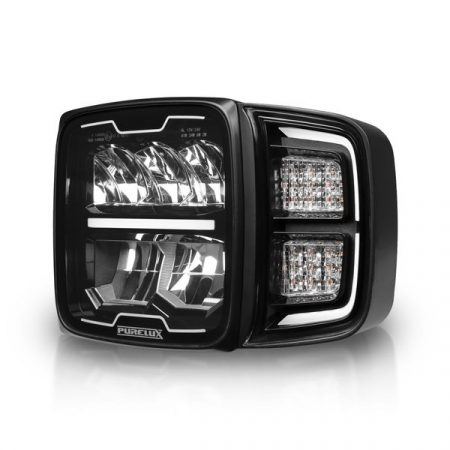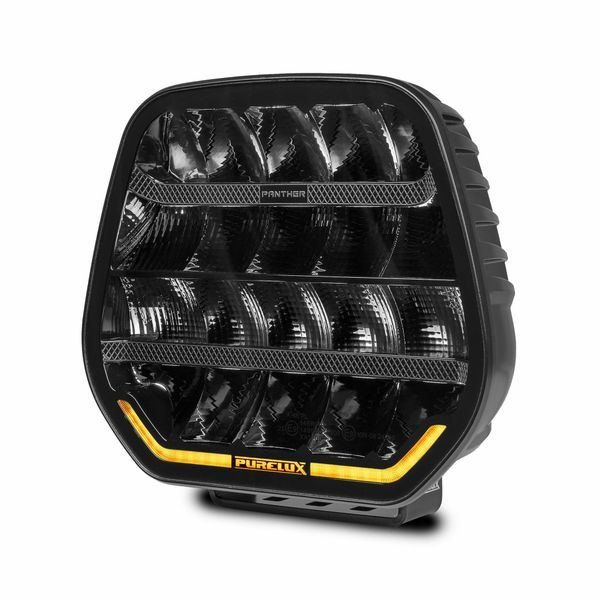
Work machines operate in conditions that standard equipment was never designed to handle. Earthmoving sites, quarries, forest environments, and construction sites combine constant vibration, impact loads, mud, water, and temperature extremes that cycle between minus 30°C in winter and summer heat. In this context, accessories for excavators, wheel loaders, and forestry machines are not optional extras — they are operational equipment that directly affects how safely and effectively the machine performs its job. This guide covers the most common work machine accessories, what conditions drive their selection in Nordic markets, and how to make informed choices for professional machine operation.
Most common accessories for work machines
The accessories most widely used on professional work machines fall into a small number of functional categories: structural mounting bars for lighting, work lights, side access components, and cab interior protection. Each addresses a specific operational gap that factory equipment leaves open.
Counterweight bars for excavators
Counterweight bars — also called rear bars or counterweight light bars — are the single most common accessory category for excavators. These are steel bars mounted to the rear counterweight section of the machine, providing a structural mounting point for work lights that illuminate the area behind and beside the machine. Excavators work in tight, complex site environments where reverse maneuvers, proximity to other machines, and low-light conditions during early-morning or late-evening shifts all create genuine accident risk when rear visibility is limited. A well-positioned counterweight bar allows high-output lights to cover this area without obstructing machine operation.
With 73 products across eight major brands — Volvo, Hitachi, Doosan/Develon, Kobelco, Caterpillar, JCB, Kubota, and Komatsu — rear bars for excavators represent the largest single category in RST-Steel’s work machine range. Machine-specific fit matters more here than in almost any other vehicle category. Excavator counterweight profiles vary significantly between brands and models. A bar engineered for a Volvo EC220 does not fit a Hitachi ZX225, and a poorly fitted bar will vibrate loose, sit at the wrong angle, or develop stress fractures at the mounting points under the constant mechanical load of earthmoving operation.
Roof bars and hood bars
Roof bars mount to the cab roof and provide a high-angle mounting point for forward-facing work lights. For excavators, this maximises throw distance and coverage angle for forward illumination — particularly relevant when working in deep excavations or on sloped terrain where the work area sits below the machine’s normal horizon. Roof bars for excavators cover 22 products across the same major brands.
Wheel loaders use both roof bars and hood bars. The hood bar is positioned at the rear of the engine compartment — which on a wheel loader is also the rear of the vehicle — giving a high-angle mounting position ideal for illuminating the tipping area and the ground behind the machine during reversing. Roof bars on wheel loaders serve forward and overhead illumination for loading operations, including enclosed spaces such as covered aggregate stockpiles or warehouses where natural light is absent.
Side bars, floor mats, and forestry-specific products
Side bars for excavators serve a dual function: they provide a step and handhold for cab access, and they allow work lights to be positioned for lateral illumination. On muddy or icy sites, a proper side bar is a safety product. Excavator floor mats protect the cab floor from mud, hydraulic fluid residue, rock dust, and machine oil — contamination that accumulates at a rate no road vehicle experiences and that, without protection, leads to floor corrosion and deteriorating operator conditions.
For forestry machines and timber cranes, RST-Steel offers roof bars engineered specifically for harvesters, forwarders, and crane equipment. These are specialist products addressing specific mounting geometry, impact resistance, and illumination requirements that differ from construction machine accessories. The range is smaller — four products for forest machines, three for timber cranes — but the key point is that forestry operators can source appropriate products rather than adapting truck or construction machine accessories that were not built for branch strikes and continuous rough-terrain vibration.
How Nordic conditions shape accessory requirements
Nordic operating conditions impose requirements that go well beyond what most accessory specifications are tested against. Temperature cycling between deep winter cold and summer heat, road salt, ice, and the physical demands of year-round professional use create a failure environment that eliminates products not built for it.
Finnish construction sites operate in low light from September through March — a period of roughly six months where natural daylight is limited to a few hours at most. For excavator operators, this means precision bucket placement and safe awareness of site personnel must be maintained in conditions where factory cab lighting is consistently insufficient. The same applies to wheel loaders working in quarries or aggregate yards on early shifts, and to forestry machines operating in complete darkness during winter harvesting cycles. Lighting accessories are not a seasonal convenience in this context; they are a year-round operational requirement.
Mechanical demands are equally specific. Excavator counterweight bars experience vibration loads that are significantly higher than anything a truck accessory is designed to handle. Steel construction rated for earthmoving operation differs from steel construction adequate for road transport. Forestry machines add branch and debris impact to the vibration load. Accessories that perform adequately in central European conditions, where winters are mild and machines are less likely to operate in extreme cold, may fail quickly when exposed to Nordic site conditions. This is why machine-specific product ranges built and tested for these environments matter — generic solutions from catalogue suppliers do not carry the same assurance.
Choosing the right accessories for your work machine
The starting point for any accessory selection is machine-specific fitment. Brand and model matter at every step. A counterweight bar for a Kobelco SK210 has different mounting geometry than one for a Caterpillar 320 — and using the wrong product creates mechanical problems that compound over time under vibration. When browsing RST-Steel’s range, using the brand filter within each product category is the most direct route to products confirmed for a specific machine.
Beyond fitment, the selection decision comes down to operational requirements. The questions worth working through are straightforward: Where does the machine work — construction site, quarry, forest, aggregate yard? What are the low-light hours on a typical shift? What directions does the operator need illuminated — rear for reversing, forward for digging, lateral for trench work? How many light mounting positions are needed, and at what angles? Operators who work across multiple environments or shift patterns often need bars at more than one position, combined with work lights selected for different beam patterns.
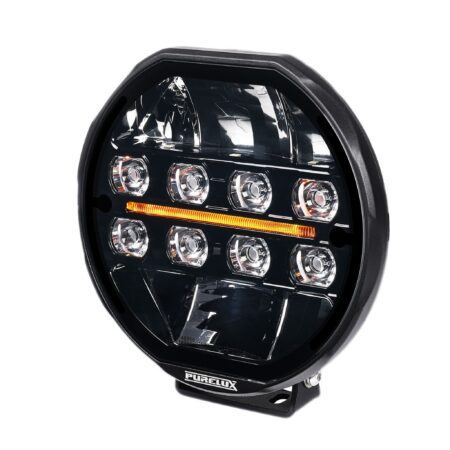
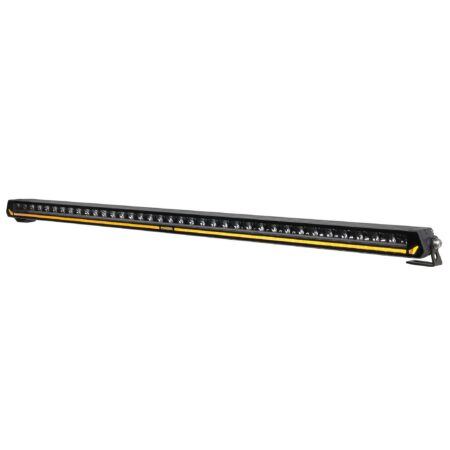
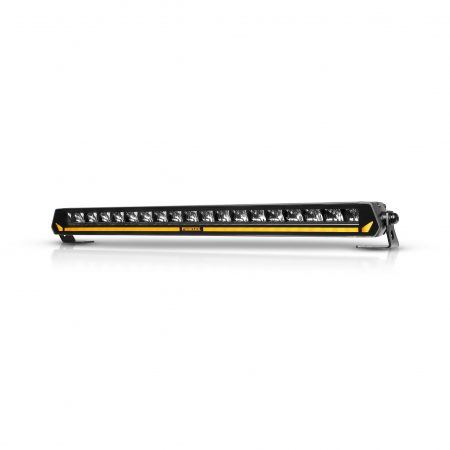
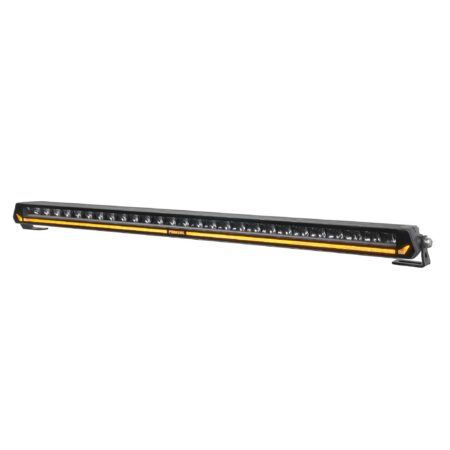
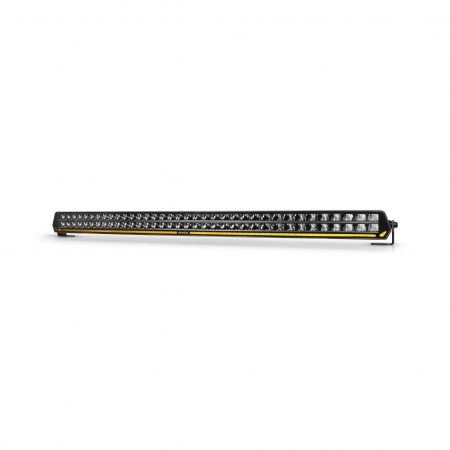
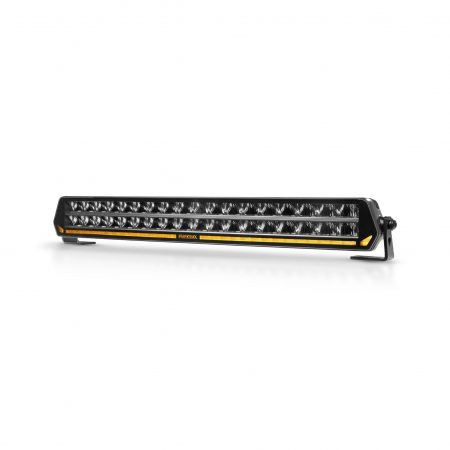
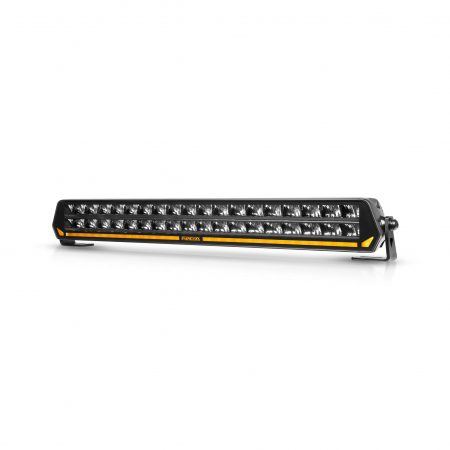
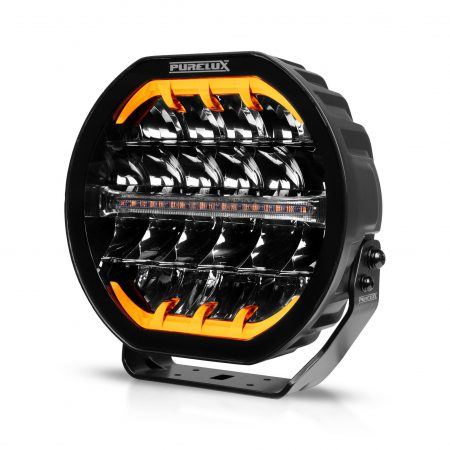
Work lights are part of this selection process, not an afterthought. Every mounting bar is only as useful as the lights attached to it. For professional work machine applications, RST-Steel recommends Lazer work lights, which are engineered for the vibration, dust, and temperature cycling that construction and forestry environments impose. Beam pattern selection matters: a wide flood beam covers a large work area at close range for loading, digging, or harvesting operations; a spot or combination beam extends illumination distance for machine travel or road transport. Many operators need both, mounted at different positions on the same bar. RST-Steel’s sales team can advise on the right combination for a specific machine and use case.
Professional installation vs. self-fitting
Work machine accessories present a different installation question than truck accessories. The mechanical environment — specifically the vibration loads that excavators and wheel loaders generate during normal operation — means that mounting integrity is not a minor detail. A bar that is incorrectly torqued, fitted to the wrong mounting points, or positioned with inadequate support will develop problems that may not be immediately visible but that compound under repeated vibration cycles.
For operators with the mechanical competence and access to the correct tooling, self-fitting of machine-specific bars is a realistic option, particularly for straightforward roof bar installations on excavators or wheel loaders. The prerequisite is that the product is genuinely designed for the specific machine — not a close-enough adaptation. Machine-specific products from RST-Steel include fitment documentation that makes the installation process clear for operators with workshop capability.
For counterweight bars, where the mounting geometry is more complex and the mechanical demands are highest, professional installation provides assurance that the bar is correctly positioned and secured for the long term. This matters particularly for fleet operators and plant hire companies where machine downtime has a direct cost and where a bar that fails in the field creates both a safety issue and an unplanned maintenance event. The total cost calculation for professional installation should account for the elimination of that risk, not just the labour cost in isolation.
Maintenance and longevity of steel accessories
Steel accessories for work machines require periodic maintenance to perform reliably over their service life. The operating environment — mud, water, salt, and constant vibration — creates conditions that accelerate corrosion and loosen fasteners faster than road vehicle applications. A maintenance routine that takes these factors into account extends product life significantly and prevents failures that could otherwise be avoided.
The practical maintenance steps for steel work machine accessories are not complicated. Fastener checks after the first 50 hours of operation and at regular intervals thereafter are standard practice — vibration settles mounting hardware, and torque values that were correct at installation may need re-checking after initial use. Powder-coated steel construction resists corrosion effectively, but physical damage to the coating from branch strikes, rock contact, or site debris creates entry points for rust. Small coating repairs made promptly prevent larger corrosion problems from developing.
Electrical connections for work lights deserve specific attention in Nordic conditions. Temperature cycling causes connector materials to expand and contract, and moisture ingress through degraded seals is a common cause of lighting failure on work machines. Inspecting connector seals and applying appropriate contact protection at seasonal service intervals is straightforward and prevents the majority of electrical faults. Lazer work lights are built with sealed connectors rated for professional machine use, but the harness connections to the machine’s electrical system benefit from the same attention as any other connector in a demanding environment.
For fleet operators managing multiple machines, treating accessory maintenance as part of the machine’s scheduled service rather than as a separate task is the most reliable approach. Counterweight bars and roof bars checked at the same time as hydraulic and undercarriage service intervals are far less likely to develop undetected problems than accessories inspected only when something visibly fails. RST-Steel’s range is designed for long service life in Nordic conditions — getting that service life consistently requires treating the accessories as the operational equipment they are, not as fitted-and-forgotten additions.
For multi-machine orders or fleet procurement, contact RST-Steel directly at sales@rst-steel.fi to discuss machine-specific requirements across the Volvo, Hitachi, Doosan/Develon, Kobelco, Caterpillar, JCB, Kubota, and Komatsu ranges.