A driver covering 800 kilometres through northern Scandinavia in December will spend the majority of that route in complete darkness. In the far north, winter darkness extends to 17 hours or more per day. Factory headlights on modern trucks and vans are engineered for road compliance, not for the sustained forward visibility that long-haul night driving demands. For professional operators — the independent owner-operator running a Scania R across Finland at night, or the fleet manager specifying lights for vans doing rural service calls — auxiliary driving lights are not an upgrade. They are a practical response to conditions that standard equipment was not designed to handle.
The specific problem in the Nordic region is animal crossings. Moose, reindeer, and deer cross rural roads throughout Finland, Sweden, and Norway at night, and these animals absorb light rather than reflecting it back the way road signs and markings do. Standard high beams illuminate an animal at approximately 50 to 80 metres in good conditions. At 90 km/h, stopping distance from full speed to rest is approximately 60 to 80 metres. That leaves almost no safety margin. An auxiliary driving light with a reference number of P9 or above illuminates the same road section at 120 to 150 metres or more — nearly doubling the available reaction time.
Choosing the right auxiliary lights for trucks and vans requires understanding beam physics, mounting geometry, technology trade-offs, and legal requirements. The sections below work through each of these areas in practical terms, with specific product guidance for long-distance road use.
Light Output, Beam Pattern, and Range Explained
Total lumen output is the figure most commonly used in auxiliary light marketing. It is also the least useful number for evaluating long-distance driving performance. What matters on an open highway is how far forward usable light reaches, not how many lumens leave the housing in all directions. Five thousand lumens in a flood pattern illuminates less useful road than 3,000 lumens in a focused spot beam.
Beam pattern determines this. A spot or driving beam concentrates light into a narrow, long-reaching cone suited to highway and open rural road driving. A flood beam spreads light wide and low, which is correct for work site illumination but provides limited forward range. Some lights combine a spot centre with peripheral fill — this is the most practical configuration for road driving, covering both maximum range and road edge visibility.
The reference number (P7, P9, P12) is the most accurate single indicator of real-world forward performance. It reflects beam concentration and intensity relative to a standardised measurement — a higher reference number means a more focused, longer-reaching beam. For long-distance driving, P9 is the practical minimum. Below P9, the forward illumination advantage over standard high beams diminishes significantly. A P9 light illuminates animals and road hazards at 120 to 150 metres or more, compared to approximately 50 to 80 metres with standard high beams. At 90 km/h, that difference in detection distance is the difference between a controlled stop and a collision. For a deeper look at how beam patterns work in practice, see beam pattern explained.
How Mounting Position Affects Visibility and Safety
Mounting position changes what an auxiliary light illuminates and how much of the road it covers. Height and lateral placement both matter, and the correct choice depends on the vehicle type and the primary driving environment.
On trucks, roof bar mounting places the lights high enough to project the beam over the hood and well ahead of the vehicle. This maximises forward range and is the standard position for long-haul highway driving. Front bar mounting sits lower, which reduces maximum range slightly but improves illumination of the road surface closer to the vehicle — useful on rural roads where animals may cross at short notice.
On vans, the options are more constrained. A roof bar or A-pillar mount is the most common configuration. Lights mounted too low on a van can create glare problems for oncoming traffic and reduce effective range. Placement should also account for the vehicle’s aerodynamic profile — poorly positioned lights on a van create wind noise and drag that compounds over long routes.
Lateral spacing between two lights affects beam overlap. Wider spacing produces better road-edge coverage; closer spacing concentrates the combined beam forward. For highway driving where maximum range is the priority, wider spacing with spot beams is the more effective configuration. RST-Steel’s vehicle-specific light kits are engineered with correct mounting geometry already resolved for specific truck and van models.
LED Technology Versus HID and Halogen for Road Use
For professional road use in Nordic conditions, LED is the correct technology. The comparison with halogen and HID is not close in practical terms.
Halogen auxiliary lights are inexpensive but draw high current relative to their output, generate significant heat, and degrade quickly in cold and wet conditions. A pair of 50W halogen auxiliary lights draws over 8 amps combined at 12V and produces a beam that falls well short of P9 performance. Bulb life is measured in hundreds of hours under normal use.
HID (high-intensity discharge) lights produce strong output but require a warm-up period before reaching full brightness, which is a genuine operational problem in sub-zero conditions. They are also more fragile under vibration — a factor on rural Nordic roads in winter.
LED auxiliary driving lamps operate at full brightness from the first second regardless of ambient temperature. They function reliably from -30°C to +35°C without the cold-start degradation that affects halogen and HID. Power draw is substantially lower: a pair of 30W LED lights draws less than 6 amps combined at 12V, well within the accessory load capacity of any modern truck or van alternator system. LED housings are sealed to IP67 or IP69 as standard across professional-grade products, preventing moisture ingress from rain, snow, and road spray. For a full breakdown of power consumption figures, auxiliary light power draw covers the specifics.
Key Factors When Choosing Lights for Nordic Conditions
Nordic operating conditions impose requirements that eliminate a significant portion of the auxiliary light market from practical consideration. The following factors are non-negotiable for professional use across Finland, Sweden, and Norway.
E-Mark Certification
All auxiliary driving lights fitted to road vehicles in EU member states and Norway must carry E-mark certification. This is a legal requirement, not a quality indicator. Uncertified lights are illegal for road use regardless of output or build quality. Nordic road traffic legislation also restricts auxiliary driving lights to simultaneous use with main high beams only, and they must be switched off when meeting oncoming traffic. In Finland and Sweden, two auxiliary lights is the standard maximum permitted for road use; Norway applies similar restrictions. Work lights, as distinct from driving lights, are restricted to stationary or low-speed use off public roads. A driver using work lights at highway speed is in violation of traffic law in all three countries. All Lazer, Purelux, and OZZ products in RST-Steel’s range are E-marked.
Cold Weather Performance and Sealing
Temperature range and housing integrity are the two most practically relevant specifications for Nordic use. Minimum IP67 sealing is the baseline; IP69 is preferable for vehicles operating on salted roads in winter. Lights that are not rated for sustained sub-zero operation will fail during the months when they are needed most.
Specific Product Recommendations
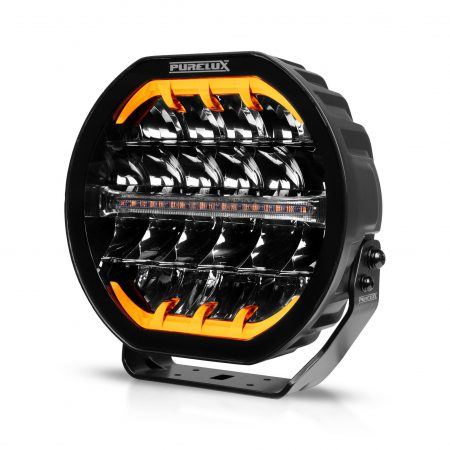
For maximum forward range on trucks running highway and open rural roads, the Lazer Triple-R 850 is the most widely specified option in RST-Steel’s range. It delivers P9+ reference number performance in a compact round format suited to cab roof bar or front bar mounting. The Triple-R 1000 provides the highest output for operators who prioritise maximum range above all other factors — it produces one of the longest forward beams available in this format. Both are available through RST-Steel as the official Nordic importer for Lazer Lamps.
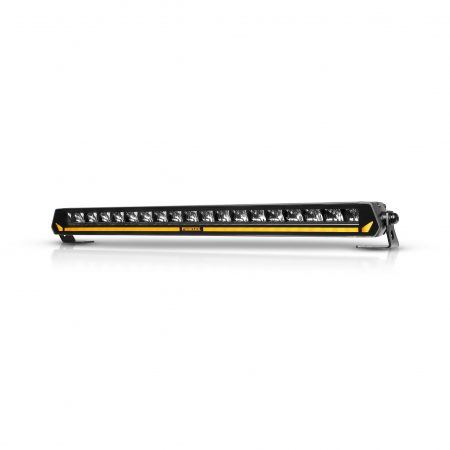
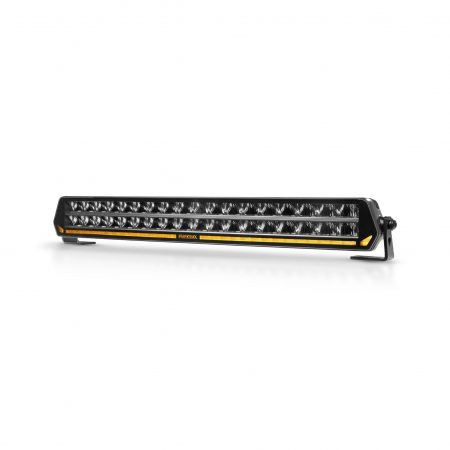
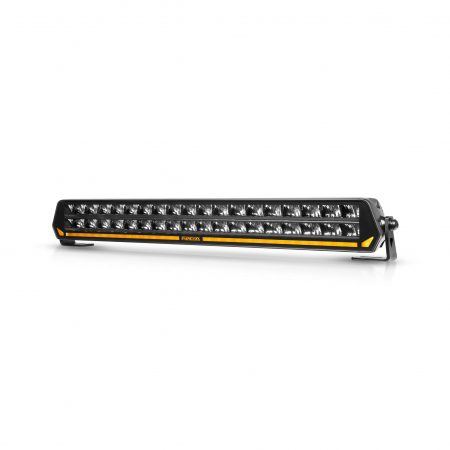
For trucks where road-edge coverage matters as much as forward range — rural roads with animal crossings, curves, and poor road edge definition — the Lazer Linear 18 produces a wide, even horizontal beam that illuminates the full road width and verge. It offers less maximum range than the Triple-R series but covers significantly more lateral area, making it the more appropriate choice for drivers who encounter frequent curves and road edge hazards.
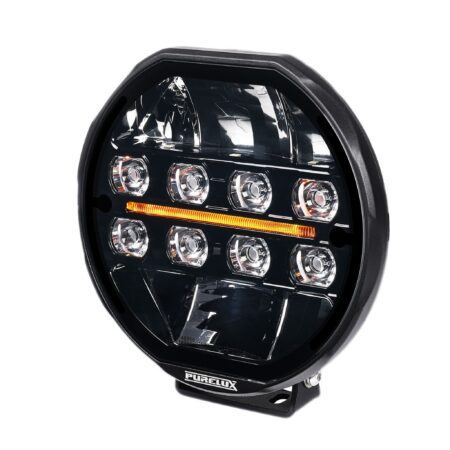
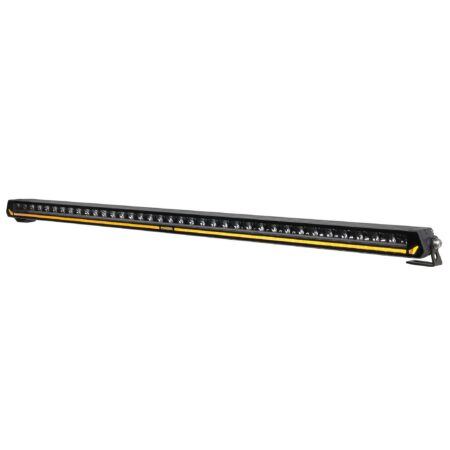
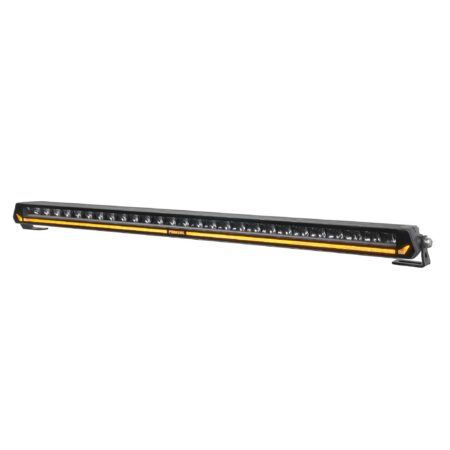
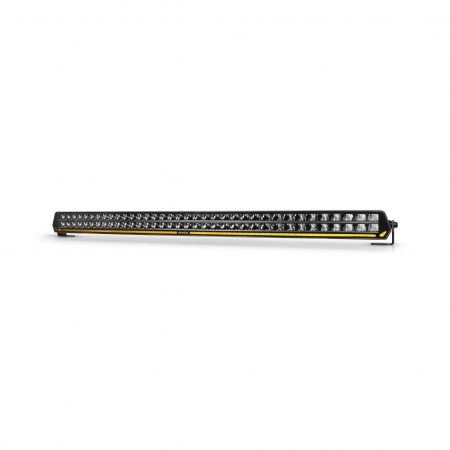
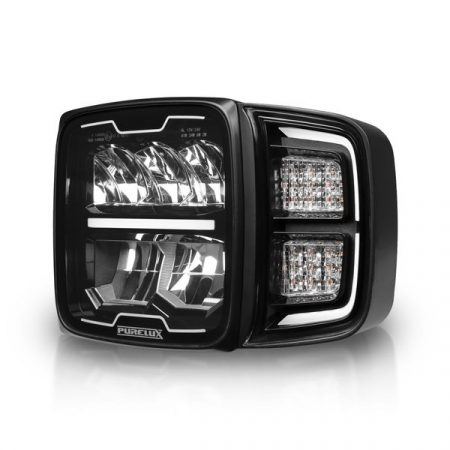
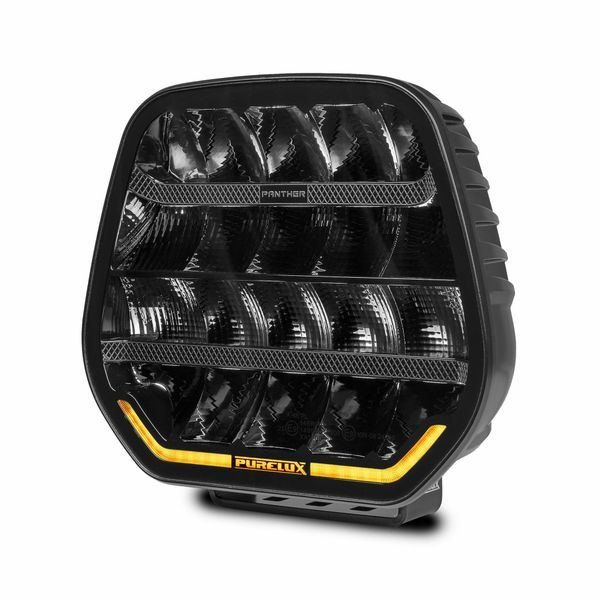
For vans on rural service routes, the Purelux Ranger 9 and the Purelux Panther S540 are sized appropriately for van fitment. The Panther S540 combines spot and flood in a compact bar format, which suits vans that need both forward range and lateral coverage on narrow rural roads. Both are E-marked and LED. For operators who need a cost-effective alternative to Lazer on trucks, the OZZ XR3 P9 delivers P9 reference number performance at a lower price point.
Professional Installation Versus Self-Fitting
Auxiliary lights can be self-fitted, and for straightforward installations on vehicles with accessible mounting points and simple wiring runs, this is a viable option for experienced operators. The practical question is where the risk sits and what the consequences of an error are.
Wiring is the most common source of problems in self-fitted auxiliary lights. Auxiliary driving lights must be wired to activate only with main high beams — this is a legal requirement in Nordic countries, not a recommendation. Incorrect wiring that allows the lights to operate independently of high beams creates a legal compliance problem and, in the event of an incident, a potential liability issue. Relay and fuse sizing must also be matched to the actual current draw of the lights fitted.
Mounting integrity matters on commercial vehicles. A light that vibrates loose at highway speed on a rural road in winter is a safety hazard. Mounting hardware must be appropriate for the specific vehicle and bracket type, with correct torque values applied. On trucks with aerodynamic cab systems, incorrect mounting can also interfere with wind deflectors and create structural stress points.
Professional installation through RST-Steel covers wiring, relay fitment, switch integration, and mounting, with the work carried out by technicians who install these systems regularly. For operators who are not confident in automotive electrical work, or who are fitting lights to a commercial vehicle where downtime has a cost, professional installation is the lower-risk path. More background on the topic is available in the article on auxiliary lights for trucks, and the full range of auxiliary lights is available to browse with specifications and compatibility information.